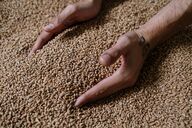
Malting
To “unlock” or make available energy available for yeast, the starch needs to go through a process called malting. By adding water to barley, the grains will begin to germinate, the beginning process of growing into a plant. Germination activates enzymes within, which will convert starch molecules – complex chains of the simple sugar glucose – into smaller chains and individual glucose molecules.
Now, we don’t actually want to grow a barley plant; we just want the starch to break down into smaller molecules that the yeast can use. The malting process will be halted by drying, after which the germinated barley – now called malt -- may be ground into a finer powder that we can easily pour and package. Different malting methods and the resulting malt characteristics (color, flavor, and aroma) significantly influence the final beer profile.
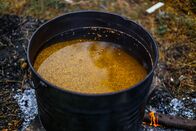
Mashing
The mashing process is where the magic begins. The malted barley, mixed with water, undergoes a series of controlled temperature steps. Enzymes within the malt operate within specific temperature ranges. Temperatures are carefully managed to activate the enzymes within the malt, converting the starches into fermentable sugars. This process is crucial as it directly affects the amount and type of sugars available to the yeast for fermentation.
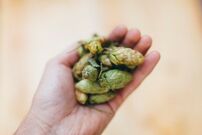
Hopping
After the mashing process, the liquid mixture, which is called wort, is separated from the spent grain. The lauter tun, or similar vessel, facilitates this separation. The wort is then boiled, a crucial step for sterilization i.e. removal of bacterial interference, and flavor development. It is during this stage that hops are added. You’ve heard of hops, of course. This is a rather standard addition to beer though in centuries-past other herbs were commonplace.
To keep it simple, hops are a type of flower and are added to the wort to impart flavor and preservative effects. How exactly the old-time beer-makers thought to add hops is a long and interesting story but I want to keep this short. Other agents may be added at this stage, such as additional sugars or herbs, but hops is the big one. If you’re a fan of west coast USA IPAs, as I am, you’ll know that they make use of some very flavorful hops varieties to create strong, bitter beer profiles.
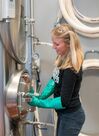
Fermentation
On to fermentation. Fermentation is where the yeast comes into play. Yeast is a single-celled fungus, and I’m sure you’re familiar with it: yeast is the microorganism that converts sugars into alcohol and carbon dioxide (CO2). It’s the release of gaseous CO2 that causes bubbles to form in bread, making it rise. As for alcohol, there are many compounds that qualify as an alcohol, and they are not all desirable, but it so happens that yeast produces ethanol, which is exactly the alcohol that gives us the good feelies when we drink it. (Well, to a point, anyway.)
Are there different yeasts, you ask? Well, yes. Some yeasts create products that tend to float at the top of the mashing container, others make products that sink or remain low in the mixture. Also, yeasts function optimally at different temperatures, so for some, effective fermentation takes place at 10 C whereas a different strain wouldn’t be active unless the temperature was raised to 20 C. The varying molecules produced give unique flavor profiles, influencing the beer's body, mouthfeel, and overall character. Lager yeast, for example, produces crisp, clean beers, while ale yeast often results in more complex, fruity, or spicy flavors.
Conditioning
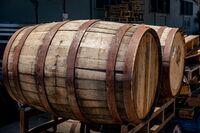
And finally, following fermentation, the beer needs conditioning to allow the carbon dioxide to fully dissolve and for flavors to mature. This can involve aging in stainless steel tanks or wooden barrels over some weeks to months. Finally, the beer is packaged for distribution.
Please bear in mind this is a pretty basic summary of the process! Some of these steps may be repeated, and there might be several filtration steps involved. I haven’t gone into filtration methods, or the use of clarifying agents, or the vessel sizes and shapes used. Beer-making is a Big topic, and can get Pretty technical. Craft beer makers are truly to be respected for their artistry, so Do raise your glass when you meet them!