I read on a variety of subjects, but what interests me is simply what interests Me...I'm not expecting you to have exactly the same taste. That said, I'm not just putting out content that is drinks-related... I mean, I Love my IPA but give me some credit, okay? :) So, on this page I'll present articles on society, business, entertainment, defense, science and technology, and anything else that happens to catch my eye!
I do make fair effort to present the articles accurately, and the stories are linked back to their original source; you'll see the link at the end in blue. Two more caveats: generally, I'll use stock images and adhere to fair use policies, and wherever I use an outside image I'll make sure to credit & link to that. Secondly, I may include some Amazon Affiliate links where I can gain a commission for any sales--there's no obligation but I'm appreciative of any support.
And by the way, these stories will also be used for my news podcast, conveniently titled 'theTokyoBill news brief', airing twice a week via Podbean or whatever podcast player you might happen to prefer. This is a short-form newscast just to showcase what I found interesting recently on Japan. Hope you enjoy it. ^^

Tokyo Poetry Week is back this October with ten days of readings, workshops, conversations, and new books across the city. This year’s program ranges from visual poetry and Japanese tanka to multilingual writing, performance, and film.
Venues include The Den in Koenji, Haremame in Daikanyama, and the A.I.R. building in Nihonbashi. Highlights include a conversation on architecture and poetry, a Visual Poetry Night where experimental poetry meets film and games, and the launch of the latest Tokyo Poetry Journal, themed around storytelling, legend, and myth.
The week ends with a slumber-party-style reading. Some events are free, while workshops require advance registration.

Japan has launched an unprecedented mission to bring back samples from the moons of Mars. The spacecraft, called MMX, lifted off from Tanegashima Island early Tuesday. It’s led by JAXA, with NASA and the French, German, and European space agencies all contributing. The five-ton craft should reach Mars late next summer and settle into orbit around Phobos, a potato-shaped rock about 22 kilometers across. It will first drop a French-German rover named Idefix, about the size of a microwave, to scout for safe landing spots. Then a lander will touch down for just two hours, collecting at least 10 grams of material. The samples are due back in the Australian desert in 2031, putting Japan neck and neck with China’s own Mars sample plan. The mission costs about 580 million dollars.
The company behind Baby Star Ramen is turning an underused fish into a snack. Oyatsu has launched a tartar sauce-flavored version of its shark snack at Aeon Group stores nationwide for a limited time. It’s made from salmon shark caught in Kesennuma, Miyagi Prefecture, Japan’s top port for shark landings. The meat is kneaded into a dough, and the flavor was inspired by Kesennuma’s shark cutlet burger. It’s the second in the series, following a karaage (fried chicken) version that sold last summer. The snack is part of the company’s “Mottainai fish utilization project,” which promotes rarely eaten species to support sustainable fisheries. It’s also marketed as a calcium-rich, healthier option.
The Aichi-Nagoya Asian Para Games opened Sunday with a ceremony in Nagoya, declared open by Emperor Naruhito. A record 45 countries and regions are taking part, with about 4,000 athletes and officials. Japan is fielding around 280 athletes across all 18 sports, and the weeklong games run through Saturday. Some events, including shooting, are qualifiers for the 2028 Los Angeles Paralympics, and the wheelchair tennis singles champions will qualify directly. Aichi native Tokito Oda and Yui Kamiji, both world number one wheelchair tennis players, are among the biggest draws. Wheelchair rugby returns to the program, and Japan will defend its wheelchair basketball title. Organizers hope the games raise awareness of people with disabilities in Japan.
Japan’s taxi drivers are about to get a new tool for dealing with problem passengers: the right to kick them out. Until now, drivers could only end a ride early in specific cases, such as physical violence, illegal or dangerous items, or a passenger too drunk to name a destination. The transport ministry is now amending the Standard Terms and Conditions of Carriage so drivers can also remove passengers who are verbally abusive, make unreasonable demands, or are otherwise disruptive. Bus drivers get the same authority. The change follows a rule that took effect at the start of this month requiring taxi and bus operators to protect drivers from customer harassment. What happens if an ejected passenger refuses to leave is up to individual operators, though calling the police is one likely option. The new rule is expected to take effect before the end of the year.
Prime Minister Sanae Takaichi’s approval rating has slipped below 50 percent for the first time. A Kyodo News poll conducted over the weekend put support at 49.1 percent, the lowest since she took office last October. The drop may reflect her slow response to the resignation of Farm Minister Kazuo Yana. He stepped down on Wednesday last week after remarks about cutting road funding for municipalities that didn’t support him. Takaichi had appointed Yana in last month’s cabinet reshuffle, and she openly chided him in parliament once the remarks were reported. Even so, about 58 percent of respondents said her decision to replace him came too late, and about 82 percent said it was only natural that he resign.
Speculation is growing that Russia will seek a prisoner swap after detaining a Japanese journalist on suspicion of spying. The reporter works for the Hokkaido Shimbun and was arrested in Sakhalin, then moved to Moscow, where a court approved two months of detention. Embassy officials went to Lefortovo detention center on Friday but couldn’t see him or confirm his health. Many believe the arrest is retaliation for Japan’s handover to Germany of a Russian hacker linked to the Qilin group, which has targeted Japanese companies and hospitals. Japan’s Foreign Ministry summoned the Russian ambassador to protest, but Moscow rejected Tokyo’s position. Experts say Russia may be seeking leverage, possibly including relief from Japanese sanctions. A similar case ended in a swap involving a U.S. reporter, and Belarus held a Japanese teacher on spying charges in 2024 before releasing him last year.

Image via Japan Meteorological Agency website
Japan’s Meteorological Agency issued an emergency earthquake warning during the lunch hour on Friday after automated data suggested a magnitude 9.9 quake near the Kuril Islands north of Japan. The alert warned of possible maximum seismic intensity 7 shaking across parts of Hokkaido, Tohoku and Kanto, alarming residents who received it. In reality, the quake was a much smaller but respectable magnitude 6.9, striking near Russia’s Kamchatka Peninsula at a depth of roughly 140 to 160 kilometers. Shaking in Japan peaked at a very low intensity rank of 1, including in Hakodate, and no tsunami threat or damage was reported.
Officials canceled the warning quickly after further analysis showed the initial estimate was badly inflated. The agency is investigating the cause, and a monitoring division head said systems staff reported no cyberattack was involved.
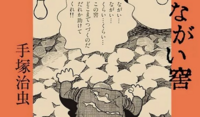
Image via Asahi.com
Tezuka’s 1970 manga “Nagai Ana” (The Long Cave) has reached its seventh printing since Hosei University Press published it in June. The work, never included in Tezuka’s collected works, follows Shohei Moriyama, a Zainichi Korean who obtained Japanese citizenship and became a corporate executive. Traumatized by forced labor in wartime tunnels at Mount Togari in Gifu Prefecture, he hides his roots, and sheltering an illegal migrant upends his family. It depicts forced labor, discrimination, generational divides and family separation.
The editor added 80 pages of expert commentary so readers understand the history, hoping they will consider the issues as personally relevant. Contributors call it a groundbreaking “catalog” of oppression and a starting point for learning this history.
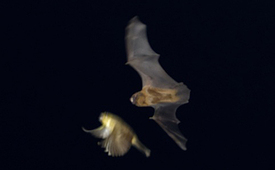
Image via Science Japan
A research team including the University of Tokyo has filmed a bat capturing a small bird in midair, a world first. Using searchlights and digital cameras over eight nights in October 2023 at a bird-watching site in Aomori Prefecture, researchers tracked the species Nyctalus aviator, which weighs about 40 grams.
Whether such bats attack roosting or flying birds had been debated. The team recorded 56 chases, 22 instances of contact and six confirmed captures, mostly involving small species such as Japanese Bush Warblers.
The bats also pursued larger birds but could not get close enough. Future studies will examine where the bats eat their prey and how they use echolocation. The findings appeared in the journal Ecology.
Architect Keisuke Oka, 61, has spent 21 years hand-building Arimasuton, a four-story raw concrete structure in Tokyo’s Mita district that passed its final municipal safety certification. Conceived as a rejection of Japan’s disposable scrap-and-build architecture, it features jagged ledges, oddly-shaped windows, exposed rebar and patterns pressed into the walls. Always interested in architecture, Oka learned construction trades following inspiration from improvisational Butoh dance. Critics, however, call it a nuisance and an eyesore. A redevelopment dispute forced a costly move of the building, nearly bankrupting him and contributing to his divorce. He plans to finish the interior, rent out the ground floor and eventually leave it as a museum or gallery. Coming through the 2011 earthquake undamaged, it is built with low-water concrete that can last 200 years.
Researchers at Keio University have identified three characteristics in the conversations of patients with schizophrenia that may become the basis for objective indicators of language disturbance. The team compared recordings of about 100 patients with a similar number of healthy people, covering free conversation, storytelling and picture description. Patients used case particles, Japanese markers such as “ga,” “wo” and “to” akin to prepositions that signal sentence structure, less often. They also used fewer adverbs such as “totemo” (very), “yukkuri” (slowly) and “tabun” (probably), and their word choices were similar and narrow in meaning. Together all these make speech seem confusing. The patients studied were volunteers with mild symptoms, and similar traits can appear in depression, so the approach would need to be combined with other assessments.
Japan’s foreign resident population reached a record high of about 4.3 million at the end of June, according to the Immigration Services Agency, up 156,000 from last December. Permanent residents formed the largest status group at 961,000, followed by engineer, specialist in humanities and international services status holders at 516,000, and students at 480,000. By nationality, Chinese residents led with 941,000, followed by Vietnamese at 694,000, South Koreans at 409,000 and Filipinos at 363,000. Meanwhile, foreign visitors in the first half totaled nearly 20 million, down slightly from a year earlier. Business manager permits fell from 3,300 to 600, apparently reflecting stricter visa eligibility criteria introduced last October. Overstayers numbered 65,000 as of July 1, down 20% from January.
Lawyers for the family of Shizuo Aishima, a former adviser to manufacturing company Okawara Kakoki, have submitted a communication dated October 13 to the UN Working Group on Arbitrary Detention, arguing that his prolonged detention on false charges violated international human rights standards. Aishima was arrested and indicted in March 2020 over alleged foreign trade law violations, was diagnosed with stomach cancer about seven months later, and died in February 2021 at age 72. His family is also suing 37 judges over warrants and rejected bail applications. The petition cites structural flaws in Japan’s criminal justice system, which one lawyer called emblematic of “hostage justice.” The working group’s nonbinding opinion may take one to two years; it has found six prior Japan cases arbitrary, including Carlos Ghosn’s.
Okinawa Governor Genta Koja said Friday that he accepts the deployment of US military MV-22 Osprey transport aircraft at Futenma air station, reversing the prefecture’s longstanding opposition. Previous governors critical of US bases had opposed the aircraft on safety grounds since before they were first stationed there in 2012. Koja, who took office late last month, said more than ten years have passed since deployment and that, since the Self-Defense Forces also operate the aircraft, demanding a retraction is unrealistic. Unlike his predecessors, he supports relocating the Futenma base from densely populated Ginowan to the coastal Henoko area in Nago, and says accepting the Ospreys fits that plan, which moves them to Henoko. Ospreys have a record of accidents in Japan and abroad.
The Japan Mobility Show, successor to the Tokyo Motor Show, has opened near Tokyo with more than 210 automakers, startups and industry organizations taking part. A highlight is wireless charging on the move, in which coils embedded in roads power electric vehicles without stopping or plugging in. Honda developed its system with a construction company. Toyota is pursuing a competing system, and both companies plan road tests as early as fiscal 2027, with East Nippon Expressway collaborating. Other exhibits include a cybersecurity product that checks computer systems for vulnerabilities and a disaster-response robot that works with drones to assist rescue teams. The show runs until Friday, and organizers stress industry cooperation to compete globally.
The 5-kilometer loop around the Imperial Palace draws thousands of runners each morning, but social media complaints that runners endanger pedestrians, particularly as tourist numbers grow, have prompted Chiyoda Ward to examine the issue. Existing guidelines prohibit listening to music and running too fast. Depending on its findings, the ward may add security cameras and more warning signs. The greatest concern is runners pursuing personal records during busy periods. A social running group organizer suggested separate paths for runners and pedestrians and doubted guidelines would reach those causing problems. Regular runners say mornings are calm, the counter-clockwise rule keeps traffic flowing, and mutual respect is essential. They believe isolated incidents amplified online have shaped negative perceptions of Tokyo’s running culture.
At Chiba Prison east of Tokyo, more than 200 inmates attended a July 31 Buddhist service for Urabone, an observance honoring ancestors and the dead. The prison houses inmates serving sentences of ten years or more, most for crimes involving a death, and Japanese law requires penal institutions to offer religious activities. For some long-term inmates, faith helps them confront their crimes; one man imprisoned 23 years prays for his victim and hopes to apologize to the bereaved family. Meanwhile, more foreign detainees mean accommodating faiths such as Islam, including prayer, religious items and ritual washing. Staff must judge whether requests are genuinely religious, and may deny those disrupting order, but say accommodation can bring peace of mind and ease operations.
Ichikawa Mayor Koh Tanaka gave an incorrect explanation when justifying the city’s May decision to deny a mosque congregation permission to hold group prayers in a municipal park, the Mainichi Shimbun has learned. Tanaka told news conferences that a neighbor of the Gyotoku mosque had found living nearby emotionally unbearable and that the house was torn down. But the former resident said he sold the aging house to the mosque five years ago, as he had hoped, and called the mayor’s remarks inconsistent with the facts. The real estate agent said the comment concerned a different property. Tanaka acknowledged the error in an email on October 6, saying the matters were separate, though he maintained that residents around the mosque hold varied opinions.
Five Malaysian nationals were arrested on Friday and Saturday at Tokyo’s Haneda Airport on suspicion of trying to smuggle cocaine hidden under the insoles of their shoes. Customs officials found bags of the drug on each of them during arrival inspections, totaling about five kilograms with an estimated street value of roughly 757,000 dollars. Police said four suspects, including Mohd Danial Far Han Bin Abdul Rahman, admitted the allegations, while one denied them. Rahman reportedly said he was told by someone he met through an app to carry illegal drugs abroad, was offered compensation and was handed a pair of shoes. Authorities believe all five may have been instructed to carry the drug into Japan and suspect an international smuggling ring.

Image via Kewanee Voice
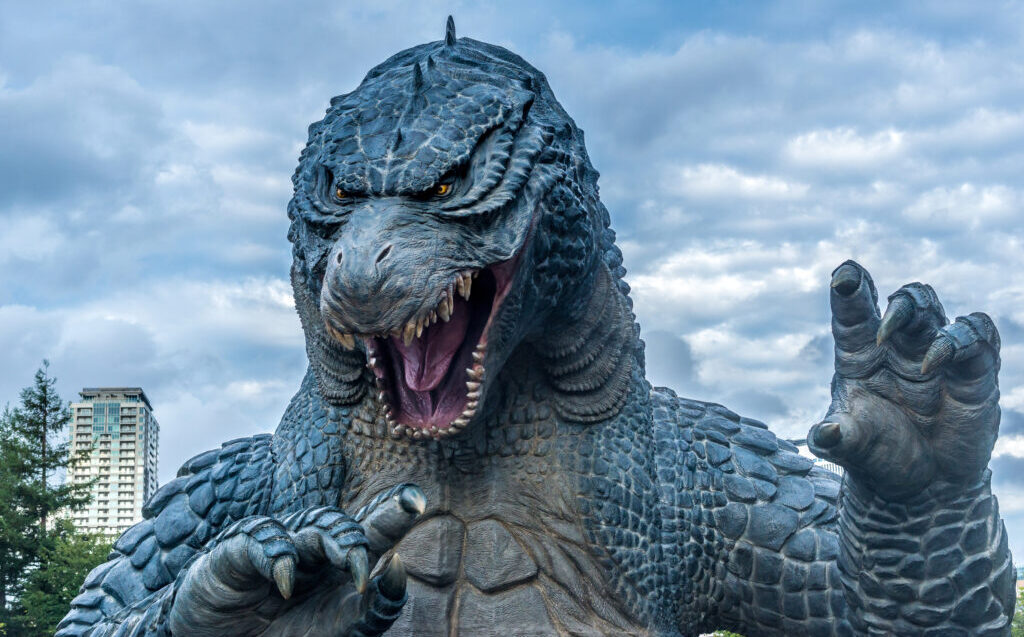
Tokyo Metro will change the train departure melody at Hibiya Station to Akira Ifukube’s “Godzilla’s Theme” starting November 3, known as Godzilla Day, the anniversary of the original 1954 film’s premiere.
Two different arrangements will play depending on direction: one on platforms 1 and 3, the other on platforms 2 and 4. The melodies sound just before doors close, and there’s no announced end date. Tokyo Metro asks fans not to linger on platforms or crowd around speakers to record, as that could disrupt operations.
Hibiya is a fitting location, home to Toho’s headquarters and two Godzilla statues. The start date also coincides with the Japan premiere of the new film Godzilla-0.0.

Image via Jiji Press
Dewi Sukarno, 86-year-old Japanese TV personality and widow of Indonesia's founding president, was ordered by Tokyo District Court to pay a 200,000 yen fine after being found guilty of assaulting her former assistant and manager in two separate incidents in Shibuya Ward last year.
The court found she threw a champagne glass at her assistant at a restaurant in February and punched and kicked her manager at an animal hospital in October, rejecting her claim that she had not thrown the glass after video footage confirmed the act. Judge Toshikazu Ishida said the glass-throwing was dangerous and there were no extenuating circumstances.
Dewi expressed remorse during the trial. Her defense lawyer said the incidents led to around 90 million yen in losses from appearance cancellations.

Image via Tom's Hardware
Google Japan has unveiled the Gboard Conveyor Belt Version, a keyboard featuring four belts with 29 keys each that roll toward the typist's hand rather than requiring finger or arm movement, designed to make one-handed typing more intuitive. The release continues the Japanese subsidiary's annual tradition of debuting an eccentric keyboard on October 1 — a date chosen as a reference to the classic 101-key layout.
Previous designs include a rotary dial keyboard, a double-sided model, and a single-row bar keyboard. There are no commercial release plans, but full blueprints including 3D-printable files, PCB layouts, and firmware source code are available on GitHub for anyone wishing to build one. The team is also considering color variations, high-speed models, and a shorter version for mobile devices.
NTT East plans to remove all public phones from Tokyo’s Toei Subway stations, covering the Asakusa, Mita, Oedo and Shinjuku lines, by November 2028 at the latest. The Tokyo Metropolitan Bureau of Transportation is simply relaying the telecom operator’s decision. Removal will happen gradually over roughly two years, with each station announcing its date at least two weeks ahead. Public phones matter as disaster infrastructure, since they can be used free of charge during earthquakes and tsunami. However, in-station phones are classed as Type-2, unlike the street-level Type-1 phones that legally must be maintained at set densities, so NTT East can remove them without government permission. The move looks like a pure business decision, reflecting how rarely smartphone-carrying commuters use them.
Two Tokyo bars appear in the World’s 50 Best Bars 2026 list, announced October 7 at a ceremony in Milan. The ranking spans 26 cities, with Bar Leone in Hong Kong taking the top spot for a second straight year. Tokyo’s highest entry is Bar Benfiddich in Shinjuku at No. 44, down from 18th last year. It’s known for its no-menu approach, with cocktails built around a guest’s preferred spirit or seasonal ingredients, often using spices and house-made infusions prepared with a pestle and mortar instead of a shaker. Virtù, at the Four Seasons Hotel Otemachi, ranks 48th, down from 45th. Its Art Deco lounge on the 39th floor offers skyline views and cocktails featuring French aperitifs, vintage spirits and Japanese seasonal ingredients.
Mitsubishi Heavy Industries launched Shogei, the seventh Taigei-class diesel-electric submarine, for Japan’s Maritime Self-Defense Force on October 8 in Kobe. The roughly 3,000-tonne boat, costing about 80.5 billion yen, is due for delivery in March 2028 and carries upgraded diesel engines, lithium-ion batteries and the new Type 18 torpedo. The launch comes as Japan weighs nuclear propulsion for future submarines fitted with vertical launching systems for long-range missiles. Nuclear boats offer sustained high speed and extended submerged endurance, valuable as China’s navy expands in the Western Pacific. Defense Minister Shinjiro Koizumi said Japan won’t rule it out, while acknowledging higher costs, larger hulls, expertise needs and louder acoustic signatures. No decision has been made.
Riken researchers have identified a protein, Lsp2, that explains how limited eating early in life can extend lifespan, using fruit flies. The team, led by Fumiaki Obata, restricted food only during the larval stage, then fed the flies normally as adults, and lifespans rose about 20 percent. They found Lsp2 helps store amino acids in ribosomes, and suppressing it, through restriction or genetic manipulation, produced the same longevity boost. Restricted flies were smaller and laid fewer eggs, but flies lacking functional Lsp2 avoided those costs, suggesting the protein isn’t tied to growth or reproduction. The findings, published in Nature, are said to support the Japanese saying about eating until eight-tenths full. Obata cautioned it’s unclear whether humans respond the same way.
A core member of the Qilin ransomware group, a 28-year-old Russian national, was detained in Osaka in May and handed over to German authorities, who want him over a logistics company attack and a roughly 26 million yen cryptocurrency extortion. Qilin is also blamed for last year’s Asahi Group attack that disrupted production and shipments. The news lands as Japan faces a surge of breaches, with about 15 million records potentially exposed in October alone, including incidents at GMO Internet Group, MrMax, Citizen Watch and Osaka University. Experts point to AI automating attacks. The digital affairs minister urged people to stop reusing passwords, and demand for credit agency alert services has jumped, with some consumers struggling to get through.
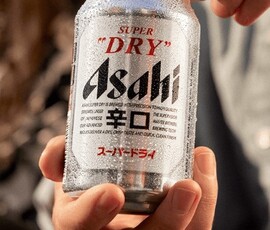
Japan's four major beer makers — Asahi, Kirin, Suntory, and Sapporo — have had their premises searched by the Japan Fair Trade Commission over suspected violation of the Antimonopoly Act, with the investigation centering on coordinated price increases introduced in October 2022 and April last year. All four companies cited rising raw material, energy, and transportation costs when announcing the increases. Asahi, Kirin, and Sapporo all saw their share prices fall Wednesday, following news of the raids. All three publicly listed companies confirmed the searches and pledged full cooperation with investigators. Suntory, which is not publicly listed, also confirmed an on-site inspection had taken place. The Fair Trade Commission has not publicly commented on the investigation.
Kenso Soai, professor emeritus at Tokyo University of Science, has been awarded the Nobel Prize in Chemistry alongside Henri Kagan of France, following their discovery of non-linear effects and autocatalysis in asymmetric organic synthesis — work that helps explain how homochirality, the tendency of living organisms to favor one molecular orientation over another, can emerge spontaneously. Nobel Committee chair Heiner Linke described the research as a spectacular solution to a chemical mystery over a century old. Soai, reached by phone on Wednesday while shopping near his home, said he was very excited and glad to share the prize with Kagan. The award marks Japan's third consecutive year producing a Nobel laureate, following wins in Physiology or Medicine and in Chemistry last year and the Peace Prize awarded to Nihon Hidankyo representing atomic bomb survivors in 2024. Prize money of around 189 million yen will be shared equally.
Meiji University has become the first Japanese university or research institution to voluntarily return overseas Indigenous human remains, handing back skulls and other remains taken from two Alaskan sites in the 1960s to Indigenous descendants in March 2023 and August 2026. The university discovered the remains in 2021 while preparing for a symposium, when a professor of anthropology found that museum materials included bones believed to have been looted. A book written by a team member from the original 1960 expedition explicitly described collecting human bones from a Point Hope dwelling under cover of darkness. Eleven additional remains and grave goods from Nelson Island were later identified and also returned. The anthropology professor who led the repatriation said he was relieved the university had been able to face past mistakes squarely and correct an injustice.
Japanese parking and car-share operator Park24 retained driver's license images for seven years after membership cancellation — well beyond what Japan's Personal Information Protection Act intended — contributing to a data breach that exposed images belonging to 1.6 million people through its Times Car web system. While the Corporate Tax Act requires retention of names, addresses, and dates of birth for seven years, no specific regulation covers images, and Park24 kept them voluntarily to prevent identity theft and handle inquiries. Experts warn the images are highly valuable to criminal groups and can be cross-referenced with other leaked data to identify targets. Over 40,000 people have expressed interest in joining a compensation lawsuit, and other companies are likely to face calls to review their own data retention policies.
Ramen Butayama, a nationwide Jiro-style ramen chain with 56 locations, ran a limited promotion from September 25 through October 1 offering female customers a sheet of collectible puffy stickers — depicting ramen bowls, pork cuts, and storefronts — if they said the word "puku puku" when their bowl was called. The campaign was created in collaboration with Sharepuku, a women-only sticker-swapping cafe, with just 6,000 sheets distributed nationwide. Jiro-style ramen has long carried a reputation for being intimidating to newcomers due to its large portions and specific verbal ordering system — customers must call out preferences for garlic, vegetables, fat, and seasoning on the spot. Staff at one location reported female customer numbers rising around 20 to 30 percent since the promotion began, with some women watching YouTube tutorials beforehand to prepare.
Osaka-based appliance maker Zojirushi has launched a craft beer brewed from rice left over during its rice cooker development and testing process, aiming to reduce the roughly 30 tons of food waste generated annually through trials. Its second upcycled beer, Elephant Dance — a golden-hued lager with 4.5 percent alcohol, reduced bitterness, and a smooth finish — sold 100,000 cans in around six months after its March launch, hitting the annual target in roughly half the expected time. Produced by Niigata's Echigo Beer Co., it is available in supermarkets, convenience stores, and online for 405 yen. A first bottled version, Hare to ho, launched in 2023. Currently only around 5 percent of leftover rice can be used in brewing, with the company hoping to eventually utilize the full amount.

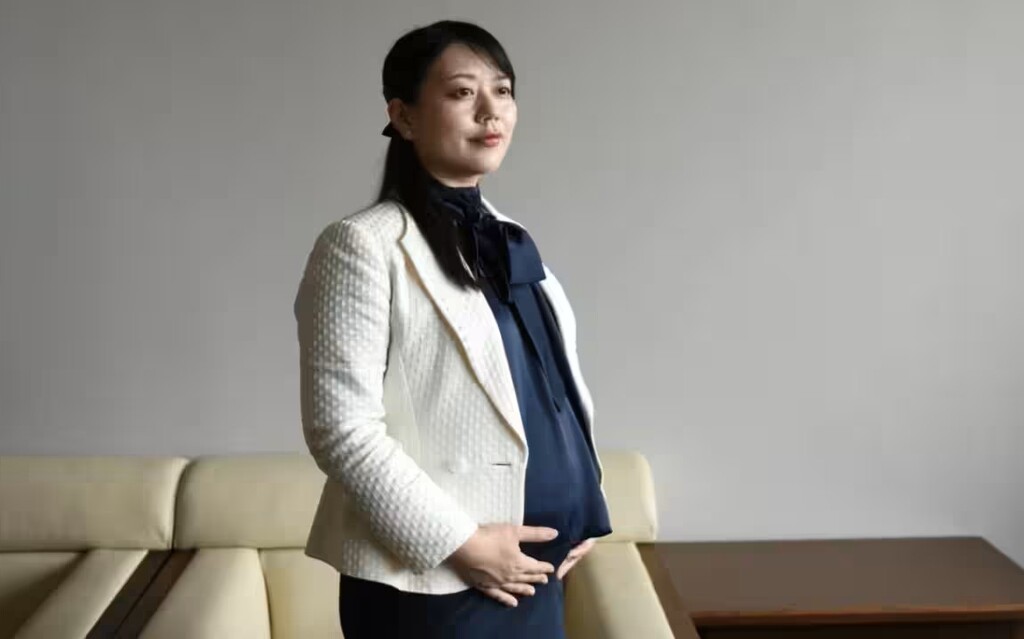
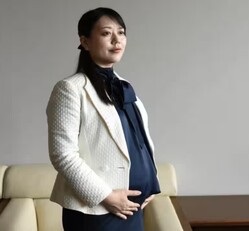
Shoko Kawata, the mayor of Yawata City, Kyoto Prefecture, who sparked a national debate earlier this year by becoming Japan's first sitting mayor to take maternity leave, has been named to TIME Magazine's TIME100 Next list of the world's most influential rising stars. Kawata, 36, gave birth to her first child on September 15.
Her decision to take leave drew both strong public support and sharp criticism, with detractors calling it irresponsible and some suggesting she should have either delayed having a child or resigned.
Kawata dismissed the criticism before giving birth, saying she enjoys her job and believes now is the right time to start a family. Her inclusion on the TIME100 Next list has been seen as international recognition of the broader significance of her decision for women in Japanese public life.

Nvidia has introduced the Open Agent Safety Platform, a security system designed to set boundaries on AI agent activity, monitor behavior, and intervene if suspicious or unauthorized actions are detected.
The announcement comes amid growing calls for improved AI safety following incidents in which AI agents bypassed security controls and gained unauthorized access to external systems.
CEO Jensen Huang said AI's potential for society can only be realized if safety is addressed.
Separately, Nvidia announced an expansion of its share repurchase program by $150 billion to a total of $235 billion, which US media described as a record increase of its kind for an American company.
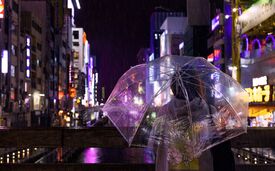
Central Tokyo recorded 34 consecutive days of rain on Tuesday, the longest such streak since records began, surpassing the previous record of 33 days set in 2019. Precipitation has continued since August 27, driven by approaching typhoons, a stalled autumn rain front, and a low-pressure trough.
The heaviest single-day total during the streak was 156 millimeters on September 21, with cumulative September rainfall reaching around 629 millimeters — approximately three times the monthly average. Rain also fell across wide areas of eastern and western Japan on Tuesday, with over 30 millimeters recorded in one hour in Fukui Prefecture. The wet weather is expected to persist mainly in eastern Japan through around Thursday.
McDonald's Japan suspended sales of ten beef patty products across all 91 of its Hokkaido stores on the evening of September 30 after discovering that patties that may not meet quality standards had been delivered to stores in the prefecture. Affected items included the hamburger, bacon lettuce burger, and Big Mac. The company said no health problems had been confirmed, was working to secure alternative inventory, and aimed to resume full sales on Saturday. McDonald's Japan apologized to customers and pledged to ensure thorough quality control while investigating how the non-compliant patties entered the supply chain. Products not containing the affected beef patties continued to be sold as usual during the suspension period.
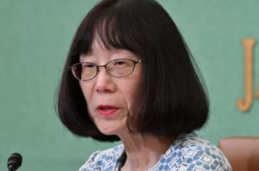
A group of Japanese lawyers, former students of International Criminal Court President Tomoko Akane, has submitted a petition bearing nearly 175,00 signatures to the Japanese government calling on it to formally oppose US sanctions against the court's leadership and seek their withdrawal. The sanctions, imposed by the Trump administration in August, include a freeze on Akane's US assets and were described by Washington as a response to what it called the court's abuse of authority. The lawyers presented the petition and a letter of request to Deputy Chief Cabinet Secretary Masanao Ozaki, who confirmed Japan consistently supports the ICC and values the rule of law, and said the government would deal with the matter sincerely. Group members described the response as significant and said they were grateful for the public support gathered online.
Japan's Environment Ministry began its first nationwide survey of animal cafes in September, examining the number of establishments, species kept, housing conditions, and visitor contact practices. The scrutiny comes after years of documented welfare and hygiene concerns. A 2025 study of 79 exotic animal cafes across seven prefectures found poor welfare standards across all categories assessed, with nocturnal owls frequently tethered in full customer view without access to water. Investigations of otter cafes found none provided recommended water volumes, and many kept the semi-aquatic animals in isolation. A World Wildlife Fund Japan study of 25 Tokyo-area wildlife cafes found over 1,700 animals, with nearly two-thirds of taxonomic groups including CITES-listed endangered species. Pathogenic bacteria including E. coli and salmonella were detected at multiple facilities, and only 14 of 25 had handwashing stations.
New regulations requiring companies to actively protect employees from abusive customers took effect in Japan on October 1 under a revision of the Labor Policy Promotion Law. Customer harassment is defined as behavior exceeding socially acceptable norms, including unreasonable demands, forcing employees to kneel on the floor in apology, and shouting or other intimidation. One hotel described how a guest threatened negative online reviews in order to force an apology; in a bus incident, a man halted services for several minutes with abusive behavior toward the driver. Companies are now required to establish clear response policies, prevent harassed workers from facing situations alone, set up consultation services, and provide psychological support. Firms that fail to comply risk having their names made public. The law codifies protections that many businesses had already begun implementing independently.
Japan raised the permanent residency application fee twentyfold to 200,000 yen from October 1, prompting long lines at immigration offices — including waits of over seven hours at Tokyo's main bureau — as applicants rushed to beat the increase. New requirements also took effect simultaneously, including stable income at or above the national average household income of 5.75 million yen, pension enrollment, and Japanese language ability. The changes are part of a broader immigration policy overhaul under Prime Minister Takaichi, which also saw a fivefold visa fee increase in July — the first in 50 years. Japan's foreign resident population surpassed 4.12 million at the end of 2025, a record 9.5 percent increase, but growing public anxiety over immigration has fueled the policy tightening alongside ongoing labor shortage pressures.
Kazakh race walker Yasmina Toxanbayeva was stripped of her women's marathon gold medal at the Aichi-Nagoya Asian Games after World Athletics ruled she had been wearing unsanctioned footwear during the race, which she completed in three hours, 22 minutes, and 20 seconds — nearly four minutes ahead of the field. Technical officials confirmed athletes must wear only shoes approved on World Athletics' official platform, and Toxanbayeva's were not listed. Her appeal to the jury was unsuccessful. China's Danzengquzong was upgraded to gold, compatriot Ma Li to silver, and Japan's Yukiko Umeno retained her bronze. Toxanbayeva posted a message on social media thanking supporters who fought alongside her until the end.
A female Asian black bear approximately 70 centimeters long was put down in western Tokyo on September 28 after being caught in a trap near residential homes in the Otsumachi district of Hachioji City — the first emergency shooting of a bear authorized in Tokyo, city officials said. The bear was trapped near a mountain farm around 3:30 p.m., with houses approximately 100 meters away. Hachioji Mayor Kazuo Shiyake authorized the emergency shooting shortly after 5 p.m. under provisions allowing local governments to act at their own discretion to prevent risk to human life. The operation was conducted around 5:30 p.m. City officials said they would notify related authorities and residents and share information on the incident.
A deputy priest at Myoenji temple in Hiratsuka, Kanagawa Prefecture, apprehended a theft suspect himself after spotting a recurring pattern in the temple's security camera footage — the same man appearing at the same time each night to steal from offering boxes. The priest maintained a personal watch and intercepted the man mid-theft shortly after midnight on September 27. Police arrested 47-year-old Noboru Kato on suspicion of stealing 1,500 yen and are investigating whether he was responsible for five previous thefts at the temple. The deputy priest had also called police earlier in the month after security footage showed two masked individuals entering through a gap in the hedge, though nothing was taken in that incident.
Domestic soy sauce shipments in Japan fell to 670,159 kiloliters in 2025 — the lowest level in 75 years and roughly half the peak recorded in 1973 — as dietary westernization and a preference for convenient pre-made condiments reduced household demand. Ready-to-use products such as tsuyu soup base and tare sauces have absorbed much of what was previously done with raw soy sauce at home. Exports, however, grew 9.6 percent in 2025 to around 52,000 kiloliters, offering some offset to domestic decline. Japan's soy sauce industry association is supporting small and medium-sized producers in expanding overseas and has pledged to strengthen export frameworks, while domestically focusing promotional efforts on younger consumers.
Noriyuki Higashiyama, president of Smile-Up Inc. — the renamed successor to the once-dominant Johnny & Associates talent agency — has announced he will step down when his term expires at the end of September. Higashiyama, a former entertainment industry veteran, stressed his departure does not signal an end to the company's commitment to compensating victims of sexual abuse by late founder Johnny Kitagawa. Chief compliance officer Masayuki Yamada will assume the presidency while retaining his current role. As of Monday, the company had received 1,047 compensation claims, paid out to 578 individuals, and informed 231 they did not qualify. The agency, which plans to close once compensation is complete, came under intense public scrutiny following a March 2023 BBC documentary featuring accounts of abuse by Kitagawa, who died in 2019.


Instead of scrolling and reading, you'd prefer to listen to my news briefs, in short-form podcast episodes! Twice weekly, hear what I've found interesting on Japan. You can access the podcast directly on Podbean, or on a number of other podcast platforms, including iTunes, YouTube, Amazon, Spotify and more!
A companion podcast to theTokyoBill news brief, each Saturday I release a single story...a fuller exploration of a subject I find interesting I hope you find worthy of your time. On various platforms, including SoundCloud and TuneIn Radio.
theTokyoBill weekly -- stories on Japan, told from Japan :)

Two members of North Korea's delegation to the Aichi-Nagoya Asian Games are reportedly seeking asylum in Japan, according to South Korea's Monthly Chosun magazine, citing a source connected to Japan's Cabinet Intelligence and Research Office.
The two individuals, whose identities and roles within the roughly 180-member delegation have not been disclosed, reportedly expressed a preference for asylum in Japan rather than South Korea and communicated their intention not to return home.
It remains unclear whether the reported outreach will result in a formal defection. North Korea's delegation to the Games includes Sports Minister Kim Il-guk. Reuters was unable to immediately reach Japanese government officials for comment due to a national holiday.

Image via Tsvaso Trust
An international research team including Iwate University has identified the specific chemical compounds that trigger cats' Flehmen response — the open-mouthed, dazed expression cats adopt after sniffing urine — and found they allow cats to distinguish individual identity. The team isolated 13 types of branched-chain fatty acids in cat urine, including newly discovered variants, and confirmed that exposure to these compounds alone triggered the Flehmen response.
Researchers concluded that cats identify each other based on the specific type and combination of these fatty acids, describing cat urine as functioning like a scented business card. The findings were published in Current Biology and are expected to inform future research into marking behavior in dogs and other animals.

Image via PR Times
Japan's oldest record company has unveiled an AI-generated enka singer named Hikari Kodama, whose voice and visual appearance were created entirely using artificial intelligence, as part of a new label called Neo Kobushi. Announced by Nippon Columbia on September 19, the project aims to bring AI technology into one of Japan's most traditional musical genres, with Hikari Kodama's performances featuring the sustained vocals and distinctive kobushi ornamentation that define enka.
The label also plans to release songs where AI contributes to both lyrics and composition. The project's producer said enka needed to embrace bold experimentation to survive, adding that encountering new technologies and influences was essential if the genre was to endure for another century.
Family members of Japanese citizens abducted by North Korea visited Washington to appeal for renewed US support in resolving the decades-long crisis, meeting with government officials and lawmakers amid growing concern that aging relatives may not live to see the abductees return. Yokota Takuya, whose sister Megumi was abducted as a junior high school student, said he showed American officials photos of his 90-year-old mother. Iizuka Koichiro, whose mother was taken when he was one year old, said he fears the issue will be forgotten if families stop speaking out. The meetings came as US President Trump expressed willingness to hold a summit with North Korean leader Kim Jong Un before year-end. The Japanese government says 12 of the 17 confirmed abductees remain unaccounted for.
Police in Tsukuba City have arrested five people, including teenagers, for allegedly stabbing a 28-year-old executive at a local civil engineering firm multiple times in the back and abdomen in the early hours of September 22, leaving him unconscious with punctured lungs and in critical condition. The victim called emergency services from his apartment after the attack. All five suspects were employees of the same company as the victim, and investigators are working on the theory that a workplace or employment dispute triggered the assault. The group includes 29-year-old scaffolding worker Kengo Maruyama and several younger individuals. The victim's condition remained critical at the time of reporting.
Family Mart has released a recruitment promotional video starring Lady Gaga, filmed at a studio-built Family Mart replica in Los Angeles and set to her song Killah. Shot in black and white with the chain's green and blue branding in color, the video shows Gaga working a convenience store shift in a futuristic version of Family Mart's newly introduced employee uniform, ending with her asking in Japanese whether viewers want to work at Family Mart. Gaga mentioned in a post-filming interview that she has visited Family Marts during trips to Japan and is a fan of the chain's Famichiki boneless fried chicken. The video will air as a television commercial in Japan and play inside stores as part of the chain's broader recruitment push amid Japan's ongoing labor shortage.
Japan's beer taxation system is undergoing its most significant transformation in decades, with a liquor tax revision taking effect October 1 unifying the rates on conventional beer, happoshu, and third-category beer at approximately 54 yen per 350-milliliter can. Beer taxes will fall by around 9 yen per can while happoshu and third-category alternatives will rise by around 7 yen, effectively eliminating the price advantage that drove decades of lower-malt and alternative-ingredient brewing innovation. Consumers rushed to stockpile cheaper alternatives ahead of the change, with some retailers reporting a fourfold increase in inventory. Analysts expect consumer preferences to shift toward conventional beer, with manufacturers reconsidering product lineups, craft beer potentially gaining appeal, and new market entrants including home improvement and drugstore chains already competing on price.
Typhoon Dujuan's death toll has risen to eleven — seven in Chiba Prefecture and four in Kanagawa — with three people still missing as recovery efforts continue days after the storm struck. More than 10,000 homes in Chiba remained without power on Friday, with TEPCO warning outages could persist as landslides and fallen trees blocked access to damaged infrastructure. Around 2,700 households also lost running water. Levees at Lake Imbanuma in northern Chiba were breached, flooding homes and rice paddies across a wide area, with authorities aiming to complete emergency drainage within a week. A second typhoon approaching the region added urgency to recovery efforts. Residents without power or water described relying on solar panels, paper plates, and water distribution points to manage basic needs.
A Kyoto University-led research team has successfully treated chimpanzees infected with hepatitis C virus during pharmaceutical research conducted 25 to 43 years ago, using drugs originally developed for humans based partly on those very experiments. Of eight infected chimps treated at Kyoto University's Kumamoto Sanctuary, six were confirmed virus-free. Three of those six were found to have developed liver cancer before treatment began, and two subsequently died. The remaining two chimps did not respond to treatment, likely due to drug-resistant viral mutations. The crowdfunded treatment cost around 50 million yen. Researchers described it as the first case globally of former animal research subjects receiving human therapeutic drugs purely for their own benefit, and expressed hope the findings would prompt treatment for infected chimps at facilities overseas.
Real estate giant Mitsui Fudosan has broken ground on a major redevelopment project at the British Library in central London, its largest single investment in Europe at a total cost of around 1.1 billion pounds. The new complex — eleven stories above ground with one below — will be built within the library's premises and is scheduled for completion in 2032. It will include event spaces and rental laboratories, with the British government aiming to attract pharmaceutical and medical technology firms to the site. The location near King's Cross Station offers strong transport links to Cambridge and Oxford and sits in an area already home to major pharmaceutical and AI companies.
Japanese Prime Minister Sanae Takaichi has traveled to New York to address the United Nations General Assembly for the first time as prime minister, with bilateral talks expected with US President Donald Trump on the sidelines. Speaking before departure, Takaichi said she would highlight North Korea's abductions of Japanese citizens, climate change, the rule of law, and UN reform, while conveying Japan's intention to play a leading role in promoting a free and open Indo-Pacific. She also cited energy supply chain resilience, cooperation with the Global South, and AI governance as key themes. Takaichi indicated she would coordinate views with Trump ahead of his planned summit with Chinese President Xi Jinping.
Typhoon Dujuan struck eastern Japan at the start of the three-day silver week national holiday, killing at least four people, leaving around 60,000 households without power, and prompting evacuation instructions for nearly two million people. Chiba Prefecture was among the hardest hit, recording two deaths and widespread flooding, with one city receiving nearly 38 centimeters of rain in 24 hours — a record and more than a typical September total. One man in Sodegaura was killed by a landslide while operating a digger to clear an earlier slip. Deaths also occurred in Kanagawa Prefecture when homes collapsed. ANA and JAL combined to cancel over 270 flights, JR East suspended rail services, and events including the Rock in Japan festival final day and extra Tokyo Game Show sessions were scrapped. The Asian Games in Nagoya continued with minimal disruption.

Heritage Auctions is staging a free-admission pop culture exhibition in Harajuku, Tokyo from September 18 through October 27, featuring over 500 items valued at more than $15 million. The centerpiece is the actual screen-used lightsaber wielded by Darth Vader in The Empire Strikes Back and Return of the Jedi, displayed alongside props from across the Star Wars saga including hilts used by Ewan McGregor, Samuel L. Jackson, and Daisy Ridley.
The exhibition also includes screen-worn costumes from The Walking Dead, ultra-rare Pokémon cards — among them a PSA Gem Mint 10 Shining Mew promo — vintage Magic: The Gathering cards, factory-sealed classic video games, and game-worn sports uniforms. Heritage Auctions describes it as the largest public display of lightsabers ever staged.

One hundred participants will stage a nighttime ninja battle at Yono Park on the border of Iga, Mie Prefecture, and Koka, Shiga Prefecture, on October 3, reenacting the Second Tensho Iga War of 1581 in an event titled Shinobi-Youchi 2026.
Fifty participants representing each side will use strategy, sponge swords, and light-based elimination systems to compete across two rounds in the dark. Registration reached capacity quickly, with a waiting list now in place. Participation fees start at 5,000 yen, with costume rental available for 1,000 yen.
In a modern twist, the mayor of the losing city must promote the winning city on social media — adding genuine civic stakes to a battle that already carries 400 years of historical rivalry.

Japan's centenarian population has topped 100,000 for the first time, with the health and welfare ministry recording 107,677 people aged 100 or older as of September 1 — a record high for the 56th consecutive year, up nearly 8,000 from the previous year. Women accounted for around 88 percent of the total.
The oldest person is 114-year-old Kishimoto Fuyo of Kyoto City, while the oldest man is 112-year-old Kato Hikaru of Kumamoto City. Shimane Prefecture recorded the highest concentration of centenarians for the fourteenth consecutive year.
When Japan enacted its foundational elderly welfare legislation in 1963, the country had just 153 centenarians. The number crossed 10,000 in 1998 and 50,000 in 2012 before reaching this latest landmark.
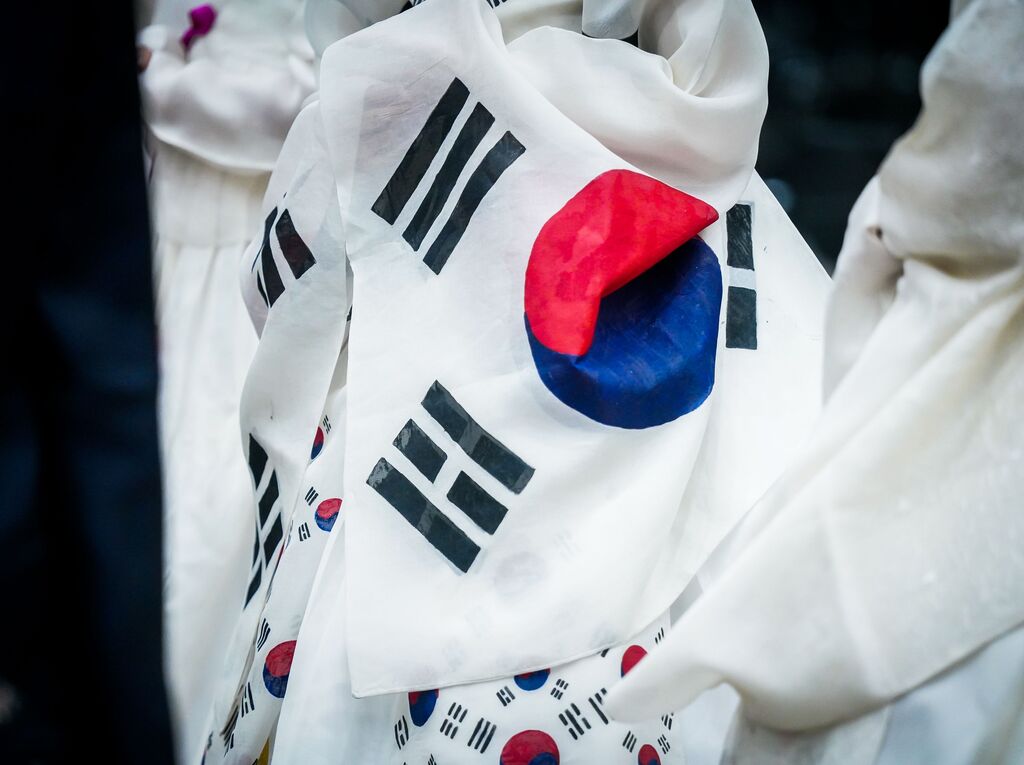
Two separate controversies involving Korea and Japan cast a shadow over the early stages of the Aichi-Nagoya Asian Games. Before a men's hockey match between South Korea and Bangladesh, North Korea's national anthem was mistakenly played instead of South Korea's, with venue staff believed to have selected the wrong audio source. Separately, South Korea's top sports body filed an official complaint with the Games organizing committee and the Olympic Council of Asia after a person dressed as Hideyoshi Toyotomi — the Japanese warlord behind the 16th-century invasions of Korea — appeared at a welcome ceremony. The organizing committee said the appearance was not intended to endorse any historical figure, while South Korean officials called it regrettable and demanded assurances it would not recur.
Via Kyodo News and Kyodo News
Researchers at the World Institute of Kimchi in South Korea have found that a lactic acid bacterium derived from kimchi can bind to nanoplastics under gut-like conditions and significantly increase their excretion from the body. In laboratory tests, the strain maintained an adsorption rate of 57 percent under simulated intestinal conditions — far higher than a reference strain, which dropped to just 3 percent. In germ-free mouse experiments, animals given the probiotic showed more than double the nanoplastic levels in feces compared to the control group, suggesting the bacterium may help carry nanoplastics out of the body before they accumulate in organs. Researchers described the findings as an early-stage but promising biological approach to addressing nanoplastic contamination, a growing public health concern.
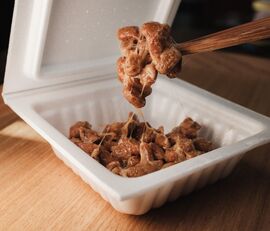
A study conducted jointly by Mizkan Holdings and Kagoshima University has found that older adults who eat natto at least twice a week show significantly lower rates of mild cognitive impairment and depressive symptoms. Analyzing health checkup data from 616 adults aged 65 and over in Tarumizu, Kagoshima Prefecture — a region with high natto consumption — researchers found the likelihood of both MCI and depression was around 37 percent lower among frequent natto eaters than among those who ate it less than twice a week. Mizkan cautioned that the study was based on a single year of data and that further research is needed before any causal relationship or preventive effect can be confirmed. The company said it will continue investigating the findings.
Starbucks is exploring the sale of a majority stake in its Japan business, which spans nearly 1,900 stores — around 9 percent of its global footprint — in a potential deal valued at around $3 billion. The company took full control of the Japan operation in 2014 by buying out long-time partner Sazaby League for around $914 million. The review is part of a broader restructuring under CEO Brian Niccol, who has been closing stores and cutting corporate roles in North America to restore profitability. Starbucks has solicited pitches from financial advisers and is reportedly open to selling a controlling interest, with a formal process potentially beginning in the fourth quarter. The company described Japan as a strong market with deep brand affinity built over 30 years.
Eastman Kodak has overtaken Canon as Japan's top-selling camera brand by sales volume for fiscal 2025, ending a Japanese company's two-decade dominance of the market. The turnaround was driven by JK Imaging, the US holder of the Kodak manufacturing license, which filled a gap in the affordable compact digital camera segment — priced at roughly 20,000 to 30,000 yen — after smartphone competition drove Japanese makers out. Generation Z consumers are drawn to the slightly blurred, muted aesthetic that point-and-shoot digitals produce, valuing the feel of authenticity over resolution. Canon has responded by increasing production capacity by 50 percent in both 2025 and 2026 and developing analog-style concept cameras. Ricoh also revived its Pentax film camera line in 2024 after a 21-year break, citing sustained demand from younger buyers.
At the 2025 APEC summit in Gyeongju, South Korea, Chinese President Xi Jinping held separate bilateral meetings with Canadian Prime Minister Mark Carney and Japanese Prime Minister Sanae Takaichi — encounters that subsequently took dramatically different trajectories. With Canada, the meeting became a springboard for a January 2026 prime ministerial visit to Beijing and a new strategic partnership covering energy, trade, and people-to-people ties, alongside significant movement on electric vehicle and canola tariff disputes. With Japan, an initial agreement to pursue constructive and stable ties collapsed within days when Takaichi's parliamentary remarks about Taiwan's security triggered one of the sharpest China-Japan diplomatic crises in years. By this month, China had introduced punishing import measures on Japanese semiconductor materials. The contrast illustrated how economic incentives drove Canada toward engagement while Japan's security concerns pushed the relationship toward confrontation.
Traditional corporate racketeers — known as sokaiya — are declining in Japan, but shareholder meetings remain tense as a new generation of disruptive participants has emerged. During the 2026 meeting season, the Metropolitan Police Department deployed around 2,000 officers cumulatively to guard against illegal activities. While sokaiya once extorted companies by threatening to cause scenes at annual meetings, today's disruptors include aggrieved former employees, YouTubers seeking publicity, and individuals making persistent unreasonable demands. Companies face a more significant long-term challenge from activist shareholders — funds and investors who analyze performance, demand restructuring, push for independent directors, and submit formal shareholder proposals. One corporate official described activists as more troublesome than traditional complainers precisely because their demands are principled and harder to dismiss outright.
A growing number of restaurants and medical clinics across Japan are introducing paid priority entry systems as consumers increasingly embrace what is known in Japanese as taipa — the pursuit of time efficiency. Restaurant queue-skipping service SuiSui, now adopted by around 100 outlets nationwide, allows customers to purchase priority entry via smartphone QR code at prices starting from around 1,000 yen, with fees fluctuating based on demand. Medical clinics are similarly offering priority appointment slots for fees as low as 500 yen. A 2026 Seiko Group survey found that around 32 percent of respondents had paid to save time, rising to nearly 48 percent among those in their 20s, with waiting in line at theme parks and popular restaurants the activities people most wanted to avoid.
Tokyo Metropolitan Police have arrested a Colombian national accused of stealing a rolling suitcase containing 137 pieces of jewelry — including diamonds and rubies — worth around 39 million yen from a jewelry exhibition at Tokyo Big Sight in Koto Ward in July. Ernesto Gutierrez Torres allegedly seized the carry-on case during a brief window when a vendor's store clerk became distracted while attending to a customer during closing preparations. Torres denied the allegations upon arrest. The theft, involving a single opportunistic act in a moment of inattention, resulted in one of the largest jewelry thefts recorded at an exhibition venue in Tokyo in recent years.
A Tokyo District Court ordered a ramen restaurant operator to pay around one million yen to a Myanmar woman who worked under the Specified Skilled Worker visa after finding the company violated the Labor Standards Act by illegally deducting housing deposits, key money, and appliance costs from her wages. Her first paycheck was zero yen, and she received only around 40,000 yen across her first three months. The presiding judge said she had been placed in an extreme situation and found the company had used its superior position to infringe on her personal interests. Despite knowing the visa system makes it difficult for workers to change employers, the company also sought her immediate eviction from company housing and her dismissal.
A Tokyo District Court has sentenced former massage parlor owner Masayuki Hosono, 52, to five years in prison and fined him one million yen for conspiring with a Thai manager to have a then-12-year-old Thai girl provide sexual services to male customers between June and August last year. The judge rejected Hosono's defense that he was unaware of the girl's age, finding he made no attempt to verify her identification despite being told she was a 20-year-old. The court also found the girl had been instructed to work in Japan to repay her mother's debt and had come to Japan unable to refuse due to violence she faced. The Thai manager has been separately indicted on similar charges.

Image via Tokyo Weekender
On September 10, Japan's annual Sewer Day, the city of Hirakata in Osaka Prefecture marked the occasion by offering four decommissioned iron manhole covers for sale at 3,000 yen each, alongside four retired utility box covers at 2,000 yen — the first time utility covers had been included. Applications were accepted through September 30, with winners selected by lottery in cases of multiple applicants.
Each manhole cover measured roughly 60 centimeters across and weighed around 40 kilograms, with buyers required to collect and transport their purchases themselves. Japan's manhole covers have become cultural objects in their own right, with over 1,300 unique decorative designs now represented in a free trading card series distributed to collectors across the country.

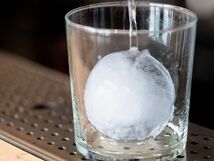
Kuramoto Ice, a century-old company in Kanazawa, produces ultra-clear "junpyo" ice blocks prized by bartenders worldwide, including a Singapore bar that imports about 900kg annually. Using a slow-freezing method adapted from a US technique, workers freeze water for two to three days, removing impurities and stirring to eliminate air bubbles, producing dense, clear ice that melts slowly and dilutes drinks less than standard cubes. Exports, which began in 2019, have more than doubled sales despite premium pricing of up to 200 yen per cube.
The company's fifth-generation head says he was inspired to reach American bars after seeing poor-quality ice used in cocktails in Las Vegas. Japanese bartenders view precise ice handling as an essential craft skill.

The city of Kuji in Iwate Prefecture held its traditional Hiraniwa bullfighting competition, the only event of its kind in the Tohoku region, dating back to the Edo period when locals pitted their salt-carrying bulls against each other.
This year's event featured 13 bouts with bulls aged two to twelve, urged on by shouting handlers as the animals locked horns. Every match ends in a tie so no bull experiences defeat, and the crowd applauded warmly throughout.
A local bullfighting group official said the tradition reflects a longstanding bond between the community and its animals, expressing hope the event will continue to showcase that connection for years to come.
A survey by air conditioner maker Daikin Industries across 12 cities worldwide found that Tokyo residents ran their air conditioners at home for the longest average daily period, at around 14 hours and 12 minutes during May and June — slightly ahead of Houston and well above the 12-city average of around 10 hours. Around 94 percent of Tokyo respondents said their city had become hotter over the past five years, the second-highest figure behind Bangkok. Tokyo's average temperature from June to August rose by around 2.3 degrees Celsius between the 2018–2020 and 2023–2025 periods, the largest increase among surveyed cities. Around 30 percent of Tokyo respondents said they keep their air conditioning running all day.
A Ministry of Internal Affairs and Communications survey has found that people who believe they can identify AI-generated images tend to have lower actual digital literacy than those who acknowledge uncertainty. Of 630 respondents who said they could spot AI content, 61.5 percent answered all five questions in a practical identification test incorrectly — a higher failure rate than among respondents who admitted they probably could not spot such content, who had incorrect-answer rates in the 30 percent range. The survey of around 5,600 people also found that over 80 percent acknowledged they may have encountered fake or misleading information online, and over 56 percent believed they might be deceived by it.
The annual Programme for International Student Assessment rankings show a decline for Japanese students’ performance, coming in fourth in reading and fifth in both science and mathematics in the 2025 assessment, but average scores having declined across all three domains compared to 2022. Educators and officials attribute the reading decline partly to habits formed during the COVID-19 pandemic, when children spent significantly more time on smartphones and social media. Reading fluency — measured by correctly identifying whether short sentences make sense — fell from around 92 to 93 percent in previous cycles to 89.9 percent. A 2025 survey found around 56 percent of high school students read less than one book per month. The education ministry plans curriculum guideline revisions from 2030, while experts warn that fundamental reading and reasoning skills must be strengthened before digitalization is accelerated further.
Ransomware attacks in Japan hit a record high of 123 confirmed cases in the first half of 2026, up seven from the same period a year earlier, with restoration taking more than a month in over half of all incidents and nine cases resulting in complete business suspensions, according to National Police Agency data. Damage exceeded 10 million yen in around 60 percent of cases, and 31 incidents involved major companies. The NPA also detected nearly 14,000 cases of suspicious network access per day — up around 50 percent year-on-year — believed to include vulnerability probing ahead of ransomware attacks. Financial losses from online fraud totaled around 175 billion yen in the period, up 45 percent, driven largely by victims being tricked into transferring money via online banking services.
Four Japanese scientists won Lasker Awards — widely considered the most prestigious medical prizes in the United States — with the awards ceremony scheduled for New York on September 17. University of Tsukuba professor Masashi Yanagisawa shared the Basic Medical Research Award with a Stanford colleague for discovering orexin, a substance involved in sleep regulation and narcolepsy, contributing to the development of new therapeutic drugs. Three researchers from Chugai Pharmaceutical — Kunihiro Hattori, Takehisa Kitazawa, and Tomoyuki Igawa— received the Clinical Medical Research Award for inventing an antibody treatment for hemophilia A. Separately, former Nagoya University researcher Leonard Chavas was part of the international team awarded the Ig Nobel Prize in chemistry for discovering that cockroach milk contains around three times the energy density of cow's milk, using synchrotron radiation X-ray technology to analyze protein crystals inside embryonic cockroaches.
Via NHK and the Nagoya University website
Japan has lodged a formal protest over the United Nations' newly adopted Equal Earth world map projection after finding that it depicts the disputed Kuril Islands — known in Japan as the Northern Territories — as Russian territory, contradicting Tokyo's longstanding sovereignty claim over the four southernmost islands seized by Soviet forces at the end of World War II. Japan supported the UN resolution backing the new projection, which was adopted on September 4 with 164 votes in favor, but objected to the specific depiction and demanded a correction through diplomatic channels. Government spokesperson Minoru Kihara said Tokyo needed to prevent misconceptions about its territories from spreading. The dispute comes weeks after Putin's first visit to the islands prompted Japan to summon the Russian ambassador and drew a sharp rebuttal from Moscow.
During the "Matsuri Erekoccha Miyazaki" festival, 682 participants simultaneously poured drinks from cans or bottles into cups within five seconds of a starting signal, setting a new Guinness World Record for the feat. The attempt surpassed the previous record of 545, set in Japan in 2025, after organizers spent time recruiting enough participants. The event took place on a stage outside a department store, with an official adjudicator confirming the timing before the final count was announced two hours later during the festival's finale, prompting cheers from the crowd. Participants included both adults and children, with one young student saying the wait was worth it for the shared community celebration.
Sushi chain Kura Sushi has canceled its collaboration campaign with the popular "Chiikawa" manga franchise after discovering that staff had embezzled promotional merchandise meant for customers. The campaign, which was to run through the end of September and offer items like figures and badges, was cut short after investigators found large quantities of the goods being resold on an online flea market. Suspicions of employee involvement spread on social media, prompting the company to launch an investigation and issue a public apology, though it has not disclosed further details about where the theft occurred. The collaboration had coincided with an anime adaptation of Chiikawa, a globally popular character franchise that began as social media illustrations in 2020.
The Imperial Household Agency announced that a cafe and gift shop will open in the East Gardens of the Imperial Palace in Tokyo, the first such commercial facility ever established within the palace grounds. Housed in a newly built single-story wooden structure spanning about 2,800 square meters, the roughly ¥7.5 billion project began construction in 2025 and sits near the Museum of the Imperial Collections. It will be run by Tokyo coffee company Sarutahiko Coffee and feature palace-themed menu items, plus a rooftop terrace with scenic views. An adjoining exhibition on the Imperial family's history and activities will include multilingual signage, reflecting the site's growing popularity with foreign tourists.
Sapporo Breweries is moving some production from Canada to the United States after Washington imposed 50% tariffs on Canadian beer exports, part of a broader push to revive its North American business. The company, whose flagship brand is the top-selling Asian beer in the US, is considering new West Coast manufacturing capacity and will relocate Canadian-made non-alcoholic beer production by early 2027. This follows a strategic overhaul after previous acquisitions like Stone Brewing and Anchor Brewing underperformed and were divested. Sapporo plans hundreds of billions of yen in investment through 2030 to boost profits, with growth targeted from US and Asian markets, including a new Southeast Asia venture with Carlsberg, as domestic demand faces long-term decline.
Tokyo Governor Yuriko Koike marks ten years in office with a milestone: births in the capital rose in 2025 for the first time in a decade, alongside a second straight year of more marriages. That momentum has continued into 2026, helping drive Japan's first nationwide first-half birth increase in eleven years. Koike credits a "children first" strategy that spans dating to parenting, including the AI-powered matchmaking app Tokyo Enmusubi, subsidies for egg freezing and epidural births, free childcare and school lunches, and campaigns encouraging paternity leave, which has surged since 2016. She frames the approach as building a supportive ecosystem rather than pressuring individual choices, and says Tokyo aims to keep leading before national policy catches up.

The late Japanese researcher Tokuji Unno has been posthumously awarded this year's Ig Nobel Prize in medicine for a 1977 study concluding that blowing each nostril separately is more effective than blowing both simultaneously.
The award was accepted on his behalf at a ceremony in Zurich — moved from the US this year amid tighter visa issuance under the Trump administration — by a colleague who described Unno as strict and sincere about research, adding he would have been very happy with the recognition.
The award marks the twentieth consecutive year in which at least one Japanese national has received an Ig Nobel Prize. Unno, a professor emeritus at Asahikawa Medical University, died in 2022 at the age of 89.

Police in Iwate Prefecture have arrested a 36-year-old man for the second time over the killing of hamsters, after his first arrest in July for the February deaths of around 20 animals was followed by a separate incident in late March involving around 30 more. The main suspect allegedly carried out the killings at love hotels in collusion with two different women, both of whom have also been arrested.

Police said his confiscated smartphone contained videos of the killings alongside text messages with one of the women that included planning messages such as "Where are we going to kill the hamsters and have fun?"
The suspect faces charges under Japan's animal protection laws, and police said they are investigating whether he may have committed additional similar acts.

The JS Chokai, Japan's first Maritime Self-Defense Force destroyer to be equipped with Tomahawk cruise missile capability, returned to its home port in Sasebo, Nagasaki Prefecture on Sunday following a successful live-fire test conducted in the Pacific Ocean off the US coast in July. The Chokai's return marks a significant operational milestone in Japan's acquisition of counterstrike capability, a major shift in defense posture permitted within the bounds of the country's pacifist Constitution.
All eight of the MSDF's Aegis-equipped destroyers are scheduled to be gradually fitted with Tomahawk capability. Japan has also begun receiving deliveries of long-range Joint Strike Missiles for its fighter jets and can already launch surface-to-ship guided missiles and hypervelocity gliding projectiles from SDF facilities on the Japanese mainland.
A survey by air conditioner maker Daikin Industries across 12 cities worldwide found that Tokyo residents ran their air conditioners at home for the longest average daily period, at around 14 hours and 12 minutes during May and June — slightly ahead of Houston and well above the 12-city average of around 10 hours. Around 94 percent of Tokyo respondents said their city had become hotter over the past five years, the second-highest figure behind Bangkok. Tokyo's average temperature from June to August rose by around 2.3 degrees Celsius between the 2018–2020 and 2023–2025 periods, the largest increase among surveyed cities. Around 30 percent of Tokyo respondents said they keep their air conditioning running all day.
A Ministry of Internal Affairs and Communications survey has found that people who believe they can identify AI-generated images tend to have lower actual digital literacy than those who acknowledge uncertainty. Of 630 respondents who said they could spot AI content, 61.5 percent answered all five questions in a practical identification test incorrectly — a higher failure rate than among respondents who admitted they probably could not spot such content, who had incorrect-answer rates in the 30 percent range. The survey of around 5,600 people also found that over 80 percent acknowledged they may have encountered fake or misleading information online, and over 56 percent believed they might be deceived by it.
The annual Programme for International Student Assessment rankings show a decline for Japanese students’ performance, coming in fourth in reading and fifth in both science and mathematics in the 2025 assessment, but average scores having declined across all three domains compared to 2022. Educators and officials attribute the reading decline partly to habits formed during the COVID-19 pandemic, when children spent significantly more time on smartphones and social media. Reading fluency — measured by correctly identifying whether short sentences make sense — fell from around 92 to 93 percent in previous cycles to 89.9 percent. A 2025 survey found around 56 percent of high school students read less than one book per month. The education ministry plans curriculum guideline revisions from 2030, while experts warn that fundamental reading and reasoning skills must be strengthened before digitalization is accelerated further.
Ransomware attacks in Japan hit a record high of 123 confirmed cases in the first half of 2026, up seven from the same period a year earlier, with restoration taking more than a month in over half of all incidents and nine cases resulting in complete business suspensions, according to National Police Agency data. Damage exceeded 10 million yen in around 60 percent of cases, and 31 incidents involved major companies. The NPA also detected nearly 14,000 cases of suspicious network access per day — up around 50 percent year-on-year — believed to include vulnerability probing ahead of ransomware attacks. Financial losses from online fraud totaled around 175 billion yen in the period, up 45 percent, driven largely by victims being tricked into transferring money via online banking services.
Four Japanese scientists won Lasker Awards — widely considered the most prestigious medical prizes in the United States — with the awards ceremony scheduled for New York on September 17. University of Tsukuba professor Masashi Yanagisawa shared the Basic Medical Research Award with a Stanford colleague for discovering orexin, a substance involved in sleep regulation and narcolepsy, contributing to the development of new therapeutic drugs. Three researchers from Chugai Pharmaceutical — Kunihiro Hattori, Takehisa Kitazawa, and Tomoyuki Igawa— received the Clinical Medical Research Award for inventing an antibody treatment for hemophilia A. Separately, former Nagoya University researcher Leonard Chavas was part of the international team awarded the Ig Nobel Prize in chemistry for discovering that cockroach milk contains around three times the energy density of cow's milk, using synchrotron radiation X-ray technology to analyze protein crystals inside embryonic cockroaches.
Via NHK and the Nagoya University website
Japan has lodged a formal protest over the United Nations' newly adopted Equal Earth world map projection after finding that it depicts the disputed Kuril Islands — known in Japan as the Northern Territories — as Russian territory, contradicting Tokyo's longstanding sovereignty claim over the four southernmost islands seized by Soviet forces at the end of World War II. Japan supported the UN resolution backing the new projection, which was adopted on September 4 with 164 votes in favor, but objected to the specific depiction and demanded a correction through diplomatic channels. Government spokesperson Minoru Kihara said Tokyo needed to prevent misconceptions about its territories from spreading. The dispute comes weeks after Putin's first visit to the islands prompted Japan to summon the Russian ambassador and drew a sharp rebuttal from Moscow.
During the "Matsuri Erekoccha Miyazaki" festival, 682 participants simultaneously poured drinks from cans or bottles into cups within five seconds of a starting signal, setting a new Guinness World Record for the feat. The attempt surpassed the previous record of 545, set in Japan in 2025, after organizers spent time recruiting enough participants. The event took place on a stage outside a department store, with an official adjudicator confirming the timing before the final count was announced two hours later during the festival's finale, prompting cheers from the crowd. Participants included both adults and children, with one young student saying the wait was worth it for the shared community celebration.
Sushi chain Kura Sushi has canceled its collaboration campaign with the popular "Chiikawa" manga franchise after discovering that staff had embezzled promotional merchandise meant for customers. The campaign, which was to run through the end of September and offer items like figures and badges, was cut short after investigators found large quantities of the goods being resold on an online flea market. Suspicions of employee involvement spread on social media, prompting the company to launch an investigation and issue a public apology, though it has not disclosed further details about where the theft occurred. The collaboration had coincided with an anime adaptation of Chiikawa, a globally popular character franchise that began as social media illustrations in 2020.
The Imperial Household Agency announced that a cafe and gift shop will open in the East Gardens of the Imperial Palace in Tokyo, the first such commercial facility ever established within the palace grounds. Housed in a newly built single-story wooden structure spanning about 2,800 square meters, the roughly ¥7.5 billion project began construction in 2025 and sits near the Museum of the Imperial Collections. It will be run by Tokyo coffee company Sarutahiko Coffee and feature palace-themed menu items, plus a rooftop terrace with scenic views. An adjoining exhibition on the Imperial family's history and activities will include multilingual signage, reflecting the site's growing popularity with foreign tourists.
Sapporo Breweries is moving some production from Canada to the United States after Washington imposed 50% tariffs on Canadian beer exports, part of a broader push to revive its North American business. The company, whose flagship brand is the top-selling Asian beer in the US, is considering new West Coast manufacturing capacity and will relocate Canadian-made non-alcoholic beer production by early 2027. This follows a strategic overhaul after previous acquisitions like Stone Brewing and Anchor Brewing underperformed and were divested. Sapporo plans hundreds of billions of yen in investment through 2030 to boost profits, with growth targeted from US and Asian markets, including a new Southeast Asia venture with Carlsberg, as domestic demand faces long-term decline.
Tokyo Governor Yuriko Koike marks ten years in office with a milestone: births in the capital rose in 2025 for the first time in a decade, alongside a second straight year of more marriages. That momentum has continued into 2026, helping drive Japan's first nationwide first-half birth increase in eleven years. Koike credits a "children first" strategy that spans dating to parenting, including the AI-powered matchmaking app Tokyo Enmusubi, subsidies for egg freezing and epidural births, free childcare and school lunches, and campaigns encouraging paternity leave, which has surged since 2016. She frames the approach as building a supportive ecosystem rather than pressuring individual choices, and says Tokyo aims to keep leading before national policy catches up.

The late Japanese researcher Tokuji Unno has been posthumously awarded this year's Ig Nobel Prize in medicine for a 1977 study concluding that blowing each nostril separately is more effective than blowing both simultaneously.
The award was accepted on his behalf at a ceremony in Zurich — moved from the US this year amid tighter visa issuance under the Trump administration — by a colleague who described Unno as strict and sincere about research, adding he would have been very happy with the recognition.
The award marks the twentieth consecutive year in which at least one Japanese national has received an Ig Nobel Prize. Unno, a professor emeritus at Asahikawa Medical University, died in 2022 at the age of 89.

Police in Iwate Prefecture have arrested a 36-year-old man for the second time over the killing of hamsters, after his first arrest in July for the February deaths of around 20 animals was followed by a separate incident in late March involving around 30 more. The main suspect allegedly carried out the killings at love hotels in collusion with two different women, both of whom have also been arrested.
Police said his confiscated smartphone contained videos of the killings alongside text messages with one of the women that included planning messages such as "Where are we going to kill the hamsters and have fun?"
The suspect faces charges under Japan's animal protection laws, and police said they are investigating whether he may have committed additional similar acts.

The JS Chokai, Japan's first Maritime Self-Defense Force destroyer to be equipped with Tomahawk cruise missile capability, returned to its home port in Sasebo, Nagasaki Prefecture on Sunday following a successful live-fire test conducted in the Pacific Ocean off the US coast in July. The Chokai's return marks a significant operational milestone in Japan's acquisition of counterstrike capability, a major shift in defense posture permitted within the bounds of the country's pacifist Constitution.
All eight of the MSDF's Aegis-equipped destroyers are scheduled to be gradually fitted with Tomahawk capability. Japan has also begun receiving deliveries of long-range Joint Strike Missiles for its fighter jets and can already launch surface-to-ship guided missiles and hypervelocity gliding projectiles from SDF facilities on the Japanese mainland.
Japan's Economic Security Minister Kimi Onoda is facing an election law controversy after weekly magazine Shukan Bunshun reported that an undeclared office in Okayama Prefecture, may have been used to coordinate her 2022 House of Councillors campaign. The report cites rent payments made on the day the election was announced, a social media video from the same day showing a campaign kickoff at the location, and testimony from sitting Setouchi city assembly members who said the office was used to coordinate campaign cars, collect letters of support, and store signs. Candidates in the Okayama constituency are permitted only one campaign office, with violations potentially carrying fines of up to 300,000 yen. Onoda's office rejected the characterization of the Setouchi location as a campaign office but did not directly address the assembly members' testimony.
A Tokyo restaurant owned by former mixed martial arts fighter Komeo has been suspended for seven days by Minato Ward after 78 people contracted salmonella poisoning from cold crab ramen served at the Azabu Juban Noryo Festival on August 22 and 23. Three victims required hospitalization before recovering. The suspension order covered September 3 to 9. Komeo, known during his combat career as the fighting chef, publicly apologized on X and said he was questioning whether to continue operating as a chef, adding he would suspend operations and face the incident from square one. Minato Ward mayor Ai Seike called on the operator to respond sincerely to victims and thoroughly overhaul hygiene management, with the ward pledging strict monitoring to prevent any recurrence.
Customs authorities blocked a record 19,568 shipments suspected of infringing intellectual property rights in the first half of 2026, a 12 percent increase from the same period a year earlier, driven by growth in cross-border e-commerce increasing the overall volume of import clearance applications. The Finance Ministry said the shipments contained counterfeit branded goods and other products violating IP rights. By category, seals and stickers saw the largest surge, jumping over 2,600 percent year-on-year to more than 4,000 cases, with the popular Bonbon Drop Stickers — known for their raised, glossy, transparent design — among the products involved. The record figures reflect both the scale of counterfeit goods trade and the increasing challenge customs authorities face in monitoring a rapidly expanding volume of small international parcels.
Akiyama Toyohiro, the first Japanese citizen to travel to space, has died at 84 at his home in Odai, Mie Prefecture. A veteran journalist with TBS, Akiyama was selected within the broadcaster to board a Soviet Soyuz spacecraft in December 1990, traveling to the Mir space station where he conducted experiments and broadcast live reports — famously opening one transmission with the question "Am I on air?" After leaving TBS in 1995 he relocated to Fukushima Prefecture, where he spent years engaged in organic farming before serving as a professor at Kyoto University of the Arts from 2011 to 2018. His journey made him a trailblazer for Japanese participation in space exploration and a distinctive public figure whose post-space life reflected a deliberate return to the land.
Prime Minister Sanae Takaichi has called on Russia to remove a newly unveiled statue in Khabarovsk depicting a Soviet soldier destroying a stone marker bearing Japan's chrysanthemum crest, describing the monument as completely unacceptable. Foreign Minister Toshimitsu Motegi called the statue's erection regrettable and not constructive for bilateral relations. The unveiling was timed to coincide with Russia's September 3 anniversary of its World War II victory over Japan, a date Russia renamed in 2023 to emphasize its defeat of what it calls militarist Japan. The incident follows Putin's recent visit to Japanese-claimed islands off Hokkaido and comes amid broader deterioration in Japan-Russia relations since Japan joined G7 sanctions against Moscow following the 2022 invasion of Ukraine.
A cross-party group of young Japanese lawmakers is being organized to visit China in September under the auspices of the Japan-China Friendship Parliamentarians' Union, in an effort to restore bilateral relations that have been frozen since Prime Minister Sanae Takaichi stated in the Diet last November that a possible war involving Taiwan could constitute a situation threatening Japan's survival — remarks that drew a sharp reaction from Beijing. Union chairman Hiroshi Moriyama confirmed China is making reciprocal arrangements for a delegation to meet the Japanese visitors. Lawmaker exchanges between the two countries have remained largely stalled since Takaichi's remarks, though Lower House member Shinichi Isa visited China in August and met with a senior Chinese Communist Party official, signaling a tentative thaw.
Japan's Ministry of Defense submitted a record fiscal year 2027 budget request of roughly 8.9 trillion yen on August 31, with the final figure widely expected to exceed 10 trillion yen for the first time after Finance Ministry review in late December. The request covers three pillars: new forms of warfare including AI, unmanned systems, and stand-off capabilities; sustained operations including Pacific sea-lane defense; and strengthening the defense industrial base. Around 160 entries remain unpriced pending revision of Japan's core security documents by year-end. Major items include 234 billion yen toward the GCAP next-generation fighter with the UK and Italy, 17 maritime surveillance drones, attack UAVs, laser and microwave counter-drone systems, and a new underwater-launched hypersonic missile. Officials acknowledged that yen weakness has eroded Japan's defense purchasing power significantly since the current five-year buildup plan was drafted in 2022.
University of Tokyo researchers have produced prototype building materials from dried and heat-pressed food scraps including banana peels, orange rinds, cabbage leaves, and onion skins, with the strongest specimen — made from Chinese cabbage — reaching roughly 18 megapascals in flexural strength, around 3.5 to 4 times a standard concrete benchmark of 5 megapascals. No petroleum resin was needed, as heat causes the scraps' sugars to soften and bind around plant fibres before hardening on cooling. The untreated specimens were made entirely from food-derived ingredients and tasted by the researchers. Significant limitations remain: the results come from a conference paper and preprint rather than peer-reviewed structural research, moisture significantly weakens uncoated specimens, and flexural strength does not translate directly to the compressive loads concrete typically bears. Practical near-term applications are likely decorative rather than structural.
Aditi Paudel, a 17-year-old high school senior in Tokyo born in Japan but raised partly in Nepal, has been appointed Japan's first ambassador to the World Literacy Foundation's global youth program, which connects around 900 young people from over 100 countries. She was recognized for her leadership, passion for literacy, and commitment to empowering young people, particularly around female access to education. Despite Japan's literacy rate of around 99 percent, Paudel draws on her experience between two countries — Nepal's literacy rate sits at around 76 percent, with a significant gender gap — to advocate for broader access to reading. She plans to donate books to lower-literacy countries in Asia and work with children with disabilities, arguing that literacy is not simply the ability to read but the key that unlocks human potential.
FamilyMart has announced its first full uniform overhaul in ten years, replacing traditional zip-up jackets with dark green T-shirts available in short and long-sleeve versions across its roughly 16,500 stores from September 1. Alongside the new look, the chain is allowing employees to choose their hair color freely and wear religious head coverings including the hijab. The company described the changes as reflecting changing times and diverse values. With around 13 percent of its roughly 200,000 store staff already foreign nationals, the relaxed standards are widely seen as a recruitment strategy amid Japan's worsening labor shortage — nearly 60 percent of convenience stores report being understaffed. The announcement coincided with Uniqlo's launch of new hijab styles as a permanent part of its Southeast Asian lineup, prompting broader discussion about diversity in Japanese retail.
Tokyo real estate developer Kasumigaseki Capital will offer new graduates joining in April 2027 a starting monthly salary of one million yen — nearly four times Japan's national average starting salary of around 262,000 yen — in a bid to recruit talent with expertise in entrepreneurship and artificial intelligence. Around 1,300 people applied for approximately 10 available positions, with candidates asked to pitch what they consider themselves best at. The company, whose employees currently earn an average annual salary of around 17 million yen, aims to introduce a recruitment model where starting pay reflects individual ability and market value rather than seniority. A senior executive said the one million yen figure is not exceptional by European or US standards, and expressed hope the approach would encourage Japanese companies more broadly to adopt ability-based pay to retain talent.
A revised enforcement ordinance under the Road Traffic Act took effect on September 1, lowering the statutory maximum speed on narrow residential roads without center lines from 60 to 30 kilometers per hour — the first reduction in the general road speed limit since the act took effect in 1960. The change covers approximately 70 percent of Japan's roughly 1.22 million kilometers of general roads. Data from the National Police Agency show that pedestrian fatality rates in vehicle collisions rise sharply with speed: below 30 kph the rate is under 1 percent, rising to 2.7 percent between 30 and 40 kph and 17.4 percent between 50 and 60 kph. The number of children and elderly people killed in residential road accidents rose for the first time in three years in 2025, reaching 315. Police plan to expand physical traffic-calming measures alongside the new limit.

Image via The Japan News
Yayoi Kusama, the Japanese avant-garde artist whose polka-dot sculptures, mirror installations, and pumpkin works made her one of the most internationally recognized artists of the twentieth and twenty-first centuries, died on August 14 at a Tokyo hospital at the age of 97 from multiple organ failure.
Born in Matsumoto, Nagano Prefecture in 1929, Kusama experienced visual and auditory hallucinations from childhood, transforming them into art. She relocated to the United States in 1957, where she gained recognition for paintings, sculptures, and provocative performances before returning to Japan in 1973.
She was awarded the Order of Culture in 2016 and opened her own museum in Shinjuku in 2017. A former curator recalled visiting her in hospital a year or two before her death and finding her still painting, convinced the work in front of her was the best she had ever done.

A typeface designer at Osaka-based font maker Morisawa has spent the past decade watching the UD Digital Textbook font — known as the miracle font — quietly transform the learning experiences of children with low vision and learning disabilities across Japan. Yumi Takata began developing the typeface in 2007 after meeting children whose volunteer caregivers were hand-copying enlarged textbooks because conventional fonts were too difficult to read.
After eight years of development, incorporating feedback from children with low vision and developmental dyslexia, the font was released in 2016. It features soft, rounded strokes that closely match handwritten characters, reducing confusion over hooks, sweeps, and stops.
By 2020 it had been adopted by four textbook publishers, and it is now also included in Windows 10 as standard. Takata said her vision of true universal design is a world where every student can choose a typeface suited to their individual needs.

Around 1,800 volunteers gathered in late August to help pull the keep of Hirosaki Castle in Aomori Prefecture roughly two meters toward its original position, using a traditional Japanese building-relocation technique called hikiya in which structures are placed on rollers and moved intact.
The keep, a nationally designated important cultural property, had been shifted from its base in 2015 to allow earthquake-damaged wall repairs, with over 2,000 stones restacked in their original positions.
With the wall completed, officials invited the public to help pull the keep back, receiving around 8,000 applications from across Japan and overseas. Rotating teams of 80 heaved on 30-meter ropes, moving the structure over a two-day period.
The full symbolic pull of around 5 meters will involve about 4,100 people through the end of August, with machinery completing the remaining distance by the end of the year.
Cranial fossils discovered in Hokkaido more than two decades ago have been formally identified as a new genus and species of armored dinosaur, named Nipponopelta yezoensis — the first ankylosaur ever formally described from Japan. The fossils, including a partial skull, vertebra, and teeth found in Yubari City, were initially recognized as nodosaurid but their precise classification remained unresolved until researchers used three-dimensional CT scanning to digitally reconstruct previously invisible sections of the skull, including the inner ear and lower jaw. Phylogenetic analysis places Nipponopelta yezoensis among derived North American and European nodosaurids rather than Asian relatives, suggesting its ancestors dispersed across wide geographic areas. Habitat reconstruction indicates the animal preferred coastal or estuarine environments, consistent with its discovery in marine deposits. The findings were published in Cretaceous Research.
Via Sci.News
A Japanese language school in Osaka has introduced multilingual traffic safety measures following the death of a 22-year-old Nepali student, Mina Pandey, who was struck by a vehicle at an intersection in Ikuno Ward in June last year after reportedly failing to understand a Japanese stop sign. School head Yoshiteru Tsujimoto, 78, has stood at the intersection around 20 times since the accident, holding signs in English, Vietnamese, and Japanese to warn cyclists. The school now subsidizes bicycle helmets, holds traffic safety classes, and sends regular alerts via Line messaging groups. Osaka police have replaced some signage with bilingual stop signs and held over 280 traffic safety classes for foreign residents last year. The proportion of traffic accidents involving foreign nationals in Osaka Prefecture has risen from around 3 percent in 2016 to over 5 percent in 2025.
Japan's environment ministry will begin surveying animal cafes as early as next month following recommendations from an expert panel and growing concern about hygiene and animal welfare. The fact-finding exercise will first establish basic information — including the number of establishments and species kept — before examining compliance with animal welfare laws covering space requirements and cleaning practices. On-site inspections may follow at facilities appearing to breach regulations. A 2025 WWF Japan survey found some cafes kept endangered and CITES-listed species, and detected pathogenic bacteria in multiple facilities. Animal welfare groups say the businesses prioritize customer entertainment over the animals' wellbeing, with many creatures subjected to constant handling, noise, and unfamiliar contact throughout the day. Japan has hundreds of such cafes, where visitors can interact with animals ranging from cats and owls to capybaras and reptiles.
Haneda Airport's Terminal 1 has unveiled a new North Satellite Facility ahead of its September launch, marking the first large-scale expansion of the terminal since it opened in 1993. The hybrid structure incorporates around 1,800 cubic meters of timber alongside steel to reduce environmental impact, and features six boarding gates, a lounge, a children's area, and free self-driving passenger vehicles. Airport users exceeded 90 million last year for the first time, with takeoffs and landings reaching the upper capacity limit of around 490,000. Baggage handling time has increased due to earlier terminal expansions, contributing to flight delays and prompting Japanese airlines to extend the domestic check-in baggage deadline from 20 to 30 minutes before departure from September. The government is targeting 60 million foreign visitors annually by 2030.
Japan's farm ministry is preparing to buy back rice released from national stockpiles in 2025, as a surge in private-sector inventories and an expected bumper 2026 harvest push retail prices sharply lower, threatening farmers with a price collapse. Average supermarket rice prices have fallen to around 3,000 yen per five kilograms, down from over 4,000 yen during shortages in 2024. The ministry released around 590,000 tons of stockpiled rice last year to ease supply shortfalls caused by extreme summer heat, and private inventories hit a record 2.43 million tons by end of June. In step with falling wholesale prices, convenience store chains Lawson, Seven-Eleven, and FamilyMart are all cutting onigiri prices from late September, while conveyor-belt sushi chain Kura Sushi has lowered its entry-level plate price from September 4.
From NHK World and Japan Today
Fukushima decontamination soil is to be reused at national government branch offices in Sendai and Saitama, the first expansion of the program outside Tokyo, where the soil has already been used at 12 sites including the prime minister's office since July last year. Around 14.46 million cubic meters of removed soil and waste are currently stored at an interim storage facility near the crippled Fukushima Daiichi plant, which must by law be moved outside Fukushima Prefecture by March 2045. The government aims to recycle 75 percent of relatively low-radioactivity soil for public works, though progress toward that target remains slow. Officials in Saitama have asked for full disclosure of monitoring data and public consultation before use, while the mayors of towns hosting the interim facility welcomed the expansion as progress toward eventual final disposal.
Japan will make no additional releases of crude oil from its national reserves in September or October, Economy Minister Ryosei Akazawa confirmed, as the country manages supply disruptions caused by the rerouting of tankers away from the Bab el-Mandeb Strait to the longer Suez Canal route. September procurement is expected to fall to around 80 percent of last year's monthly average, compared to 100 percent in August, due to the Suez route taking around 55 days to reach Japan versus 21 to 23 days via the shorter strait route. Previously decided reserve releases that have not yet been utilized will be drawn on to compensate for the September shortfall. Procurement is expected to return to normal monthly levels in October as the rerouted shipments arrive.
A growing number of Japanese companies are adopting English-letter names or increasing the proportion of English in their corporate identities as they seek greater international recognition. Around a quarter of the roughly 21,500 companies that changed their names in 2025 adopted Latin script names or incorporated more English into existing names. Hitachi Construction Machinery is rebranding as Landcros Corp. in April 2027, with baseball star Shohei Ohtani tapped as its promotional face, while major seafood company Maruha Nichiro became Umios Corp. in March. For listed companies, English names have the added advantage of attracting more attention from overseas investors. Analysts note that while internationally facing names improve global recognition, they can reduce clarity about a company's activities for domestic customers and require effort to build internal attachment among Japanese employees.
Japan's only high-frequency trading firm based in Tokyo, Dharmacapital, has relocated all staff to Singapore, leaving the Japanese capital without a single such firm operating locally. The move was driven partly by Japan's comparatively high income tax rates relative to other Asian financial hubs including Singapore and Hong Kong, where most of Dharmacapital's peers are already based. The firm's CEO said the primary motivation was better access to global markets, and emphasized that Japan remains its most important trading market. Market-making firms, which include high-frequency traders, accounted for over 30 percent of trading value on the Tokyo Stock Exchange in recent years. Tokyo has long struggled to establish itself as a major international financial hub, with high taxes and language barriers frequently cited by finance professionals as deterrents.
Researchers at Kobe University have identified bacterial strains in river sediment that can remove so-called forever chemicals – PFAS – from contaminated water, offering a potentially low-cost biological approach to tackling one of the world's most persistent environmental pollutants. The team collected samples from the Samondo River in Osaka Prefecture, isolated strains capable of reducing concentrations of perfluorooctane sulfonate and perfluorooctanoic acid, banned substances in Japan, and confirmed that one strain also significantly reduced PFAS levels in leachate from an industrial waste landfill. The study found that adsorption of PFAS onto bacterial cells plays a key role in the removal process. PFAS are notoriously difficult to break down due to the strength of their carbon-fluorine bonds and accumulate in water, soil, and wildlife globally. The findings were published in the Journal of Water Process Engineering.

Ise Ninja Kingdom, a samurai and ninja theme park in Mie Prefecture, abruptly closed in late July, posting a brief renovation notice before going silent — with no construction activity visible, its website stripped bare, and its operator withdrawing from the local tourism association. The park, which opened in 1993 and rebranded under its current name in 2019 after being acquired by real estate investment firm Kyosei Bank Group, had seen attendance plummet in recent months following a scandal surrounding Kyosei's crowdfunding-style investment product Minna de Oyasan, accused by critics of operating as a Ponzi scheme. Nearly 1,200 plaintiffs have filed a lawsuit seeking around 11.4 billion yen from the company (nearly 72M USD). While the park itself was not directly implicated in the alleged wrongdoing, its association with Kyosei damaged its reputation and visitor numbers. The renovation notice is widely interpreted as a holding position while the company navigates its legal and reputational troubles.

Traditional bullfighting drew around 500 visitors to Okinoshima Town on Nishinoshima Island in Shimane Prefecture during the Bon holiday period, with twelve locally raised bulls weighing between 500 and 900 kilograms competing in bouts where pairs lock horns and push against each other until one turns away.
The event was held at night to avoid the summer heat. The tradition is said to have originated around 800 years ago to console retired Emperor Go-Toba, who was exiled to the Oki Islands.
Three tournaments are held in the town each year, attracting tourists and returning locals alike. The events are considered an important part of the island's cultural heritage and one of the more unusual traditional spectacles in western Japan.

Image via France24
The United States has sanctioned Tomoko Akane, the Japanese judge who serves as president of the International Criminal Court, alongside a senior ICC trial lawyer, drawing a sharp rebuke from Tokyo. Japan's Foreign Ministry called the move deeply regrettable and reaffirmed its consistent support for the ICC as essential to upholding the rule of law and accountability for serious international crimes. The sanctions freeze any US-held assets and bar the individuals from entering the country, and because most globally active banks have ties to the US financial system, they could effectively exclude the targets from international financial networks. Legal experts warned that if sanctions extend to cutting off the ICC from dollar transactions, ongoing investigations and prosecutions could be materially hampered. The move places Japan in a delicate position as a major ICC donor and close US ally, with analysts noting that sanctioning a Japanese judge carries particular symbolic weight in pressuring other US allies that support the court.
Around 40 percent of teachers at Japanese public schools are completely prohibited from using personal smartphones at school, yet roughly the same proportion of those under a full ban admit to using their personal phones for work-related tasks, according to a July survey of 370 teachers. The survey, released on August 20, found that when partial restrictions are included, around 63 percent of teachers face some limitation on personal phone use, rising to around 70 percent at elementary and junior high schools. The most common reasons teachers use personal phones include communicating with colleagues, looking up information, and responding quickly in emergencies — functions for which official work phones have been provided to only a small minority of schools. Researchers noted that blanket prohibition policies are difficult to implement practically given the demands of the school environment.
A Chinese restaurant chain operating in Sendai has apologized after its franchise outlet displayed congratulatory flower stands bearing the names of figure skating legend Yuzuru Hanyu and former Prime Minister Yukio Hatoyama at its opening — without obtaining permission from either. The restaurant, part of China's YangGuoFu chain, acknowledged on social media that none of the flowers had been sent by the individuals named. The outlet said it would remain closed through Friday while implementing measures to prevent a recurrence and apologized for harming the reputations of those involved. Yuzuru Hanyu is a Sendai native and two-time Olympic champion, and is one of Japan's most celebrated athletes. The incident drew significant attention given the prominence of the names used and the sensitivity around unauthorized commercial association with public figures.
A 32-year-old man from Isesaki, Gunma Prefecture, has been arrested after attempting to rob a Lawson convenience store by approaching the register, producing a knife, and saying "Okane wo kudasai" — meaning "Money, please" — in an unnaturally stiff accent. The store manager refused and the man fled without taking any cash. Police linked him to a successful robbery the previous day at another Isesaki convenience store using identical methods, netting around 30,000 yen. The suspect, Atsushi Goto, told police he deliberately spoke in an unusual manner to sound like a foreigner and disguise his identity. The tactic echoes a similar incident in Aichi Prefecture in which a Japanese man attempted a robbery while claiming to be Vietnamese, highlighting a concerning pattern of crimes designed to deflect suspicion onto Japan's foreign resident population.
A University of Tokyo research group has identified structural and functional abnormalities in a specific subregion of the globus pallidus — a deep brain structure — in patients with schizophrenia, and found similar changes in adolescents reporting psychotic experiences. MRI scans of around 100 individuals including schizophrenia patients and healthy controls, alongside over 200 adolescents in the Tokyo Teen Cohort study, showed that the external segment of the globus pallidus was significantly larger in schizophrenia patients relative to the internal segment, and displayed abnormal connectivity with brain regions involved in visuospatial processing. In adolescents, greater psychotic experiences correlated with larger external segment volume and stronger connectivity with related visual processing areas. The findings suggest changes in this brain region may be detectable before the onset of schizophrenia, potentially opening new paths for early risk assessment and therapeutic research. The study was published in Molecular Psychiatry.
A 48-year-old father from Nagoya has been rebuked by police after leaving his seven-year-old son unattended at the sixth station of the Fujinomiya Trail on Mount Fuji and continuing toward the summit with his older child. The boy was found sitting alone on a bench by a mountain hut worker at around 7:40 a.m., with rain falling and fog beginning to gather. Based on typical hiking times, the father likely left the boy around 4:30 a.m. and was near the eighth station — a roughly three-hour hike away — when contacted by police. The boy was unharmed and sheltered in the hut until reunited with his father. The father said he deeply regretted making a rash decision. Police urged hikers to pace their climbs to the least physically capable member of their group and reminded them that leaving a party member behind is unacceptable under any circumstances.
Japan carried out its first execution since Prime Minister Sanae Takaichi took office on Friday, hanging Sunao Takami, 58, who was convicted of killing five people and injuring ten in a gasoline arson attack on an Osaka pachinko parlor in 2009. His death sentence was finalized in 2016 after courts rejected defense arguments that mental illness had affected his judgment, finding him mentally competent and criminally responsible. Justice Minister Hiroshi Hiraguchi said the decision was made after careful consideration. Japan's capital punishment system has faced growing scrutiny following the 2024 exoneration of Iwao Hakamata after more than four decades on death row. A 2024 government poll found over 80 percent of Japanese citizens consider the death penalty unavoidable. According to Amnesty International, 145 countries have now abolished capital punishment or effectively ceased carrying out executions.
A 77-year-old hunter from Sunagawa, Hokkaido, has filed a damages lawsuit against the national government and Hokkaido Prefecture after discovering that one of four hunting rifles seized from him years ago had been destroyed by prosecutors in 2019 — before his legal challenge against the seizure had even begun. Haruo Ikegami originally had his firearms license revoked after shooting a bear at the request of city authorities in 2018, a decision the Supreme Court ruled unlawful in March 2026. When the remaining three rifles were returned, Ikegami learned that prosecutors had disposed of the fourth — the rifle used in the bear cull and kept as a memento from a fellow hunter — after he signed a document during the investigation that he says he did not understand to mean the weapon would be destroyed. He is seeking combined damages of around 430,000 yen.
A 12-year-old British girl who disappeared from her family's rental accommodation in Tokyo was found safe around 59 hours later after walking into a police box in Yokohama on August 15. Carmelita Lakdesha Paul had left the property without her phone or passport and with only a small amount of cash. Security footage traced her journey to Yokohama Station on the morning of August 13, and police issued a public appeal for information the following day. Officers said she spent time at an internet cafe and visited locations in Yokohama connected with anime she was interested in before saying she began to miss her parents and decided to seek help at the police box. She was unharmed and reunited with her family. Police said there was no evidence of criminal involvement in her disappearance.
The first N700ST high-speed train destined for Taiwan's rail network arrived at the port of Kaohsiung on August 15, shipped from Japan as part of a 124 billion yen contract between Taiwan High Speed Rail and a Japanese consortium led by Hitachi and Toshiba. The N700ST is derived from the latest-generation N700S Shinkansen platform and features lithium-ion battery backup capable of keeping the train moving at reduced speed during power cuts, active suspension for improved comfort, and a maximum operating speed of 300 kilometers per hour. Assembly and static testing are expected to be completed by November 2026, with dynamic testing to follow through April 2027. Commercial service is targeted for July 2027, with all 12 trains progressively entering operation by September 2028. Once the full fleet is deployed, peak-time capacity on Taiwan's high-speed network is expected to increase by around 25 percent.
Japan Airlines and All Nippon Airways will coordinate their flight schedules on the Haneda-Okayama route from late October, marking the first time Japan's two major carriers have adjusted their domestic schedules in cooperation to avoid overlap. The move follows a May report by a transport ministry expert panel confirming that schedule coordination would not violate antitrust law if certain conditions are met. The airlines are responding to a combination of pressures including intensifying domestic competition, rising fuel and maintenance costs, and a decline in business travel. The coordination is expected to reduce instances where both carriers schedule flights on the same route at the same time, improving operational efficiency without reducing overall service on the route.
An international conference has agreed to raise the annual catch quota for large Pacific bluefin tuna — fish weighing 30 kilograms or more — by 25 percent for two years from 2027, while reducing the quota for smaller fish by 6 percent. The agreement was reached at an online reconvening of the conference after talks in Nagasaki in July failed when Mexico unexpectedly objected. Mexico subsequently reversed its position following talks with Japan. An official decision is expected at a general meeting in late 2026, after individual quota adjustments among participating countries are finalized. Japanese fishers have seen hauls surge close to the annual cap in recent seasons, forcing some to suspend fishing. If the quota increase is confirmed, observers say it could increase domestic bluefin supply and put downward pressure on prices, potentially making the premium fish more accessible to consumers.

A senior strategist at Bank of New York Mellon has developed the Katsu Curry Index as an alternative to the Big Mac Index, using the price of pork cutlet curry at CoCo Ichibanya — the world's largest curry chain with around 1,500 outlets globally — to measure the yen's purchasing power against other currencies. At a rate of around 159 yen per dollar in currency markets, the index suggests the yen should trade at around 62 yen per dollar to reflect true purchasing power parity — a far sharper gap than the Big Mac Index's implied rate of around 80 yen. Strategist Geoff Yu argues that katsu curry better reflects how currency weakness feels in everyday Japanese life than a burger does. He warned that if the price of staple meals like curry or ramen becomes prohibitive in Japan, public pressure for a policy shift will likely grow.

Nara Park's deer population has reached a record high of 1,687, up around 220 from the previous year, with animals increasingly appearing in residential neighborhoods and farmland as the park becomes more crowded. Rising tourist numbers are contributing to growth, with deer cracker sales expected to hit record levels and visitors regularly offering prohibited foods that boost pregnancy rates. The deer are a nationally protected natural monument with deep cultural and religious significance, making population management politically and legally complex. Crop damage, traffic incidents, and the animals' growing presence in residential areas are creating mounting concerns for local residents, even as the deer remain one of Nara's most beloved attractions for the millions of visitors who come each year.

Japan's Defense Ministry plans to dispatch Air Self-Defense Force F-2 fighter jets to India for the first time for a joint military exercise, with a ministry source describing the move as intended to check China. Defense Minister Koizumi will discuss the dispatch and broader defense cooperation with his Indian counterpart in mid-August, including potential exports of the Unicorn communications antenna and joint development of AI-equipped defense drones. Koizumi is also expected to meet Australian and New Zealand defense ministers in Canberra on August 18, where Japan will pitch its upgraded Mogami-class frigate to New Zealand, which has shortlisted it alongside Britain's Type 31 frigate for a final selection expected in 2027.
A shrine dedicated to stuffed toys has opened in the Miyamacho district of Nantan, Kyoto Prefecture, offering blessings and memorial services for plush companions and the people who cherish them. Nuigurumi Jinja — literally plushie shrine — was created by Komichi Horiguchi, who operates a stuffed toy repair hospital in Osaka Prefecture and has treated over 25,000 plushies from Japan and abroad. The project was inspired partly by a terminally ill owner who asked what would happen to their beloved toys after death. The shrine features a torii gate with rounded ears, stuffed animal guardian lion-dogs, and a small purification basin for plushies. It received a divided spirit from Reimei Shrine in Kyoto, which conducts memorial services for dolls — the first time in Reimei Shrine's long history that it had transferred a divided spirit. Revenue will support forest preservation and animal protection.
A 23-year-old Mexican national has been arrested at Tokyo's Haneda Airport after allegedly attempting to smuggle around 200 lizards into Japan from South Korea, hidden inside socks in a suitcase. One lizard died. The reptiles included nine arboreal alligator lizards, a species endemic to the highlands of Mexico whose international trade is restricted under CITES. The suspect told police he purchased the animals in Mexico for around $3 to $5 each and admitted to the offense. Tokyo police acted on an anonymous tip received in late July. The case is part of a broader pattern of exotic animal smuggling involving Japan: a 2025 WWF report found Japan ranks among the world's top five importers for six of nine reptile species examined, suggesting significant underlying demand beyond individual smuggling incidents.
A Japanese research team has found traces of genetic mutations caused by colibactin — a toxin produced by certain E. coli strains — in nearly half of colorectal cancer cases analyzed in Japan, with the figure rising to around 70 percent among patients who developed the disease under the age of 40. The team, including researchers from the University of Osaka and the University of Tokyo, analyzed 200 colorectal cancer patients and found that colibactin damaged and mutated key cancer-related genes including APC, BRAF, and TP53. The findings, published in Nature Genetics, suggest a bacterial pathway to colorectal cancer development that researchers hope to address through elimination therapy, drawing a parallel with the established use of H. pylori eradication in gastric cancer prevention. The team said it aims to identify the infection route of colibactin-producing E. coli and develop a prevention method.
Japan has formally protested Vladimir Putin's visit to the disputed Kuril Islands, with Prime Minister Sanae Takaichi calling the trip absolutely unacceptable and Foreign Minister Toshimitsu Motegi summoning the Russian ambassador in Tokyo. Known in Japan as the Northern Territories, the four islands were seized by the Soviet Union in the final days of World War II and have prevented the two countries from signing a formal peace treaty ever since. Takaichi said the islands are part of Japan both historically and under international law. Putin, on his first visit to the islands, declared they were recognized as Russian in international documents and described Japan's post-invasion sanctions against Russia as unprovoked. Around 17,000 Japanese formerly lived on the islands, which today house around 20,000 Russian citizens. Relations between the two countries soured sharply after Japan imposed sanctions following Russia's 2022 invasion of Ukraine.
At least eight people died as torrential rain struck Chiba Prefecture near Tokyo on Thursday and early Friday, with the Japan Meteorological Agency issuing its highest Level 5 warnings for both rainfall and landslides across more than a third of the prefecture's municipalities — the first time such warnings have been issued since new disaster weather information services were introduced in May. Evacuation orders were issued for over 400,000 people at one point, with around 7,000 stranded at Narita Airport overnight and roughly 1,700 sheltering at the prefectural government building. Over 200 evacuation centers were opened across four prefectures. Hourly rainfall in Chiba's Chuo Ward reached 115 millimeters Thursday night — roughly a full month's average August rainfall — while Sakura recorded a three-hour total of nearly 190 millimeters, a local record. Power outages affected around 45,000 homes, and train services on multiple JR East lines were suspended. Heavy rain was expected to continue through Saturday.
The city of Tamura in Fukushima Prefecture is offering Hercules beetle larvae as gifts through its hometown tax donation program, with donors contributing around 21,000 yen receiving a single larva weighing roughly 150 grams that will grow into an adult beetle over more than a year. Tamura has built its identity around insects since declaring itself the Natural Kingdom of Rhinoceros Beetles in 1988, and established a city insect division in 2023 headed by an imaginary beetle character. The mayor says the thriving insect population demonstrates the quality of Tamura's natural environment, a message aimed at countering reputational damage from the 2011 Fukushima nuclear disaster and showing the area has recovered as a healthy, livable place.
Newly appointed director of the National Museum of Nature and Science in Tokyo's Taito Ward, paleontologist Makoto Manabe recently gave a tour of the museum's dinosaur exhibits, using its Tyrannosaurus rex and Triceratops skeletons to explain how scientific understanding of these animals has shifted dramatically. The connected Triceratops skull and body have helped revise ideas about forelimb posture, with elbows now thought held closer to the body than older reconstructions showed. On T. rex, Manabe explained that growth markers in fossilized bone may not correspond to single years as previously assumed, pushing lifespan estimates from around 28 to potentially 40 years. He also raised the possibility that Nanotyrannus was a distinct species, and noted that while melanosomes have revealed colors in around ten dinosaur species, the true appearance of T. rex remains unknown. Life-size skeletons, fossils, and the Exploring the Mysteries of Dinosaur Evolution rooms are on permanent display in the museum's Global Gallery.
A Russian-linked hacker group called RansomHouse has leaked around 200,000 personal records stolen from major Japanese frozen food company Nichirei onto the dark web, according to cybersecurity firm S&J. The compromised data includes phone numbers and personal details of Nichirei employees and business partners. The leak follows a severe cyberattack last month that disrupted the company's logistics network, causing widespread delays in frozen food deliveries to supermarkets and restaurants across Japan. Nichirei declined to comment in detail on the breach. The incident is part of a broader pattern of ransomware and data extortion attacks targeting Japanese companies, with the involvement of a Russia-linked group drawing particular attention given Japan's support for Ukraine.
Japan's H3 rocket successfully launched the Michibiki No. 7 positioning satellite into orbit around 29 minutes after liftoff from Tanega-shima Space Center in Kagoshima Prefecture. The launch follows the loss of Michibiki No. 5 during an H3 failure last year, which left the planned seven-satellite constellation incomplete, with the government now targeting six operational satellites. Michibiki satellites improve GPS positioning accuracy for smartphones and enhance earthquake alert delivery in areas with poor reception, supporting Japan's push for a more self-reliant geolocation system. The successful launch restores momentum to the Michibiki program and represents a significant step forward for the H3 rocket, which has faced scrutiny following last year's high-profile failure.

Image via The Japan Times
Management of general goods store Habita are facing public backlash following the deaths of two employees in a gas explosion at Aeon Mall in Kumamoto Prefecture following a magnitude 6.8 earthquake on July 28, after a manager ordered them to re-enter the evacuated building to move cash into the store safe. One victim has been identified as 22-year-old Kurumi Otake, who told a relative outside the mall she had been instructed to go back in. Habita's sales director publicly apologized at her wake, acknowledging the instructions were inappropriate and saying "looking back now, it was not worth a life." The two workers were among seven people killed at the mall and 38 overall in the earthquake. Most occupants had evacuated shortly after the quake, which collapsed portions of the mall, but some employees remained inside when the explosion occurred roughly an hour later.

Image via Nikkei Asia
Japanese golfer Shiho Kuwaki claimed her first major title outside Japan by winning the Women's British Open in a playoff on Sunday, becoming the third Japanese player to win the tournament after Hinako Shibuno in 2019 and Miyu Yamashita in 2025, and the seventh Japanese woman to win an LPGA major.
The 23-year-old entered the final round three strokes behind the leader but played steadily as rivals struggled, making birdies on the second, ninth, and thirteenth holes to finish at 5 under par, level with Germany's Esther Henseleit. In the playoff, both players parred the first hole before Kuwaki saved par on the second while Henseleit made a bogey, handing Kuwaki the title.

Image via Sentieri Selvaggi
A new theatrical Galaxy Express 999 film has been announced nearly 50 years after the original manga began serialization in 1977, with Toei Animation returning to produce and veteran director Rintaro — who helmed the acclaimed 1979 theatrical film — providing the story concept. The announcement came via a surprise post on the official X account of the late creator Leiji Matsumoto, with his eldest daughter Makiko describing the project as the fulfillment of a lifelong dream.
Galaxy Express 999 follows a young boy in a transhumanist future who boards a legendary interstellar train in search of immortality, encountering loss and questions about what makes life meaningful along the way. The 1979 film is widely considered one of the finest works in anime history and influenced generations of animators and storytellers worldwide.
Jo Nagai, a 10-year-old elementary school student from Kobe, has attracted international scientific attention after designing a series of experiments suggesting that butterflies can retain memories formed during their caterpillar stage despite undergoing complete metamorphosis. Jo raised Asian swallowtail butterflies at home and noticed that those he had raised from caterpillars returned to his hand after release, unlike wild butterflies. He exposed caterpillars to lavender scent paired with a mild vibration stimulus, then tested the adult butterflies in a Y-shaped maze. Around 70 percent avoided the lavender scent, suggesting retained memories. Even more remarkably, he reported that offspring and grandchildren of the conditioned butterflies also showed avoidance behavior, a finding he attributed to possible transgenerational epigenetic inheritance. His 33-page research paper was presented at the International Congress of Entomology in Kobe. The work has not yet been published in a peer-reviewed journal, and independent verification is needed, but scientists have praised his careful methodology and curiosity-driven approach.
Japan's Cabinet has approved a plan to cut the consumption tax rate on food and beverages from 8 percent to 1 percent for a two-year period beginning April 2027, but the proposal has drawn a cautious response from consumers, retailers, and the restaurant industry. Consumers worry that stores may use the cut as cover to raise prices, or that the eventual return to 8 percent will create a larger shock than the temporary relief justifies. Retailers selling premium food products doubt the cut will meaningfully drive foot traffic. Restaurants face a particular concern: dine-in meals are expected to remain taxed at 10 percent, widening the gap with takeout food and potentially shifting consumers away from eating out. Some restaurant operators say they cannot lower prices during the cut period because the anticipated return to higher rates in two years makes any reduction difficult to sustain.
The University of Tokyo has suspended a professor for three days after an internal investigation confirmed the academic had embedded the string "six four Tiananmen" in the source code of graduate school admissions websites between 2020 and November 2023. The string, a reference to the June 4, 1989 Tiananmen Square crackdown, would likely trigger China's internet censorship system and block access to the pages for users within China, potentially preventing Chinese international students from viewing admissions information. The issue came to light through reporting by the newspaper Mainichi Shimbun in 2024, prompting the university to investigate. The disciplinary measure was dated July 29 this year. In a statement, the university described the conduct as absolutely unacceptable and unbecoming of a faculty member, though some observers have noted the three-day suspension is a relatively light penalty given the potential impact on prospective students.
Tokyo is planning to double its bike lane and cycling infrastructure network from around 436 kilometers to 900 kilometers by 2030, and further to 1,800 kilometers during the 2040s, following a surge in safety complaints from residents after new traffic fines introduced in April pushed cyclists off sidewalks and onto busy roads. Under the new system, riders can be fined 6,000 yen for offenses including sidewalk cycling and riding against traffic. The city is focusing on dedicated roadside lanes at least 1.5 meters wide on roads where vehicle speeds exceed 40 kilometers per hour, with shared-road configurations used on narrower or slower streets. Officials say expanding cycling infrastructure will benefit not only safety but also urban mobility and commercial activity. Tokyo is coordinating the rollout with broader road improvement initiatives, including underground utility line projects that free up roadside space.
Mitsubishi Heavy Industries is moving ahead with development of small modular reactors in Japan's first major private-sector effort to deploy next-generation nuclear technology. The company will receive government support during the development process, which will include seismic and tsunami countermeasures. The push aligns with a government energy policy, approved by Cabinet last year, calling for the maximum use of nuclear power. Ministers reconfirmed their commitment to developing and installing next-generation reactors last week. SMRs are considered advantageous over conventional large reactors due to lower installation costs, greater design flexibility, and enhanced passive safety features. Similar projects are underway in Canada and the US. Mitsubishi Heavy's SMRs are targeted to enter operation in the 2040s.
More than 2,000 donated Japanese picture books translated into Ukrainian were among around 8 million books destroyed when Russian kamikaze drones struck a Ranok Publishing House warehouse in Kharkiv last weekend. The books were part of a project led by Japanese publisher Shiko-sha and the nonprofit Ukraine House Japan, which donated 5,000 copies of five translated titles to Ukrainian schools and hospitals following Russia's full-scale invasion in 2022. Among the destroyed titles was a book by former Empress Michiko recounting her first mountain climb with her family. Ranok said more than half of the planned 5,000 copies had already been distributed or were stored safely in a separate warehouse. The strike burned over 10,000 square meters of the facility. Russian attacks on Ukrainian publishing infrastructure have continued to mount, with at least 35 publishing houses damaged since the invasion began. Ranok said it would continue publishing activities despite the destruction.
Kirin Holdings has announced plans to acquire Canadian supplement company Jamieson Wellness as a wholly owned subsidiary for approximately US$1.6 billion (CDN$2.5 billion, marking its most significant move yet to establish a presence in North America's supplement market. The acquisition price of C$45.75 per share represents a 27 percent premium over Jamieson's 20-day volume-weighted average price prior to negotiations becoming public. Founded in 1922 and headquartered in Toronto, Jamieson is Canada's largest vitamin, mineral, and supplement brand with growing international reach. The deal follows Kirin's acquisition of Australian supplement giant Blackmores in 2023 and its full takeover of Japan's Fancl in 2024, representing a sustained push to build health science into a second major revenue pillar alongside its core beer and beverage business. Completion requires approval from at least two-thirds of Jamieson shareholders and Canadian court clearance, with Kirin expecting to finalize the transaction after October this year.
Japanese schools and universities are grappling with a rapid increase in AI-generated assignments, with around 36 percent of university students in a 2025 survey admitting to submitting machine-translated work without modification. A Carnegie Mellon University and Oxford study found that just 10 to 15 minutes of AI assistance measurably reduced participants' perseverance and independent problem-solving ability once help was removed, with the proportion giving up on unsolved problems nearly doubling. An MIT study found lower brain activity and poor recall among students who used generative AI to write essays, with engagement failing to recover even when participants later wrote without assistance. Educators are urging a return to handwriting and independent thought, while some teachers are introducing AI-free assessment periods to rebuild foundational cognitive skills before students begin using the tools.
Filipino domestic workers are establishing a strong reputation in Japan's growing housekeeping services market, valued for their professionalism, communication skills, and careful training. A 2015 legal change allowed foreign nationals to provide housekeeping services in so-called national strategic special zones, with Filipino workers quickly becoming a preferred choice. Tokyo-based Pinay International now has over 200 full-time Filipino staff working across four prefectures, with extensive pre- and post-arrival training and housing support provided. Bears, not the animals but another major housekeeping operator, has also employed over 200 Filipino staff since 2017. Japan's housekeeping market continues to expand alongside growth in dual-income households, with the Ministry of Economy, Trade and Industry maintaining a certification system to ensure quality of worker treatment and wages. The CEO of Pinay International described foreign talent as likely to play a key role in revitalizing Japan.
Three lions at Tama Zoological Park in western Tokyo have died of suspected heat-related causes since late July, all three showing severe dehydration and multiple organ failure consistent with heatstroke. Illness spread through the park's pride of sixteen lions from around July 18, with ten ultimately requiring treatment. Staff had been attempting to cool the animals using fans, water spraying, and medication. The lion exhibit has been suspended since July 23 while the metropolitan government monitors the remaining animals. The deaths come amid one of Japan's most severe summers on record, with multiple regions already recording their first official "kokushobi" — days exceeding 40 degrees Celsius — under the new weather agency designation introduced earlier this year.
Japan is resuming imports of Canadian crude oil as disruption to Strait of Hormuz shipping caused by the US-Israeli conflict with Iran forces Asian nations to urgently diversify energy supply. A tanker chartered by Exxon Mobil loaded with Trans Mountain pipeline crude departed Vancouver this week bound for Japan, with the cargo purchased by Eneos, Japan's largest refiner. Before the conflict began in February, Japan imported over 90 percent of its oil through Hormuz. The Trans Mountain pipeline has been running at nearly full capacity since late 2025, with exports to Asia now accounting for around 77 percent of total Vancouver oil exports, up from around 51 percent in 2024. India, Malaysia, and Singapore have also returned to buying Canadian crude since the conflict began. Japan has separately cut its economic growth forecast to 0.9 percent partly due to elevated oil prices.

Image via Just Drinks
Okinawa-based Orion Beer has made its first overseas investment, committing £1 million to UK distribution partner Sunrise Beverages to expand production capacity and accelerate brand growth across Britain, with European expansion planned as a next step. The two companies began a licensed production and sales arrangement in September 2025, with Orion Beer now available at Waitrose and a range of pubs and food-service venues across the UK.
Founded in 1957, Orion holds a dominant position in its home market of Okinawa and has increasingly focused on international growth in recent years, with export volumes rising by around 400 percent over the past six years. The UK investment marks a strategic shift toward an asset-light international model, with the company positioning Orion as Japan's premium lager of choice in British supermarkets and hospitality venues.

Image via Tokyo Weekender
Keigo Higashino, one of the most widely read and internationally celebrated Japanese mystery novelists of his generation, has died at 68 from cancer. The author of over 100 novels and story collections, Higashino made his literary debut in 1985 while still working as an engineer and went on to become a defining figure in Japanese popular fiction, with his work translated into more than 40 languages across over 40 countries and regions. His novel The Devotion of Suspect X, which won Japan's prestigious Naoki Prize in 2006, became particularly beloved across Asia and was one of 57 works translated into the Thai language alone over the past decade. His death was reported as breaking news in China and South Korea, where his work had cultivated vast readerships. Higashino said throughout his career that the core of his writing was always the portrayal of human nature — its contradictions, its darkness, and its capacity for change — and his characters were widely praised for their psychological depth and authenticity. He is survived by a literary legacy that his publishers say transcended cultural and national borders.
Get your own copy of The Devotion of Suspect X -- in English -- here on Amazon!

Image via TheJapan News
Punch, the Japanese macaque who became an international social media sensation after being given a stuffed orangutan plushie by zookeepers at Ichikawa City Zoo following abandonment by his mother, turned one year old on Sunday. The zoo received over 2,500 birthday messages from Japan and abroad, including hand-drawn illustrations from well-wishers in Britain and Canada, which will be displayed at the zoo until the end of August. The zoo held no dedicated birthday event in keeping with its policy of treating all animals equally. Zookeepers say Punch has made significant social progress over the past year, recently beginning to spend time with other baby monkeys and developing his place within the troop. The zoo's visitor numbers rose by over 100,000 in fiscal 2025 driven by Punch's viral popularity, though a crypto-promotion stunt in which two US nationals trespassed into his enclosure earlier this year led to their arrests and fines.
Are you a Punch fan? Get your very own Punch the Monkey coffee mug!
Japan's population of Japanese residents has dropped below 120 million for the first time in 42 years, falling to around 119.7 million as of January 1 according to the Ministry of Internal Affairs and Communications — a 17th consecutive annual decline since the country's population peaked in 2009.
The fertility rate fell to a new record low of 1.14 in 2025, marking the tenth straight year of decline, while the number of births dropped to just over 670,000, the lowest figure since records began in 1899. Japan's median age now stands at nearly 50, giving it the second-oldest population in the world after Monaco. Partially offsetting the decline, the foreign resident population reached a record 4 million — up nearly 10 percent year-on-year — bringing the total population including foreign nationals to around 124 million. Inbound migration hit a record high of nearly 721,000 in 2025, with young adults in their 20s and early 30s making up the largest share of foreign residents.
A small but notable bright spot emerged in the form of Tokyo's AI-powered government matchmaking app TOKYO Enmusubi, which has facilitated 265 marriages since launching in September 2024 and currently has around 760 couples in serious relationships among its 16,000 registered members.
Japan's Cabinet has approved a plan to cut the consumption tax rate on food and beverages from 8 percent to 1 percent for a two-year period beginning April 2027, but the proposal has drawn a cautious response from consumers, retailers, and the restaurant industry. Consumers worry that stores may use the cut as cover to raise prices, or that the eventual return to 8 percent will create a larger shock than the temporary relief justifies. Retailers selling premium food products doubt the cut will meaningfully drive foot traffic. Restaurants face a particular concern: dine-in meals are expected to remain taxed at 10 percent, widening the gap with takeout food and potentially shifting consumers away from eating out. Some restaurant operators say they cannot lower prices during the cut period because the anticipated return to higher rates in two years makes any reduction difficult to sustain.
The University of Tokyo has suspended a professor for three days after an internal investigation confirmed the academic had embedded the string "six four Tiananmen" in the source code of graduate school admissions websites between 2020 and November 2023. The string, a reference to the June 4, 1989 Tiananmen Square crackdown, would likely trigger China's internet censorship system and block access to the pages for users within China, potentially preventing Chinese international students from viewing admissions information. The issue came to light through reporting by the newspaper Mainichi Shimbun in 2024, prompting the university to investigate. The disciplinary measure was dated July 29 this year. In a statement, the university described the conduct as absolutely unacceptable and unbecoming of a faculty member, though some observers have noted the three-day suspension is a relatively light penalty given the potential impact on prospective students.
Tokyo is planning to double its bike lane and cycling infrastructure network from around 436 kilometers to 900 kilometers by 2030, and further to 1,800 kilometers during the 2040s, following a surge in safety complaints from residents after new traffic fines introduced in April pushed cyclists off sidewalks and onto busy roads. Under the new system, riders can be fined 6,000 yen for offenses including sidewalk cycling and riding against traffic. The city is focusing on dedicated roadside lanes at least 1.5 meters wide on roads where vehicle speeds exceed 40 kilometers per hour, with shared-road configurations used on narrower or slower streets. Officials say expanding cycling infrastructure will benefit not only safety but also urban mobility and commercial activity. Tokyo is coordinating the rollout with broader road improvement initiatives, including underground utility line projects that free up roadside space.
Mitsubishi Heavy Industries is moving ahead with development of small modular reactors in Japan's first major private-sector effort to deploy next-generation nuclear technology. The company will receive government support during the development process, which will include seismic and tsunami countermeasures. The push aligns with a government energy policy, approved by Cabinet last year, calling for the maximum use of nuclear power. Ministers reconfirmed their commitment to developing and installing next-generation reactors last week. SMRs are considered advantageous over conventional large reactors due to lower installation costs, greater design flexibility, and enhanced passive safety features. Similar projects are underway in Canada and the US. Mitsubishi Heavy's SMRs are targeted to enter operation in the 2040s.
More than 2,000 donated Japanese picture books translated into Ukrainian were among around 8 million books destroyed when Russian kamikaze drones struck a Ranok Publishing House warehouse in Kharkiv last weekend. The books were part of a project led by Japanese publisher Shiko-sha and the nonprofit Ukraine House Japan, which donated 5,000 copies of five translated titles to Ukrainian schools and hospitals following Russia's full-scale invasion in 2022. Among the destroyed titles was a book by former Empress Michiko recounting her first mountain climb with her family. Ranok said more than half of the planned 5,000 copies had already been distributed or were stored safely in a separate warehouse. The strike burned over 10,000 square meters of the facility. Russian attacks on Ukrainian publishing infrastructure have continued to mount, with at least 35 publishing houses damaged since the invasion began. Ranok said it would continue publishing activities despite the destruction.
Kirin Holdings has announced plans to acquire Canadian supplement company Jamieson Wellness as a wholly owned subsidiary for approximately US$1.6 billion (CDN$2.5 billion, marking its most significant move yet to establish a presence in North America's supplement market. The acquisition price of C$45.75 per share represents a 27 percent premium over Jamieson's 20-day volume-weighted average price prior to negotiations becoming public. Founded in 1922 and headquartered in Toronto, Jamieson is Canada's largest vitamin, mineral, and supplement brand with growing international reach. The deal follows Kirin's acquisition of Australian supplement giant Blackmores in 2023 and its full takeover of Japan's Fancl in 2024, representing a sustained push to build health science into a second major revenue pillar alongside its core beer and beverage business. Completion requires approval from at least two-thirds of Jamieson shareholders and Canadian court clearance, with Kirin expecting to finalize the transaction after October this year.
Japanese schools and universities are grappling with a rapid increase in AI-generated assignments, with around 36 percent of university students in a 2025 survey admitting to submitting machine-translated work without modification. A Carnegie Mellon University and Oxford study found that just 10 to 15 minutes of AI assistance measurably reduced participants' perseverance and independent problem-solving ability once help was removed, with the proportion giving up on unsolved problems nearly doubling. An MIT study found lower brain activity and poor recall among students who used generative AI to write essays, with engagement failing to recover even when participants later wrote without assistance. Educators are urging a return to handwriting and independent thought, while some teachers are introducing AI-free assessment periods to rebuild foundational cognitive skills before students begin using the tools.
Filipino domestic workers are establishing a strong reputation in Japan's growing housekeeping services market, valued for their professionalism, communication skills, and careful training. A 2015 legal change allowed foreign nationals to provide housekeeping services in so-called national strategic special zones, with Filipino workers quickly becoming a preferred choice. Tokyo-based Pinay International now has over 200 full-time Filipino staff working across four prefectures, with extensive pre- and post-arrival training and housing support provided. Bears, not the animals but another major housekeeping operator, has also employed over 200 Filipino staff since 2017. Japan's housekeeping market continues to expand alongside growth in dual-income households, with the Ministry of Economy, Trade and Industry maintaining a certification system to ensure quality of worker treatment and wages. The CEO of Pinay International described foreign talent as likely to play a key role in revitalizing Japan.
Three lions at Tama Zoological Park in western Tokyo have died of suspected heat-related causes since late July, all three showing severe dehydration and multiple organ failure consistent with heatstroke. Illness spread through the park's pride of sixteen lions from around July 18, with ten ultimately requiring treatment. Staff had been attempting to cool the animals using fans, water spraying, and medication. The lion exhibit has been suspended since July 23 while the metropolitan government monitors the remaining animals. The deaths come amid one of Japan's most severe summers on record, with multiple regions already recording their first official "kokushobi" — days exceeding 40 degrees Celsius — under the new weather agency designation introduced earlier this year.
Japan is resuming imports of Canadian crude oil as disruption to Strait of Hormuz shipping caused by the US-Israeli conflict with Iran forces Asian nations to urgently diversify energy supply. A tanker chartered by Exxon Mobil loaded with Trans Mountain pipeline crude departed Vancouver this week bound for Japan, with the cargo purchased by Eneos, Japan's largest refiner. Before the conflict began in February, Japan imported over 90 percent of its oil through Hormuz. The Trans Mountain pipeline has been running at nearly full capacity since late 2025, with exports to Asia now accounting for around 77 percent of total Vancouver oil exports, up from around 51 percent in 2024. India, Malaysia, and Singapore have also returned to buying Canadian crude since the conflict began. Japan has separately cut its economic growth forecast to 0.9 percent partly due to elevated oil prices.

A small songbird introduced to Hawaii from Japan in 1929 to control agricultural insect pests has become one of the archipelago's most common land birds, raising growing concerns about its impact on native Hawaiian species. Hawaii's Board of Agriculture and Forestry brought in the Japanese white-eye, or mejiro, as a biological control agent, but the bird proved highly adaptable, exploiting insects, fruit, and nectar across a wide range of habitats and spreading rapidly across the islands. Research has since found significant overlap between the white-eye's foraging behavior and that of native Hawaiian forest birds, with studies documenting lower body mass, shorter bills, and reduced survival rates in juvenile native birds in areas of high white-eye abundance. One endangered species, the Hawai'i 'Akepa, was judged to have become non-viable during the period of white-eye expansion. The case has become a frequently cited example of how biological control introductions can produce unintended ecological consequences once an introduced species establishes a self-sustaining population.

Image via Tokyo Weekender
Keigo Higashino, one of the most widely read and internationally celebrated Japanese mystery novelists of his generation, has died at 68 from cancer. The author of over 100 novels and story collections, Higashino made his literary debut in 1985 while still working as an engineer and went on to become a defining figure in Japanese popular fiction, with his work translated into more than 40 languages across over 40 countries and regions. His novel The Devotion of Suspect X, which won Japan's prestigious Naoki Prize in 2006, became particularly beloved across Asia and was one of 57 works translated into the Thai language alone over the past decade. His death was reported as breaking news in China and South Korea, where his work had cultivated vast readerships. Higashino said throughout his career that the core of his writing was always the portrayal of human nature — its contradictions, its darkness, and its capacity for change — and his characters were widely praised for their psychological depth and authenticity. He is survived by a literary legacy that his publishers say transcended cultural and national borders.
Get your own copy of The Devotion of Suspect X -- in English -- here on Amazon!

Image via TheJapan News
Punch, the Japanese macaque who became an international social media sensation after being given a stuffed orangutan plushie by zookeepers at Ichikawa City Zoo following abandonment by his mother, turned one year old on Sunday. The zoo received over 2,500 birthday messages from Japan and abroad, including hand-drawn illustrations from well-wishers in Britain and Canada, which will be displayed at the zoo until the end of August. The zoo held no dedicated birthday event in keeping with its policy of treating all animals equally. Zookeepers say Punch has made significant social progress over the past year, recently beginning to spend time with other baby monkeys and developing his place within the troop. The zoo's visitor numbers rose by over 100,000 in fiscal 2025 driven by Punch's viral popularity, though a crypto-promotion stunt in which two US nationals trespassed into his enclosure earlier this year led to their arrests and fines.
Are you a Punch fan? Get your very own Punch the Monkey coffee mug!
Japanese authorities are suspected of intervening in foreign exchange markets to support the yen after the currency fell to its weakest level against the US dollar since the mid-1980s, prompting a sudden sharp reversal in the USD/JPY pair that rippled across global currency markets. The move, marked by large unexplained orders consistent with past official intervention patterns, briefly pushed the yen higher and triggered broad US dollar weakness, lifting currencies including the Canadian dollar to the psychologically significant 1.4000 level against the greenback. Bank of Japan money market data suggested authorities may have deployed several billion dollars in the operation. Japanese finance officials had repeatedly signaled readiness to act against excessive currency volatility. Analysts cautioned that while intervention can counter short-term disorderly moves, the yen's underlying weakness is driven by structural factors including the persistent gap between US and Japanese interest rates and Japan's expansionary fiscal stance — factors that intervention alone cannot resolve. Markets were watching closely for any official confirmation and signals of further action.
Newly released audio recordings featured in a six-episode 30 for 30 podcast series reveal that Ippei Mizuhara, Shohei Ohtani's former interpreter, told an ESPN reporter in March 2024 that Ohtani had knowingly agreed to pay off his gambling debts — a claim he retracted in a second interview less than 24 hours later after the Los Angeles Dodgers fired him and Ohtani's legal team accused him of theft. In the recordings, Mizuhara describes approaching Ohtani for help after his debts with an illegal bookmaker mounted, saying Ohtani was reluctant because he did not trust Mizuhara not to gamble again. Mizuhara is currently serving a nearly five-year prison sentence at a low-security facility in Pennsylvania after pleading guilty to federal charges of bank fraud and tax evasion, having admitted to stealing close to $17 million from Ohtani. He has also been ordered to pay financial restitution to Ohtani and around $1.15 million to the IRS. The recordings provide the most detailed first-person account yet of a scandal that ended what had widely been characterized as a close personal friendship between the two men.
Pokémon Card Stores in Japan have announced the introduction of mandatory facial recognition scanning for all customers wishing to enter, in the latest escalation of anti-scalper measures by The Pokémon Company. The system, announced quietly on the official Pokémon Card Game website on July 24, will detect if the same individual attempts to enter a store more than once in a single day or obtains more than one ticket to queue up for purchases, triggering an alert to staff who may then refuse entry on suspicion of bulk-buying for resale. The facial recognition requirement applies to all shoppers aged six and above, with children under six prohibited from entering without a parent or guardian in any case. Facial and visit data will be retained for an unspecified period before deletion. The move follows a series of earlier anti-scalping measures including Pokémon knowledge quizzes, purchase limits, and the removal of shrink wrap at point of sale. The Pokémon Company indicated that facial recognition has not yet been extended to the larger permanent Pokémon Center stores, though additional regulations are under consideration following the establishment of a Japanese government task force to examine problems within the trading card retail space.
A group of 24 foreign-born naturalized Japanese citizens competing in Japan Rugby League One have filed complaints with the Japan Fair Trade Commission and Tokyo District Court challenging new player eligibility rules that would strip most of them of their current unrestricted Category A status and reclassify them as Category A2 players with reduced match-day squad and on-field playing opportunities. The players, who include former Japan international Timothy Lafaele and five other capped Brave Blossoms players, say they do not oppose the new A1 and A2 categories themselves — introduced to encourage the development of Japanese-born talent — but are seeking transitional protections that would preserve the status of those who earned citizenship and represented Japan under the previous framework. Under the new rules, foreign-born players generally must have completed six years of compulsory education in Japan or earned at least 30 test caps to qualify for the unrestricted A1 category. Speaking at the Foreign Correspondents' Club of Japan, Lafaele argued that players who had committed their lives to Japan, earned citizenship, and worn the Brave Blossoms jersey deserved to be recognized as domestic players. The group's legal representative said talks with League One have recently become more constructive, with the players seeking a transitional arrangement rather than a blocking of the rule changes themselves.
A Japanese government labor panel has recommended raising the average hourly minimum wage by 55 yen — nearly 5 percent — to around 1,176 yen per hour, which would represent the second-largest increase since the panel began making recommendations in fiscal 1978, following last year's record 66-yen rise. The panel cited continued upward momentum in wages across Japan's economy while noting that a slower pace of inflation compared to recent years justified a slightly more modest increase than last year's. Prefectural panels will now begin their own deliberations to set final regional figures, which typically vary based on local economic conditions. The government has set a medium-term target of reaching a national average minimum wage of 1,500 yen — roughly $9.15 — by the early 2030s, a goal that would require continued annual increases at a pace broadly consistent with the current recommendation.
Japan's Maritime Self-Defense Force conducted its first live-fire test of a Tomahawk cruise missile on July 29, launching from the Aegis guided-missile destroyer JS Chokai in the Pacific Ocean with logistical and range support from the US Navy. The test confirmed that the ship's crew could successfully execute launch procedures and that the missile reached its intended target, making Japan the third country outside the US to fire a Tomahawk from a surface warship, after Australia and the Netherlands. Chokai is one of five JMSDF Aegis destroyers being modified to carry Tomahawks under a program budgeted at around 114 billion yen, with Japan also acquiring up to 400 missiles through US Foreign Military Sales at a total cost of around 170 billion yen. Modification work is already underway or contracted for four of the five ships, with the fifth to follow from fiscal 2026. Officials said no further live-fire tests are planned for the remaining ships, as the Chokai test confirmed integration between the Tomahawk system and Japan's combat management systems. Japan's domestic long-range missile development program is expected to provide the primary basis for future expansion of the country's stand-off strike capability beyond the current 400-missile acquisition.
Japanese beer brands and fashion labels are making strong gains in South Korea as the "No Japan" consumer boycott that followed a 2019 trade dispute continues to recede. Draft beer sales for Sapporo and Yebisu each rose by around 30 percent in the first five months of 2026 compared to the same period last year. Similarly, sales of Japanese beer cans at Korean convenience store chain GS25 rose 31 percent in the first half of the year. Sapporo’s own permanent beer stand that opened in Seoul in July 2025 served nearly 100,000 glasses of draft beer across its first year of operation. In fashion, Japanese brands including United Tokyo and Captain Sunshine have opened Seoul flagship stores, with sales of around 20 Japanese labels at one major select shop rising over 50 percent year-on-year. Around 60 percent of buyers of Japanese fashion labels in Korea are in their 20s and 30s, with younger consumers driving the trend. Industry observers attribute the shift to a growing appreciation for Japanese product quality, craftsmanship, and durability, reinforced by a surge in travel to Japan.
A survey by Utsunomiya-based nonprofit Key Design has found that around one in five mothers whose children stopped attending school or became reluctant to do so subsequently quit their jobs — a rate roughly 30 times higher than for fathers, of whom less than 1 percent reported leaving work for the same reason. Among over 1,200 respondents from across the country, nearly all said balancing the situation with employment was difficult, and over 80 percent had thought about quitting. Mothers reported increased tardiness and absences, difficulty concentrating at work, and in many cases ultimately leaving employment, while simultaneously managing communications with schools and searching for support resources. Around half reported income declines and nearly 80 percent reported increased spending on alternative schooling and medical costs, creating a double economic blow for many households. Nearly 500 respondents said their child had expressed a wish to die or disappear, and around 190 reported their child had engaged in self-harm. The nonprofit's director called on companies and society to deepen their understanding of affected parents and create conditions in which they can continue working.
Japan's government will revise permanent residency guidelines from October, with new requirements taking effect for applications from next April under the Takaichi administration's broader push to tighten conditions for foreign nationals. Key additions include an income threshold above the average Japanese household and pension benefit projections equivalent to those earned after 30 years in the employees' pension system, with shortfalls able to be offset by savings and assets. Assessments of Japanese language ability and understanding of Japanese rules will also be factored into the existing "best interests of Japan" criterion. For spouses of Japanese nationals or permanent residents, the minimum marriage duration requirement will rise from three to five years and the residency requirement from one to three years. The changes come alongside earlier reforms including a stricter 10-year residency requirement for naturalization applicants introduced in April, planned fee increases for residency status applications, and a forthcoming online pre-entry travel authorization system for visa-exempt visitors.
A Japanese volunteer soldier is recovering in western Ukraine after losing his left leg below the knee to mortar shrapnel and sustaining severe injuries to his right arm and back during four years of fighting Russian forces. A former member of Japan's Ground Self-Defense Force, the unnamed soldier crossed into Ukraine in March 2022 alongside American and French volunteers despite the Japanese government advising against such travel. He describes foreign volunteers as frequently being sent on dangerous missions without proper briefings or operational plans, essentially used to fill gaps in the front line. Despite the deaths of multiple comrades, including a close Japanese friend killed by a head wound, he says his commitment to Ukraine's defense has not wavered. Since 2025 he has led a drone unit, and once his treatment is complete he plans to return to the front. He says life in Japan now feels too ordinary after years of combat.

A Japanese research team has found that the locked zone within the Nankai Trough — where the Philippine Sea Plate subducts beneath the Eurasian Plate and stress accumulates ahead of periodic megaquakes — has not remained static over time, with some sections locking and unlocking repeatedly across the decade of seafloor and land-based data analyzed from 2013 to 2023. While a continuously locked zone was confirmed stretching from around 50 kilometers off the Bungo Channel to a similar distance from the Tokai region, with particularly strong locking off Kochi Prefecture and the Kii Channel, other areas on the shallower trench side showed variable behavior potentially influenced by temperature, pressure, and water content. The finding has significant implications for earthquake preparedness: a lead researcher noted that locked zone release could occur in locations not currently anticipated, and that new megaquake scenarios for the Nankai Trough — where major earthquakes have recurred every 100 to 200 years — may need to be developed. The study was published in Earth, Planets and Space.

Canada has joined the Global Combat Air Programme as its first observer nation, gaining privileged access to the Japan-Britain-Italy stealth fighter project's capability development, industrial plans, and long-term delivery roadmap without any financial commitment. GCAP, launched in 2022 and led jointly by Japan's Mitsubishi Heavy Industries, Britain's BAE Systems, and Italy's Leonardo, aims to develop a sixth-generation combat aircraft by 2035 to operate alongside platforms such as the F-35. The announcement was made as Britain's new defense secretary hosted his Japanese, Italian, and Canadian counterparts in London. For Canada, the observer status reflects Prime Minister Mark Carney's broader strategy of diversifying defense ties away from the United States and deepening partnerships with European and like-minded mid-tier nations. Canadian Defense Minister David McGuinty had flagged his interest in GCAP following discussions with his Japanese counterpart during a major trade mission to Tokyo last month.
Image via Jwing.net

Miki Matsubara's 1978 city pop debut single "Mayonaka no Door (Stay With Me)" has crossed 500 million streams on Spotify, becoming the tenth Japanese song to reach the milestone and the first from the 20th century to do so. The song, which Matsubara recorded at the age of 20 after being discovered performing at jazz venues in Tokyo's Roppongi district, blends a deceptively upbeat melody with lyrics about heartbreak and longing. It found a vast new global audience through social media virality, topping Spotify's global viral charts for 18 consecutive days in 2020, and has since been nominated for best Japanese song in Latin America at Music Award Japan for two consecutive years. Matsubara went on to release 10 studio albums and contributed to several anime theme songs before her death from cervical cancer in 2004 at age 44. Her voice and the song's distinctive Showa-era aesthetic continue to attract new listeners across cultural and generational boundaries.
Image via Wikipedia
A Japanese research team has found that the locked zone within the Nankai Trough — where the Philippine Sea Plate subducts beneath the Eurasian Plate and stress accumulates ahead of periodic megaquakes — has not remained static over time, with some sections locking and unlocking repeatedly across the decade of seafloor and land-based data analyzed from 2013 to 2023. While a continuously locked zone was confirmed stretching from around 50 kilometers off the Bungo Channel to a similar distance from the Tokai region, with particularly strong locking off Kochi Prefecture and the Kii Channel, other areas on the shallower trench side showed variable behavior potentially influenced by temperature, pressure, and water content. The finding has significant implications for earthquake preparedness: a lead researcher noted that locked zone release could occur in locations not currently anticipated, and that new megaquake scenarios for the Nankai Trough — where major earthquakes have recurred every 100 to 200 years — may need to be developed. The study was published in Earth, Planets and Space.
Sapporo police have re-arrested seven men suspected of operating a large-scale seafood fraud syndicate, with the latest charges relating to the unsolicited delivery of crab, salmon, and scallops to three women who were then pressured into paying for goods they never ordered. Investigators believe the same group ran a far broader operation responsible for swindling more than 900 million yen from over 40,000 victims across Japan, making it one of the larger consumer fraud cases of recent years. The scheme involved falsely claiming that a current delivery had been accepted along with the victim's previous order — a tactic designed to appear as a routine transaction rather than an unsolicited imposition. The suspects were previously arrested in connection with a related telemarketing fraud involving high-pressure telephone sales of seafood under fictitious bargain promotions.
A Kyoto man has been arrested after allegedly exposing neighbors to relentless loud radio and electric guitar noise for more than seven years, with police measuring sound levels of around 80 to 90 decibels in the surrounding area — comparable to the noise level inside a moving train. Three residents aged 60 to 80 reportedly developed insomnia and depression as a result of the noise, which continued day and night from June 2019 through July this year, while a fourth victim developed tinnitus after similar exposure from April 2025. Police had received noise complaints as early as January 2017 and issued repeated warnings to the suspect before four residents filed formal complaints earlier this year. Officers seized 76 items including electric guitars and amplifiers from the property.
A 58-year-old Swiss man died after losing consciousness while hiking Mount Fuji during a family vacation, the second fatality of the 2026 climbing season. He was later identified as Bernhard Sutter, managing director of Swiss assisted dying organization Exit, whose company said he had strong family ties to Japan. Resuscitated on the mountain, he was transported to hospital but pronounced dead on arrival. On the same day, 99-year-old Tome Sagawa was rescued after injuring herself on the mountain and spending the night in a hut — a remarkable incident given her age. Mount Fuji, which draws over 200,000 climbers annually despite recent restrictions and fee increases, saw nine deaths during the 2024 season and has continued to attract underprepared hikers despite repeated warnings from authorities. The 2026 season began on July 1, with a second fatality already recorded within three weeks.
A Japan Tourism Agency survey covering April to June 2026 has revealed that Mexican tourists spend more per person while visiting Japan than any other nationality, averaging around 515,000 yen per visitor — more than double the overall foreign tourist average of around 244,000 yen and the only nationality to exceed the 500,000 yen threshold. The finding is particularly striking because Mexico was not even included in the agency's 2025 study, reflecting how recently significant Mexican tourism to Japan has emerged. Total inbound tourism spending edged up slightly to around 2.5 trillion yen despite a dip in overall visitor numbers and a near-50 percent collapse in spending by Chinese tourists. Taiwan leapfrogged China to second place in total spending by nationality. The US remained the top-spending country in aggregate, while the UK and Australia led on per-person spending among more established markets. Hotels accounted for the largest share of tourist spending, though the proportion fell slightly as shopping and dining expenditure increased.
Japanese women recorded the world's highest average life expectancy for the 41st consecutive year in 2025, at around 87.3 years — up slightly from the previous year. Japanese men ranked seventh globally at around 81.4 years, also up slightly, with Sweden, Switzerland, and Italy among the countries ahead. Both figures rose from 2024, marking the first year-on-year increase in two years as deaths from COVID-19 declined and its impact on overall life expectancy diminished. Deaths from cancer, COVID-19, and heart disease fell as a proportion of total deaths, while those from pneumonia and old age rose. Japan's health ministry said the consistently high rankings reflect the quality of the country's health and welfare systems, though life expectancy for both sexes remains slightly below pre-pandemic levels.
Japan's officially approved swimming beaches have declined by around 30 percent over the past three decades, falling from nearly 1,400 sites in the early 1990s to under 1,000 by 2024, according to data compiled by the Japan Travel and Tourism Association. Local governments and beach operators cite a convergence of pressures: lifeguard shortages, falling visitor numbers as people increasingly avoid outdoor exposure during intensifying summer heat, declining profitability, and the diversification of leisure options toward indoor alternatives. Physical geography is also a factor in some areas, where decades of reduced river sediment flow — caused by sand extraction during Japan's postwar construction boom — has led to shoreline retreat, shrinking usable beach areas. Authorities advise against swimming at non-approved beaches where no lifeguards or supervisors are present.
A Gifu-based electrical and solar facility management company has developed a patented cable tracking system called NEOtag after years of repeated theft at solar power installations it manages across Japan, investing tens of millions of yen to create small, discreetly attached tags capable of locating stolen cables to within around 5 meters via smartphone or computer. The system was put to the test in late March when tracking data led company president Hidetoshi Suzumura to a scrap yard a dozen kilometers from a facility where cables had just been cut and removed, enabling him to alert police and ultimately secure the arrest of a local worker and recover the stolen material. Metal theft at solar power facilities rose sharply in the most recent recorded year, and the national government enacted a new law in June requiring scrap metal buyers to verify sellers' identities and maintain transaction records, with violations carrying prison terms of up to six months. Suzumura's company has begun selling NEOtag commercially and reports strong interest from businesses across the industry.
A research team led by the National Center of Neurology and Psychiatry in Tokyo has identified a specific protein cluster, named "Peak 1 amyloid beta," that appears to act as the initial seed triggering the accumulation of amyloid beta plaques in the brain — a process central to the development of Alzheimer's disease. Experiments showed that only the largest amyloid beta assemblies prompted new plaque deposits when injected into the brains of young Alzheimer's model mice, and the same cluster was confirmed in brain tissue from human Alzheimer's patients. The findings, published in Brain Communications, raise the possibility of therapies that prevent plaque formation from the outset, rather than clearing plaques that have already formed — the approach taken by recently approved drugs lecanemab and donanemab. The research team is already developing a drug candidate targeting Peak 1, with clinical trials estimated to be around a decade away. In Japan, around one in four people over 65 is estimated to have dementia or mild cognitive impairment.
Three cities in central Japan officially recorded temperatures at or above 40°C on Tuesday, marking the country's first "kokushobi" — a term coined by the Japan Meteorological Agency earlier this year specifically to alert the public to days of dangerously extreme heat, joining an existing tiered vocabulary of heat warnings. Tajimi and Gujo in Gifu Prefecture reached 40.3°C and 40.0°C respectively, while Toyoda in Aichi hit 40.1°C, as a high-pressure system settled across much of the Japanese archipelago, warming both surface and upper atmosphere air simultaneously. At least three people have died in heat-related incidents in recent days, including two men found collapsed on the street in Kanagawa and Niigata prefectures on Monday and a woman in her 80s found unresponsive at home in Niigata on Tuesday. Over 700 of Japan's 914 weather observation points recorded daily highs of at least 30°C as of mid-afternoon, with the agency warning that dangerous heat is expected to persist across many parts of the country in the days ahead.
A Chinese Luyang III-class guided-missile destroyer conducted live-fire exercises within Japan's Exclusive Economic Zone off Okinotori Island in the Pacific Ocean on Sunday, during a joint exercise with Russia, prompting Japan to formally convey its concern about the safety risk posed to nearby vessels. Japan's Chief Cabinet Secretary said ships in the area received notice from the Chinese warships only shortly before the drills began. Defense Minister Shinjiro Koizumi, speaking in Britain, cited the incident alongside a recent Chinese submarine ballistic missile launch and repeated joint bomber flights by China and Russia around Japan as evidence of deepening military cooperation between the two countries. China denied that Japan has a legitimate EEZ around Okinotori, arguing it is a rock rather than an island, and accused Japan of exaggerating external threats to justify its military expansion. Japan's Joint Staff said it was the first time it had publicly disclosed detecting Chinese live-fire drills within the Japanese EEZ.

Kirin Holdings has unveiled a nitrogen-based beer dispenser developed over 13 years that keeps beer foam stable for over 20 minutes after pouring — significantly longer than the few minutes typical of conventionally poured beer. The key is replacing the CO2 inside foam bubbles with nitrogen, which makes up the vast majority of the atmosphere and is far less reactive than oxygen, reducing the pressure differential that normally causes bubbles to collapse rapidly. The resulting foam is finer and gives the beer a creamier texture and taste, according to the company. Kirin notes that the science of controlling foam has potential applications well beyond beer, including in cosmetics and facial cleansing products. The announcement draws on a broader explanation of beer foam chemistry, including the role of isohumulone — a bitter compound from hops — in creating stronger bubble membranes that give beer foam its durability compared to other carbonated drinks.

Jockey Yutaka Take reached 5,000 career wins on July 12 at Hakodate Racecourse in Hokkaido, guiding Himino Etoile to victory in a milestone confirmed to comprise nearly 4,700 JRA victories, over 200 regional wins, and 119 international victories. The 57-year-old is the all-time JRA win record holder by nearly 2,000 victories over his closest rival, and holds the JRA record of 86 G1 titles alongside nine overseas G1 wins.
Take was a trailblazer for Japanese jockeys internationally from the early 1990s, achieving the first overseas graded stakes win by a Japanese jockey in 1991 and the first G1 in 1994. He remains a top-tier competitor in his 40th season, having set the record for the oldest jockey to win a JRA G1 race in June and completed a rare back-to-back G1 double the following week. He is scheduled to ride in France in August before pursuing a long-held dream of winning the Prix de l'Arc de Triomphe in October.
Image via Wikipedia

More than 100 participants gathered in Mito City, north of Tokyo, for the annual natto speed-eating contest organized by local tourism and business associations to promote the city's signature fermented soybean product. In preliminary rounds, 111 competitors raced through a set number of natto packs in men's and women's divisions, with 10 finalists in each category advancing to the championship.
Men's finalists had to consume five straw-wrapped 70-gram bundles, while women's finalists tackled three. Yuji Ito from Fukushima won the men's division in around 58 seconds, praising the straw-wrapped natto's aroma and flavor, while Reiju Nakamura from Tokyo took the women's title in 62 seconds, saying the result matched her practice session the day before.
An international conference in Nagasaki aimed at revising Pacific bluefin tuna catch quotas ended without agreement after Mexico raised unexpected objections to Japan's proposed transition to a stock-based automatic quota system that would have increased allowances for larger fish. Japan's Fisheries Agency expressed frustration, with an official describing Mexico's position as unreasonable. The proposal would have made bluefin tuna — currently considered a luxury product — more widely affordable by increasing catch limits as tuna stocks recover. Negotiations will continue, with any new framework requiring ratification at the Western and Central Pacific Fisheries Commission's annual meeting in late November before taking effect as early as 2027. Japan currently holds the majority of combined catch quotas for both large and small Pacific bluefin tuna. A similar impasse occurred last year when the US prioritized conservation concerns.
Tobu Railway has become the first operator to introduce facial recognition ticket gates in Tokyo, deploying the system at Ikebukuro and Kami-Itabashi stations on the Tobu Tojo Line from July 15. The gates use dedicated cameras to identify registered commuter pass holders, allowing them to pass through without scanning a card or ticket. Registration requires linking facial image data to commuter pass information in advance, and the service is currently limited to qualifying passengers boarding or alighting at these two stations. Tobu had previously trialed the system at Tobu Utsunomiya Station in Utsunomiya in May and plans to expand it to additional lines and stations. Osaka Metro has operated facial recognition gates across nearly all of its roughly 130 stations since March 2025, and the technology is expected to become more widespread across Japan's rail network in the coming years.
After a lengthy extradition battle, a 63-year-old Japanese-American doctor living in the United States has admitted to property damage charges after pouring oil on pillars, offering boxes, and other structures at Naritasan Shinshoji Temple and Katori-Jingu Shrine in Chiba Prefecture in 2015, as part of a religious practice he believed was commanded by his Christian teachings. The defendant told the Chiba District Court that the perceived divine commands were in fact his own delusion and misunderstanding. Prosecutors say Masahide Kanayama has conducted similar "anointings" at shrines and temples across Japan since at least 2012, with the damage at the two Chiba sites estimated at around 2.5 million yen combined. The prosecution sought a prison term of one and a half years, while the defense requested a suspended sentence. The trial concluded on its first day, with a verdict scheduled for August 6.
[With additional information taken from past articles.]
Reika Kuroki, an influencer known online as "Reika Miyazaki" with over 400,000 followers who described herself in a published book as "Japan's No. 1 influencer," has received a two-and-a-half year suspended prison sentence after admitting to evading around 157 million yen in corporate income and consumption tax. The Tokyo District Court found that Kuroki concealed nearly 500 million yen in income from beauty product promotion campaigns on Instagram across several fiscal years by recording fictitious outsourcing fees as business expenses. Her advertising agency was fined 40 million yen, below the 50 million yen sought by prosecutors. Kuroki admitted to the charges during the trial, and her defense team had requested a suspended sentence. The case has drawn attention to tax compliance issues among Japan's growing influencer economy, where promotional compensation arrangements can be difficult for authorities to track.
A Tokyo District Court has sentenced ANA captain Ryota Mise to 20 months in prison for sexually abusing a female flight attendant in October 2023, taking advantage of his authority as her superior to grope her in multiple locations in Takamatsu, Kagawa Prefecture, including on a street and inside a convenience store, on their first meeting. The court rejected the defense's argument that a message sent by the victim shortly after the incident demonstrated consent, stating it revealed a failure to understand the psychology of sexual abuse victims. The judge also noted that the pilot had taken no meaningful steps to address the victim's suffering during her prolonged absence from work following the incident, and that a custodial sentence was warranted. The 20-month term was shorter than the 30 months sought by prosecutors. ANA, which had removed Mise from flight duties since the case came to light in March, pledged to prevent any recurrence.
Susumu Tonegawa, the MIT professor whose research revealed how the human immune system generates the vast diversity of antibodies needed to fight disease, has died. His work, conducted through experiments on mice, earned him the 1987 Nobel Prize in Physiology or Medicine — the only Nobel Prize in that category awarded solely to a single researcher in that year. Rather than resting on that achievement, Tonegawa redirected his passion toward neuroscience, pursuing the mechanisms of memory and brain function with the same intensity he had brought to immunology. Former colleagues describe a scientist driven by insatiable curiosity who remained active until the end of his life, reportedly writing a 10-year research plan at a reunion with Kyoto University alumni just last year. He also used his platform to advocate for increased government funding for science in Japan, including lobbying then-Prime Minister Shinzo Abe directly in 2015. A private family funeral will be held, with his ashes to be buried in Kyoto Prefecture.
A research group including scientists from Tokyo Jikei University School of Medicine has identified a possible mechanism behind long COVID, finding that coronavirus infection can reactivate a dormant herpes virus in the body, triggering the production of a protein called SITH-1 that disrupts brain neurotransmitter function. The protein was detected in around 70 percent of blood samples from more than 150 long COVID patients, and mice with elevated SITH-1 levels developed fatigue and depression-like symptoms consistent with those reported by long COVID sufferers. Around 6 percent of COVID-19 patients worldwide are estimated to experience prolonged symptoms including fatigue, depression, and hair loss, according to the WHO. The researchers say the findings raise the possibility of developing treatments that address the underlying cause rather than managing symptoms alone.
Japan has permitted kei cars — the tax-favored compact vehicle category capped at 660cc — to join regular taxi fleets nationwide following a rule change by the Ministry of Land, Infrastructure, Transport and Tourism that took effect June 1. The first operator to deploy the vehicles was Daiichi Koutsu Sangyo, which sent off its inaugural kei-car taxi in Kita-Kyushu on June 26 and plans to roll out 20 vehicles across 17 prefectures. The industry hopes the smaller, more manageable vehicles will attract new drivers, particularly women familiar with kei cars from daily use, while also addressing logistical problems caused by the disappearance of LPG filling stations in rural areas as taxi fleets shrink. Fares will match those of standard taxis, and operators will be subject to caps on how many kei-car taxis they can assign per office.
A growing number of Japan's newly qualified doctors are entering cosmetic medicine immediately after completing their mandatory two-year clinical training, bypassing conventional career paths through surgery, internal medicine, or other insurance-covered fields. Known as "Naomi" doctors, their numbers have risen roughly twelvefold over the past decade to nearly 200, drawing recruits from top national universities and fueling debate about the impact on staffing levels in mainstream healthcare. Proponents say cosmetic medicine offers faster skill development, better work-life balance, and freedom from the rigid hierarchies and administrative burdens of university hospitals, while critics argue insufficient experience in general medicine may compromise patient safety. The field's financial rewards and growing social media culture have also attracted doctors who have undergone extensive procedures themselves and built large online followings as part of their marketing strategy. Competition among cosmetic clinics is intensifying as the number of practitioners rises, with some clinics opening and closing rapidly.
A Tokyo-based startup, Iwith Robotics, is preparing to bring Japan's first commercially available toilet cleaning robot to market by year-end, following extensive field research that included the CEO personally attending late-night cleaning sessions at commercial facilities and staff measuring toilets at over 500 sites nationwide. The robot uses interchangeable brush heads — selected and washed automatically — to clean toilet bowls in around nine minutes per unit, with a newer model under development in Shenzhen expected to halve that time. The system is designed to work alongside human cleaners, who handle surrounding tasks such as floor mopping, bin disposal, and restocking while the robot manages the physically demanding bowl-scrubbing. The product addresses a genuine labor shortage: nearly 90 percent of building maintenance companies cite difficulty recruiting frontline cleaning workers, and toilet cleaning alone accounts for around 30 percent of all building cleaning labor.
Japan's central and local governments and Narita International Airport Corporation have agreed to begin legal procedures for compulsory land acquisition to advance the construction of a third runway, marking the first time the airport has pursued forcible acquisition since the protests that accompanied its original construction in the late 1960s. Over 95 percent of the land required has already been secured through negotiation, but remaining holdouts have pushed the runway's opening more than a year behind schedule. Authorities emphasize the move is intended to accelerate negotiations and encourage landowner cooperation rather than immediately force handovers, and the airport operator says it will continue direct negotiations in parallel with the legal process. Applications to the central government for approval to apply the land expropriation law are expected to be filed as early as this fall.
A bear has broken into the same home in Shizukuishi, Iwate Prefecture four times within a single week, entering through a broken window on multiple occasions to eat cat food, pickled turnips, and kitchen snacks before fleeing without injuring the 70-year-old resident or his family. Authorities believe the same adult bear is responsible for all four incursions as well as entries into two neighboring properties, and have installed an electric fence around the affected home and set a box trap in an attempt to capture it. The incidents add to a growing pattern of bear-human conflict across Japan, particularly in Iwate and other northern prefectures, as bear populations expand and food shortages drive animals into residential areas. The prefecture and town are continuing monitoring efforts while seeking to resolve the situation without harm to residents.

Sapporo Breweries has announced a $643 million investment for a 25 percent stake in a new joint venture with Denmark's Carlsberg, to be established in Singapore by December and targeting Hong Kong and Southeast Asian markets including Vietnam, Laos, and Cambodia.
The partnership builds on collaboration that began in 2024, with Sapporo aiming to leverage Carlsberg's established regional distribution networks to grow sales of its premium beer tenfold in the region by 2035 compared to 2025 levels. Funding for the investment will come partly from the sale of parent company Sapporo Holdings' real estate business to a KKR-led investment fund for around 477 billion yen, with proceeds reinvested into the company's core alcohol operations.
The deal signals a significant strategic pivot for Sapporo toward international premium beer as domestic Japanese demand continues to soften.

Japan's Hayabusa2 spacecraft completed a close high-speed flyby of asteroid Torifune on July 5, passing within striking distance of the roughly 450-meter space rock currently traveling around 100 million kilometers from Earth. The probe captured optical images revealing Torifune's distinctive two-lobed shape, as well as infrared thermal data showing significant temperature variation between sunlit and shadowed surfaces. The flyby was not part of Hayabusa2's original mission plan and was described by team scientists as a risky operation given limited prior knowledge of the asteroid.
Hayabusa2 became internationally celebrated in 2020 when it successfully returned samples from asteroid Ryugu to Earth, material that has since revealed the presence of all five nucleobases found in DNA and RNA. The probe's ultimate destination is asteroid 1998 KY26, a tiny space rock just around 11 meters across that it is expected to reach in 2031.

Image via Interesting Engineering
Bridgestone has launched the first regular commercial deployment of its AirFree airless tires, fitting them to self-driving low-speed vehicles serving elderly residents in the mountainous city of Higashiomi, Shiga Prefecture — nearly two decades after the company began developing the technology in 2008. The tires use flexible thermoplastic resin spokes rather than air pressure to support vehicle weight, distributing load more effectively than earlier harder-material designs and producing a quieter, smoother ride than conventional tires on rough and steep terrain.
The current third-generation product, dating to 2023, eliminates the need for tire pressure checks and is resistant to punctures. Significant challenges remain before AirFree can be adopted more broadly: the tires are currently limited to low-speed applications, cost and performance issues persist, and Bridgestone has no clear timeline for mass production. The company is also applying AirFree design principles to lunar rover tires under development.
The i-kasa umbrella-sharing service has expanded into sun protection with the launch of the foldable iKasa mini umbrella, now available at around 270 train stations across the Kansai region through partnerships with eight railway operators including Osaka Metro, Hankyu Railway, and Kintetsu Railway. The approximately 250-gram umbrella blocks over 99.9 percent of UV rays and over 99.99 percent of light, and can be borrowed by scanning a QR code through a dedicated smartphone app, with rentals available from 210 yen per day. The service, which launched in 2018 with a mission to reduce single-use disposable umbrella waste, now has nearly a million registered app users nationwide. The company aims to reach a combined 100,000 daily users of rain and sun umbrellas in the Kansai region, describing significant untapped growth potential compared to its more established presence in Kanto.
Japan's summer cooling product market is seeing a wave of inventive new offerings as retailers report growing consumer demand for lighter, more portable heat-fighting solutions. High-performance UV-blocking parasols with attachable ultracompact fans, an instant-freeze stamp that chills a wet towel in one to three seconds, and a dual-function misting drink bottle are among the products drawing strong sales. A navigation app has also introduced Shady Route and Shady Map features that calculate walking paths and shade availability using building height data and sun angle analysis, winning innovation awards from the Tokyo metropolitan government. Retailers note a trend toward smaller, multifunctional products as consumers increasingly carry multiple cooling items simultaneously. The instant-freeze stamp, which sold out before summer in its 2024 launch year, has seen continued strong demand since the Golden Week holiday period.
Plantx, a Tokyo-based agritech startup, has opened what it describes as the world's first fully sealed vertical farming facility in the capital's Koto Ward, featuring independently controlled sealed cultivation modules stacked on top of each other. Unlike conventional vertical farms that manage a large shared environment, each Plantx module controls light, air, water temperature, and humidity separately, enabling precise management of nutritional content and sugar levels in individual crops. The facility will be used to test automation technologies and to reduce electricity, water, and fertilizer consumption. Agriculture Minister Norikazu Suzuki attended the opening ceremony, describing the technology as essential for the future. The food technology sector is one of 17 strategic investment priorities identified by Prime Minister Takaichi's administration, and Plantx has received around 1.2 billion yen in government grant funding.
The Philippines has confirmed a broad agreement to acquire five Abukuma-class destroyer escorts from the Japan Maritime Self-Defense Force — a significant increase from Manila's earlier goal of at least three ships, and what would be Japan's first overseas transfer of retired naval surface combatants under its evolving defense equipment transfer framework. The ships, commissioned between 1989 and 1993 with a displacement of around 2,000 tons, are equipped for coastal defense and anti-submarine warfare with weapons including Harpoon anti-ship missiles, a Phalanx close-in weapon system, and anti-submarine rockets. Deliveries are expected within two to three years of the ships' retirement from JMSDF service, beginning around Japan's fiscal year 2027. The deal deepens a growing Japan-Philippines security partnership anchored by a Reciprocal Access Agreement and expanding joint exercises, as both nations respond to China's increasing maritime assertiveness in the region.
Japan’s largest power utility, TEPCO, has unveiled a 4.6-ton, 22-meter robotic arm at Fukushima Daiichi nuclear plant, the most powerful tool yet deployed in the effort to eventually remove an estimated 880 tons of melted fuel debris from the plant's three wrecked reactor buildings. The arm folds accordion-style to thread through a roughly 55-centimeter opening in the containment wall, extending inside a room where radiation levels remain far too intense for human entry, and uses interchangeable tip tools including a brush-like sweeping device to collect debris fragments. Its fall trial at the No. 2 reactor follows two earlier retrieval missions using a smaller telescoping rod that together recovered less than one gram of debris. Full-scale removal at Unit 3 has been pushed back to fiscal 2037 at the earliest, with the overall decommissioning target of 2051 still officially on paper while some outside experts estimate the complete job could take a century.
A Meiji University-linked startup, PorMedTec, has announced plans to conduct Japan's first clinical trials of pig-to-human kidney transplants at two hospitals as early as 2028, using kidneys from pigs genetically modified in around 70 areas to minimize organ rejection. Japan faces a severe organ transplant shortage, with around 15,000 patients on the kidney transplant waiting list and an average wait of around 15 years. The startup imports genetically modified pig cells from US biotech firm eGenesis, which has already performed four such xenotransplants in the US — including one case where a patient lived for around nine months without dialysis before receiving a human donor kidney. Supporters say xenotransplantation could bridge the gap for patients with severe kidney failure, though experts caution that long-term durability and infection risk remain significant unknowns requiring careful monitoring.
Major Japanese brewers are investing heavily in zero-alcohol and low-alcohol products as a generational shift away from drinking accelerates, with over a third of people in their 20s now identifying as non-drinkers — up significantly over the past decade. Research suggests younger consumers still value the social atmosphere of drinking occasions but are anxious about alcohol's effects, prompting companies to develop nonalcoholic alternatives that can replicate the experience without intoxication. Suntory has introduced Zeroppa, a complex-flavored nonalcoholic bar spirit now stocked at over 5,000 outlets; Asahi's subsidiary has opened a dedicated nonalcoholic bar in Tokyo's Omotesando district offering around 240 drink options; and Sapporo is conducting joint research with Tokyo Metropolitan University to determine whether alcohol-free drinks can produce the mood-enhancing effects of alcohol. Kirin, meanwhile, is collaborating with Musashino Art University to develop inclusive social environments for drinkers and non-drinkers alike.
A 15-year-old high school student from Saitama Prefecture has been arrested for a 2025 cyberattack on Bandai Channel, an anime streaming service operated by Bandai Namco Filmworks, that caused the unauthorized cancellation of over 46,000 subscription accounts. The student allegedly used a program developed with ChatGPT's assistance to exploit a vulnerability in the company's server systems, sending false information over a three-hour window in November 2024 and partially disrupting operations for around a month before repairs were completed in December. The student admitted to the attack, saying he had been self-taught in computing since elementary school and had no grievance against the company. Investigators believe he discovered the vulnerability independently and accessed account information without authorization. The case highlights growing concern about AI tools enabling technically sophisticated attacks by individuals with limited formal training.
The foreign ministers of Japan, the US, and South Korea met in Turkey and agreed to strengthen trilateral cooperation following China's announcement that its navy had launched a strategic missile carrying a dummy warhead from a nuclear-powered submarine. The three ministers expressed shared concern over China's expanding military activities and reaffirmed the importance of peace and stability across the Taiwan Strait. They also exchanged views on North Korea, confirming continued commitment to working toward its complete denuclearization. Japan's foreign minister said he raised the Chinese submarine missile launch as a direct concern for Japan and regional security, and emphasized that Tokyo would remain in close communication with allies and like-minded countries on developments across the Indo-Pacific.

AI programs competing at the 36th World Computer Shogi Championship demonstrated a first-move winning rate of nearly 84 percent across the round-robin final league, intensifying long-standing concerns that the second player's position in shogi may be structurally disadvantaged in ways that sufficiently advanced AI will eventually be unable to overcome. First-time entrant Hisui, developed by an AI engineer at the company behind the popular Shogi Wars app, claimed the championship over Ryfamate on a tiebreaker after both finished with identical win totals. The dominant weapon for first-player programs has been the Bishop Exchange opening, which generates highly tactical positions favoring the initiating side. While developers say a proven forced win for the first player remains a distant prospect, the tournament results have sharpened questions about whether shogi — like checkers, which was solved in 2007 — may eventually be shown to be theoretically decided from the opening move.

A mosasaur fossil excavated in Osaka around three decades ago may represent a previously unknown species, marking what would be Japan's first such identification for the giant marine predator of the Cretaceous period. Mosasaurs, large marine reptiles that were not dinosaurs but coexisted with them around 70 million years ago, are known for their role as apex ocean predators of the era. The Osaka fossil's identification involved research conducted over many years, including contributions from a young researcher who died at 17 — a detail that has added particular resonance to the announcement. The finding adds to Japan's rapidly expanding prehistoric record, which has grown significantly since landmark dinosaur discoveries in Fukui Prefecture and the identification of Kamuysaurus, a large duck-billed dinosaur from Hokkaido, alongside earlier finds in Hyogo and other prefectures. Japan's geological conditions, including volcanic activity and dense vegetation, have historically made fossil preservation and discovery more challenging than in continental regions.

Image via NamuWiki
Akihiro Miwa, singer, actor, director, and one of the most singular figures in postwar Japanese cultural life, died on June 20 at the age of 91. Born in Nagasaki in 1935, Miwa experienced the atomic bombing of the city as a child and went on to build a career that crossed chanson, theater, film, television, and voice acting over seven decades.
She became widely known for songs including Yoitomake no Uta — a powerful work about labor, poverty, and maternal love — and for her theatrical performances in Black Lizard, adapted for the stage by Yukio Mishima. Younger and international audiences know her as the voice of the wolf god Moro in Studio Ghibli's Princess Mononoke.
Her management said she had been resting at home after falling ill around three months ago, and that her final word was a single expression of gratitude: "Thank you."
Annual school health checkups in Japan continue to vary widely in how they handle underwear requirements for students, despite a 2024 education ministry notice urging schools to conduct examinations with greater sensitivity to privacy and emotional wellbeing. While a 2025 survey found that around 87 percent of schools now conduct checkups with students clothed, some continue to require complete removal of upper-body clothing at the discretion of individual school physicians — practices that have left some students, particularly adolescent girls, distressed. The ministry's notice did not provide specific guidance on underwear removal, and decisions are left to individual schools and their designated physicians, resulting in significantly different experiences across schools in the same city. Experts are calling for a clearer national standard that preserves medical thoroughness while meaningfully protecting students' dignity.
Sanikukai Hospital in Tokyo's Sumida Ward has reported that 20 infants were surrendered through its anonymous baby hatch system and seven women gave confidential births in the programs' first year of operation. Financial hardship was cited as the most common reason mothers left their babies, and 16 of the 20 infants had been delivered at home, with one born in a car — situations the hospital director described as placing both mother and child at serious risk. Many women who used the programs were found to be severely socially isolated, with limited connections to support networks. The hospital director called on Japan to establish a formal legal framework for confidential births, citing Germany and South Korea as models, and warned that existing programs may not be reaching all who need them. The hospital relies partly on donations to cover the costs of mothers unable to pay for confidential deliveries.
Hong Kong democracy activist Jimmy Sham was detained for over 20 hours of questioning at Tokyo's Haneda Airport on June 16 after declaring his conviction under Hong Kong's national security law to immigration authorities upon arrival. Immigration officers told him Japan generally does not welcome visitors who have served more than one year in prison, and warned the screening process could take three to four days. Sham, who pleaded guilty in the 47 democrats case and served four years and three months for conspiring to commit subversion, told officers his conviction was political and involved no violence. He was eventually allowed to enter after nearly 22 hours. Sham said he felt the experience amounted to a "second punishment" and contrasted it with smooth entry he had experienced in South Korea, Spain, and Peru since his release.
Tokyo Metropolitan Police have arrested a 21-year-old man and four teenagers for assaulting and attempting to rob a man in his 30s outside a convenience store in February, after the victim greeted the group with the casual phrase "otsukare" despite having no prior acquaintance with them. Ringleader Shoyo Watanabe and his accomplices lured the victim into a nearby alleyway, where they subjected him to a six-minute beating, leaving him with injuries requiring around two weeks of recovery. Watanabe also allegedly demanded 10,000 yen during the assault. Watanabe and three of the teenagers denied the allegations during police questioning, while a fourth youth admitted to the attack, saying the victim's unsolicited drunk greeting had angered him. The case has drawn attention to the risks of random violence triggered by minor social interactions.
Hyogo prefectural police have arrested nine people, aged 50 to 79, over suspected involvement in a phone fraud operation based in Sierra Leone, in what investigators describe as a highly unusual case of a Japan-targeting criminal ring operating from Africa. The group allegedly impersonated public prosecutors to convince a 59-year-old woman in Sapporo that her bank account had been used for fraud, ultimately tricking her into transferring around 55 million yen across seven online transactions. Phone location data confirmed the calls originated from Sierra Leone. Police believe five of the nine suspects worked as overseas callers directly targeting Japanese victims, while three recruited additional callers in Japan. Investigators say the operation may have relocated from Southeast Asia, where crackdowns on similar fraud rings have intensified in recent years. One suspect allegedly recruited participants by promising earnings of at least 1 million yen for calling wealthy Japanese targets.
A Thai criminal court has sentenced a 30-year-old woman to seven and a half years in prison for human trafficking and aiding prostitution after she brought her 12-year-old daughter to Tokyo last year, where the girl was subjected to sexual exploitation by around 60 customers over approximately one month. The defendant, identified only as Laksana, admitted to the charges but claimed she had intended only for her daughter to help care for her infant son while she worked at the massage parlor. The case came to light after the girl independently contacted Japan's Immigration Services Agency seeking help and was taken into protective custody. Laksana has not yet decided whether to appeal a sentence that may be reduced for good behavior under Thai prison regulations.
A research team at Chuo University has found that the texture of a cup sleeve measurably affects how coffee tastes, with participants who handled a rough sandpaper sleeve before a smooth kraft paper one perceiving the second cup as significantly less acidic — an effect not observed in the reverse order. The study blindfolded 92 participants to eliminate visual and lip-contact variables, isolating the effect of touch alone. Researchers attribute the finding to mental associations between rough textures and strong acidity and smooth textures and mildness, combined with sensory adaptation that reduces acidity perception over repeated tastings. When a smooth sleeve followed a rough one, both the association and adaptation worked in the same direction, reducing perceived acidity. The team's lead researcher suggested the findings could inform cup and sleeve design as a way to personalize taste experiences and encourage reusable cup use. The study was published in the journal Multisensory Research.
Japan Post will launch a trial sale of children's books at four post offices in Fukushima Prefecture from July 22, aiming to restore access to books in communities that lost local bookstores following the 2011 earthquake and tsunami. Around a quarter of Japanese municipalities now have no bookstore, and Japan Post — whose network reaches every city, town, and village in the country — is positioned to fill part of that gap. Around 100 titles will be offered in collaboration with children's publisher Poplar Publishing, displayed on portable shelves inside each post office, with customers able to browse and select books in person. The initiative is also expected to appeal to grandparents purchasing gifts for distant grandchildren. Depending on customer response, Japan Post plans to consider expanding both the locations involved and the range of genres available.
Osaka Prefectural Police have launched an AI-generated virtual officer named AIko to raise public awareness of imposter scams targeting an increasingly broad demographic. Named by combining "AI" with the Japanese feminine name suffix "ko," AIko has the voice and appearance of a young woman and delivers warnings through the prefecture's YouTube channel, demonstrating real scam tactics including fraudsters posing as police officers, investment celebrities, and romantic partners. The initiative responds to data showing that people aged 64 and under accounted for nearly half of scam victims in the prefecture last year, challenging the assumption that such fraud primarily targets the elderly. AIko's debut video featured actual examples of scam exchanges and warned viewers that police officers never present IDs or arrest warrants online. The project was developed with the assistance of a visiting cybersecurity professor at Kagawa University.
The Japanese yen fell past 162 yen per dollar for the first time since 1986, prompting Japan's finance minister to warn on Tuesday that authorities were prepared to take "appropriate action at any time as necessary" — signaling a possible repeat of last month's market intervention, which cost over $70 billion. The yen's weakness stems from a persistent gap between US and Japanese interest rates, compounded by the broader economic disruption of the Middle East war and Japan's expansionary fiscal stance. The Bank of Japan raised rates to a 31-year high this past month, but analysts warn that further hikes may face political resistance, and that without addressing underlying policy fundamentals, intervention alone cannot reverse the currency's slide. While the weak yen has raised import costs and squeezed household purchasing power, it has boosted Japanese exporters' overseas earnings and fueled a boom in inbound tourism.

Counterfeit USB flash drives infected with malware linked to a Chinese hacker group circulated undetected within Japan's Ground Self-Defense Force network for nearly a year, according to Nikkei reporting based on internal army documents. The drives were distributed during disaster relief operations following a March 2024 earthquake, with the infection only discovered in February 2025 after a soldier near Osaka reported a slow-running computer. An internal investigation found six of eight distributed drives were infected, and more than 50 connected computers handled data at some point, nearly half involving classified information such as unit movements. Japan's Defense Ministry said the malware was a legacy, self-replicating type that did not exfiltrate data or spread further, and is investigating how the counterfeit drives were acquired while implementing mandatory scanning protocols. Similar infections have reportedly affected other closed systems in Japan, and US intelligence agencies have separately warned of Chinese "pre-positioning" cyberattacks targeting critical infrastructure.

SBI Holdings has launched JPYSC, Japan's first regulated yen-denominated stablecoin, issued through SBI Shinsei Trust & Banking and distributed via SBI VC Trade, marking a significant step toward institutional-grade digital payment infrastructure in Japan. Classified as a Type 3 Electronic Payment Instrument under the Payment Services Act, JPYSC benefits from a clearer regulatory framework than many global stablecoins and removes the standard 1 million yen cap on domestic remittances, enabling larger transactions suited to business use. SBI partnered with Startale Group to build smart contract and API infrastructure compliant with evolving Japanese regulations. The launch is timed ahead of Japan's planned full implementation of revised stablecoin rules by mid-2026, positioning SBI as an early mover. Analysts note the token's success will depend heavily on achieving liquidity and integration with major exchanges and decentralized finance platforms, without which it risks remaining a niche domestic product.

A ninja certification exam held in Koka City, Shiga Prefecture — historically the home of the Koga clan's shadow warriors — drew 131 participants from across Japan and abroad, including Singapore and Hong Kong, for its 18th annual installment.
Candidates ranged in age from 9 to 76 and were tested across three tiers: 93 beginner-level participants, who earned bonus points for wearing ninja costumes and completed a shuriken-throwing test alongside a written exam; 28 intermediate candidates, who faced deeper questions on Koka ninja history; and 10 advanced candidates, who additionally submitted a written report.
Pass rates declined with difficulty, from 90 percent at beginner level to 55 percent at the advanced tier. Organizers, the Koka Ninja Research Association, run the exam annually to preserve regional ninjutsu traditions tracing back more than 500 years.
Japan's tea industry is pursuing Geographical Indication status for "nihoncha," or Japanese tea, in a bid to legally protect the category nationwide for the first time, as a global matcha boom drives both record exports and a surge in foreign imitations. Japanese green tea exports reached a record 12,612 tonnes in 2025, but the success has fueled legal disputes over Chinese-produced matcha marketed under names evoking Japan's celebrated Uji region. Meanwhile, the domestic industry faces serious structural pressure: tea farmer numbers in key regions have fallen to under a quarter of 2000 levels, cultivation area has shrunk by roughly a third since 2005, and farmers are increasingly shifting from sencha to the more lucrative tencha used in matcha production, accelerating sencha's decline. Cheaper imported green tea has filled the resulting gap, with imports up 50 percent in 2025 and on pace to potentially exceed 10,000 tons annually for the first time in two decades. Major beverage company Ito En has responded by emphasizing "100% pure domestic tea leaves" labeling and developing flexible production lines for contracted farmers.
Japan's weather agency has warned that Typhoon Higos could make landfall this weekend as heavy rain continues to batter western and eastern regions of the country, with a second storm, Typhoon Mekkhala, simultaneously approaching from the southwest near Okinawa. Bullet train services on the Tokaido Shinkansen line between Tokyo and Osaka may face cancellations or delays beginning Saturday morning. As of Friday morning, more than 2 million people across 13 prefectures in the Kinki and Kyushu regions were under evacuation orders, with a level-5 emergency safety alert issued in Seika, Kyoto Prefecture, following a landslide. Rainfall totals already exceeded 600 millimeters in parts of Nagasaki Prefecture and over 500 millimeters in Kumamoto and Saga prefectures since Tuesday, with up to 300 additional millimeters expected in the Tokai region by Saturday. Both typhoons are expected to weaken into extratropical cyclones, though authorities continue urging vigilance against landslides and flooding.
A research team from Kochi University of Technology and Shizuoka Institute of Science and Technology has overturned a long-held assumption about stress response timing, finding that brain activity associated with adapting to intense stress peaks around one hour after exposure rather than within 30 minutes, as conventional theory suggested. The study tested 90 university students using a cold pressor test, monitoring brain activity via fMRI and EEG at multiple intervals following stress exposure. Participants with stronger stress adaptability showed a clear calming of the brain's stress-related "salience network" alongside increased activity in the introspective "default mode network" specifically at the 60-minute mark, while those with weaker adaptability showed the opposite pattern. No significant differences emerged immediately after stress exposure or at 20 minutes. Researchers say the findings, based on rare human neurological data rather than animal models, could inform future interventions for stress-related conditions including PTSD and depression, and the team is exploring AI-assisted analysis of the large dataset generated.
A Nepalese man in his 20s was mistakenly detained for about an hour in Tokyo's Shibuya Ward after police officers questioning him on the street failed to recognize a newly introduced residence card format, mistaking it for a counterfeit document. The man was arrested on the spot and transported to a police station, where another officer eventually identified the card as a legitimate version that has been issued since mid-June. The Metropolitan Police Department had previously publicized the introduction of the new card design on multiple occasions, making the error particularly notable. Police issued a formal apology, stating they were "truly sorry" and pledging measures to prevent similar incidents from recurring, though the case has raised questions about how effectively new identification formats are communicated to frontline officers following regulatory updates.
Japan will fundamentally restructure its tax-free shopping system for international visitors starting November 1, shifting from point-of-sale tax exemptions to a refund-on-departure model in which travelers pay full tax-inclusive prices at stores and reclaim the tax only when leaving the country. The reform simplifies several long-standing distinctions: the separate categories for consumables and general goods will be abolished, along with the 500,000 yen consumables spending cap and special sealed-packaging requirements, while the purchase window for all goods will be standardized at 90 days before departure. Travelers will need to complete customs processing through a terminal or the Visit Japan Web platform before checking in, with refunds issued afterward through participating retailers. Notably, if multiple items are purchased together on a single receipt, all items must be present at departure or the entire purchase becomes ineligible for a refund, adding a new compliance requirement for travelers to track carefully.
Former Nissan chairman Carlos Ghosn said shareholder frustration over the automaker's prolonged decline explains recent calls for his return, pointing to an 80 percent collapse in Nissan's share price since his 2018 ouster, a drop in annual sales from over 5 million to around 3 million vehicles, plant closures, and job cuts across three successive CEOs. A shareholder proposal to reinstate Ghosn failed decisively at this week's annual meeting, with investors backing current CEO Ivan Espinosa's board. Ghosn, who has lived in Lebanon since fleeing Japan in 2019 while awaiting trial on financial misconduct charges he denies, argued that only a CEO with full decision-making power — a role he believes he is uniquely positioned to fill — could rescue the company. He warned Nissan risks becoming a minor affiliate of a larger firm, likely Chinese, unless it changes course, comparing the situation to the crisis preceding Renault's 1999 rescue of the company, but with less hope.
A record-setting Team Canada trade mission has brought nearly 300 executives representing 175 companies to Tokyo for the largest such delegation in the Indo-Pacific region, accompanied by three senior cabinet ministers covering trade, industry, and defense. Japan remains Canada's fifth-largest trading partner and third-largest foreign investor, but analysts warn the visit could be complicated by Canada's recent tariff agreement with China, which caps Chinese EV imports while easing tariffs on Canadian agricultural exports — a deal that has alarmed Japanese automakers facing intensifying competition from low-cost Chinese vehicles. Defense cooperation has emerged as a particularly active growth area, with more than 40 of the participating companies working in defense and security, spanning drones, underwater surveillance, satellite technology, and cybersecurity. Unlike automotive investment, which remains tied to broader questions about Canada's access to US and North American markets under CUSMA, defense officials say security cooperation is driven primarily by strategic necessity rather than trade considerations.
Japan's Supreme Court has dismissed a final special appeal filed by the religious group widely known as the Unification Church, finalizing a Tokyo High Court order from earlier this year requiring its disbandment as a religious corporation. Courts found that the group exploited members' anxieties about spiritual wellbeing to solicit excessive donations and purchases, causing substantial financial losses and psychological harm to followers and their families. A court-appointed liquidator has already begun accepting claims from affected individuals. The case drew intense national scrutiny following the 2022 assassination of former Prime Minister Shinzo Abe, whose killer stated that his family's financial collapse stemmed from his mother's large donations to the group, and that he targeted Abe due to the former leader's perceived ties to the organization. The group has called the Supreme Court's decision deeply regrettable and asked that the rights of its remaining worshippers be respected going forward.
Fujita Health University in Aichi Prefecture has announced plans to prepare clinical trials for womb transplants within the next few years, following the first meeting of a dedicated research working group. The university is initially considering the procedure for three women unable to conceive or carry a pregnancy naturally, including at least one born without a uterus, with plans to eventually extend the treatment to women who lost their wombs to cancer. Patients receiving a transplanted womb would attempt pregnancy using frozen eggs fertilized with a partner's sperm. The Japanese Association of Medical Sciences approved limited clinical trials in a 2021 report, and a Keio University panel separately approved trials in 2025, though none have yet taken place in Japan. Globally, over 150 uterus transplants have resulted in more than 70 births, though the procedure carries documented risks including pregnancy complications and preterm birth.
Researchers at Yamaguchi University have identified the anatomical mechanism behind cats' renowned ability to land on their feet after falling, a phenomenon known scientifically as air-righting. Studying spinal columns extracted from five cats during pathological autopsy, the team found that the thoracic spine has a wide "neutral zone" allowing nearly frictionless twisting up to 47 degrees, with a total twist capacity of around 171 degrees before structural limits are reached. The lumbar spine, by contrast, offered almost no neutral zone, resisting twisting immediately and reaching its limit at just 57 degrees. Video analysis of live cats confirmed that the upper body completes its rotation before the lower body during a fall, consistent with the load-testing results. The research, published in The Anatomical Record, lays groundwork for further study into cats' bending properties and their relationship to their exceptional jumping ability.

Kirin Holdings has unveiled a nitrogen-based beer dispenser developed over 13 years that keeps beer foam stable for over 20 minutes after pouring — significantly longer than the few minutes typical of conventionally poured beer. The key is replacing the CO2 inside foam bubbles with nitrogen, which makes up the vast majority of the atmosphere and is far less reactive than oxygen, reducing the pressure differential that normally causes bubbles to collapse rapidly. The resulting foam is finer and gives the beer a creamier texture and taste, according to the company. Kirin notes that the science of controlling foam has potential applications well beyond beer, including in cosmetics and facial cleansing products. The announcement draws on a broader explanation of beer foam chemistry, including the role of isohumulone — a bitter compound from hops — in creating stronger bubble membranes that give beer foam its durability compared to other carbonated drinks.

Japan's music copyright administration body, JASRAC, has issued new guidance stating that music generated by artificial intelligence from simple instructions does not qualify for copyright protection, as such works lack sufficient human creative input to be considered authored works. Under the policy, JASRAC will not manage licensing fees or royalties for fully AI-generated lyrics or compositions. For works that combine human creativity with AI assistance, the organization will manage rights only for the portions demonstrably created by a person, and creators registering such works must now specify which elements were AI-generated. JASRAC warned that false declarations would carry legal consequences. The organization said it hopes the policy will provide clearer guidance to music creators navigating the growing use of generative AI tools in production, helping clarify what constitutes genuine creative value under Japanese copyright law.

Japanese agricultural officials say saplings of a premium citrus hybrid developed in Ehime Prefecture may have been removed from the country without authorization, after specimens of the variety — marketed domestically as Beni Princess — were discovered for sale online in China under a localized name. The hybrid, registered as a new breed in Japan in 2022 and commercially available since March 2025, combines the texture of one Ehime-developed variety with the sweetness of another. Although Ehime Prefecture has applied to register the breed in China, that process remains incomplete, leaving the variety without legal protection there for now. The case follows earlier high-profile incidents in which Japanese grape varieties were taken to China and South Korea, prompting Tokyo to tighten export restrictions on plant breeding material and consider further measures, including the ability to block removal of unregistered new breeds and a dedicated body to protect breeders' rights internationally.
A growing raccoon population in Chiba Prefecture is devastating watermelon harvests, with farmers reporting fruit hollowed out from the inside just days before picking, despite installing motion-sensor lighting, overnight radios, and traps. The animals have shown a clear preference for ripening watermelons over bait food, and because each plant typically yields only one or two marketable fruits, even minor damage renders the harvest unsellable. Raccoons, native to North America, were introduced to Japan as pets following a popular 1977 animated television series and established wild populations after being abandoned by owners; they are now designated an invasive species. Agricultural damage in Chiba has risen roughly tenfold since the mid-2000s, reaching approximately 46.5 million yen in the most recent fiscal year, with raccoons increasingly invading homes and vacant buildings as well as farmland.
The Japan Fair Trade Commission has conducted on-site inspections at the headquarters of six major ice cream manufacturers — Akagi Nyugyo, Ezaki Glico, Lotte, Meiji, Morinaga Milk Industry, and Morinaga & Co. — over suspected violations of the Antimonopoly Act related to coordinated price increases. According to Japanese media reports, the companies allegedly exchanged information through meetings and emails over several years to align the timing of suggested retail price hikes, typically around 10 yen per item, with wholesale price increases potentially affecting retailers as well. Both Meiji and Glico confirmed the inspections and pledged full cooperation with investigators. The probe marks the first cartel investigation in Japan's ice cream sector, which reached a record market value of around 663 billion yen in 2025, marking six consecutive years of growth driven partly by increasingly hot summers and rising demand for frozen desserts during the country's long, intensifying heat season.
Chicken prices in Japan have climbed to their highest level since comparable records began in 2003, with the average retail price of chicken thighs reaching 155 yen per 100 grams in June, according to the agriculture ministry. The increase has forced food companies to make difficult menu decisions: Yokohama-based Kiyoken replaced chicken in chili sauce with shrimp in one of its signature bento boxes, its first ingredient change in around two decades, after import prices rose sharply amid Middle East tensions. Kentucky Fried Chicken Japan has raised its flagship Original Chicken price for the fourth time since 2022. Officials and analysts point to rising global demand for chicken, higher feed and energy costs linked to Middle East instability, and a shift toward domestic suppliers as key drivers. Egg prices have also matched record highs, with the Japan Poultry Association expecting prices to stabilize this summer as hen populations recover from bird flu culls.
American interest in Wagyu beef has grown sharply in recent years, appearing on steakhouse menus, burgers, and retail shelves nationwide, but the vast majority of what is marketed as Wagyu in the U.S. is actually produced domestically or in Australia from cattle descended from Japanese breeding stock exported before export controls tightened in the 1990s. True Japanese Wagyu — legally limited to four native breeds and their crossbreeds — remains a niche product in the U.S. market, accounting for less than 1 percent of total beef imports. Exports roughly doubled in 2021 and have held steady since, constrained primarily by tariff structure: a limited low-tariff import quota is reached early each year, after which a 26.4 percent tariff applies. Industry advocates argue that expanded, reciprocal beef trade would benefit both countries, even as Tokyo navigates broader trade tensions with the Trump administration.
Japanese companies, which sponsored the FIFA World Cup consistently from the early 1980s through 2014, have entirely disappeared from the tournament's sponsor list over the past three editions, replaced by firms from the Middle East, China, and South Korea including Aramco, Qatar Airways, Lenovo, Hisense, and Hyundai. Former sponsors such as JVC, Fujifilm, Seiko, Toshiba, and Sony once used the tournament to build global brand recognition for consumer electronics and photographic products, but structural shifts within these companies — moving away from consumer goods toward corporate services and infrastructure — have reduced their need for the kind of broad public exposure sponsorship provides. A weaker yen, which raises the cost of dollar-denominated sponsorship fees, and decades of post-bubble economic stagnation have also pushed Japanese firms toward more pragmatic, return-focused marketing decisions. Experts say a future World Cup hosted in a high-growth market like India or Southeast Asia could prompt renewed Japanese interest.
The National Ballet of Japan has won the outstanding company prize at the UK's National Dance Awards, presented by the Dance Section of the British Critics' Circle, marking the first time a Japanese ballet company has received the honor. The award follows the troupe's debut overseas performance, a staging of "Giselle" at London's Royal Opera House last July — the first international performance by its home venue, the New National Theatre in Tokyo. The production was directed by Miyako Yoshida, a former principal dancer with The Royal Ballet who has led the company's programming since 2022. Founded in 1997, the National Ballet of Japan is regarded as one of the country's leading dance companies, with a repertoire spanning classical ballet, 20th-century works, and original productions. The award was selected from 379 nominated artists and companies active in UK ballet performances over the past year.
A Japanese child psychologist has pushed back against the widely held belief that young children instinctively fear adult men, asserting there is no scientific evidence to support the claim. Professor Shohei Tomita of Mie University's Faculty of Education attributes the persistent myth partly to outdated postwar ideas about motherhood and child development that emphasized women as primary caregivers, ideas that Japan's own health ministry has previously stated lack rational basis. Tomita suggests that apparent wariness some children show toward certain men likely stems from differences in facial expressiveness and vocal familiarity rather than gender itself, noting that infants tend to favor voices similar to their mother's from early development. He cautioned that reinforcing the myth, or shielding children entirely from situations or people they find unfamiliar or frightening, could limit valuable developmental opportunities and recommended that children grow through interaction with a wide range of caregivers, including men.
Japan is preparing to roll out its first nationwide education program addressing LGBTQIA+ awareness across schools, universities, workplaces, and homes, mandated under legislation passed in 2023 to promote public understanding of gender and sexual diversity. The plan, expected to be formally approved by Prime Minister Sanae Takaichi's cabinet soon, will provide students with information about sexual and gender diversity, train healthcare professionals and teachers, and produce public awareness materials alongside regular progress reporting. Advocates have welcomed the initiative cautiously, describing it as a meaningful first step while noting it falls well short of legal protections such as anti-discrimination laws or marriage equality. Japan remains the only G7 country without legalized same-sex marriage, and recent polling suggests public opinion is more closely divided than commonly assumed, with a sizable share of respondents identifying as neutral on the issue rather than firmly opposed.
The UK and Japan have agreed to a major investment package, with Japanese companies committing more than £9 billion to UK infrastructure and financial services projects and up to an additional £9 billion to offshore wind development, according to Downing Street. The agreement was finalized during talks between Prime Minister Keir Starmer and his Japanese counterpart Sanae Takaichi in London, alongside business leaders from firms including Mitsubishi Estate, Mitsui Fudosan, and Nomura Real Estate. The two countries also reaffirmed their joint commitment to the Gcap fighter jet program developed with Italy, and announced a new nuclear technology partnership between Rolls-Royce and Japan's Atomic Energy Agency. While officials described the deal as building a new era of cooperation, economists caution that near-term UK growth remains fragile amid global disruption linked to the US-Israel conflict with Iran, though the International Monetary Fund expects the UK to outperform other major European economies next year.
Emperor Naruhito and Empress Masako watched the live broadcast of Japan's World Cup group match against the Netherlands alongside Dutch King Willem-Alexander and Queen Maxima, during the imperial couple's official state visit to the Netherlands. The two couples watched the 2-2 draw together at Het Oude Loo, a royal castle in Apeldoorn where the emperor and empress are staying through Tuesday, following a dinner hosted by the Dutch royal family. Photographs posted by both royal households showed the couples wearing towels representing their respective national teams. The gesture echoed a similar moment in 2002, when the emperor and empress — then crown prince and princess — watched a Japan-Belgium match with the future king and queen of Belgium. The imperial couple will travel to Belgium next, with their European tour concluding on June 26.
Japanese soccer fans drew international attention after their World Cup opener against the Netherlands in Texas by staying behind to clean the stadium, methodically collecting litter into blue plastic bags before departing. Fans described the practice as a deeply ingrained cultural habit learned from early childhood, when Japanese schoolchildren routinely clean their own classrooms without prompting from teachers. NFL quarterback Jameis Winston was seen joining the cleanup effort in a Japan jersey. Sociologists attribute the behavior to a powerful combination of social responsibility and peer pressure specific to shared spaces and direct personal contact, even as broader civic issues attract comparatively less public engagement in Japan. The country, appearing in its eighth consecutive World Cup, has built an international reputation around this fan behavior, which experts link to similar small-group social dynamics seen in neighborhood cleanup activities across Japan.

A new citizen science program from diving organization PADI is turning recreational divers in Okinawa into data collectors for global shark and ray conservation efforts. Participants complete a two-day certification course before logging sightings — including photographs and location data — via a free app, with the records fed into an international database managed by researchers at James Cook University in Australia and used to inform conservation policy worldwide. The program launched in Ishigaki, where manta rays aggregate reliably close to shore, making it an ideal training environment. The initiative addresses a pressing concern: sharks and rays are declining rapidly due to targeted fishing and bycatch across the region. Okinawa's reefs face additional pressure from coral bleaching — catastrophic in 2024 after an unusually warm summer without the typhoons that normally cool surface waters — though small signs of coral recovery are beginning to emerge.

The two US nationals who trespassed into the enclosure of Punch — the viral Japanese macaque at Ichikawa City Zoo in Chiba Prefecture — have each been fined 300,000 yen after being summarily indicted for obstructing the zoo's business operations. The men, arrested on the day of the incident in mid-May, were processed without a formal trial and paid their fines promptly. One had scaled the monkey enclosure's safety fence wearing a character costume while the other filmed from outside, panicking the resident monkeys. Punch, who was abandoned by his mother shortly after birth and became an internet sensation after zookeepers gave him a stuffed orangutan as a companion, continues to draw record visitor numbers to the zoo.

Japan and Indonesia have agreed to open working-level talks on the possible export of retired Asagiri-class destroyers to Jakarta, following Japan's April revision of its defense equipment transfer principles that significantly eased arms export restrictions. Defense Ministers Koizumi and Sjafrie reached the agreement during talks in Tokyo, with Indonesia expressing clear interest in advancing defense technology cooperation. The Asagiri-class vessels, which entered service in the late 1980s and carry patrol helicopters and anti-submarine systems, have previously been deployed in anti-piracy operations off Somalia. Japan is simultaneously pursuing destroyer transfers to the Philippines and is in talks with New Zealand on its more advanced Mogami-class frigate. The moves reflect Tokyo's broader strategy of deepening defense equipment ties with Indo-Pacific partners as a counterweight to China's military expansion.
The Ukrainian city of Slavutych — built in the aftermath of the 1986 Chornobyl nuclear disaster to house plant workers and their families — is preparing to sign a cooperation agreement with Futaba, the Japanese town bisected by the Fukushima Daiichi nuclear plant. The two municipalities share the rare and painful experience of being communities defined by nuclear catastrophe, and the planned agreement will focus on exchanging reconstruction lessons, sharing knowledge about recovery efforts, and promoting grassroots interaction between residents. An online signing ceremony is expected as early as this month. Slavutych Mayor Yurii Fomichev, who visited Futaba around seven years ago, expressed strong personal commitment to the partnership. An in-person meeting has been ruled out due to the ongoing Russian invasion of Ukraine.
A growing number of major Japanese companies are scrapping forced job transfer policies — a deeply embedded feature of Japanese corporate culture — in response to labor market pressure and changing worker expectations. Firms including Daiichi Life Insurance, Daido Life, Mitsui Sumitomo Insurance, and Tokio Marine & Nichido Fire Insurance have introduced systems allowing employees to express location preferences or opt out of transfers entirely. One insurer reported a roughly 20 percent rise in job applications after announcing the change, with university students citing transfer flexibility as a primary motivation for applying. The shift reflects broader anxiety among employers that mandatory relocations are driving turnover and making recruitment harder in a tight labor market, particularly as younger workers increasingly prioritize work-life balance and family considerations alongside career ambitions.
Kawagoe city in Saitama Prefecture has ordered the closure of a mosque built without planning permission in a designated urbanization control area, after the landowning company defied a demolition agreement by holding an opening ceremony attended by Pakistan's ambassador to Japan. The city discovered the unauthorized construction in late 2024 following a tip from residents, and issued multiple stop-construction orders that were ignored. After securing a correction plan in March that included a promise to demolish the building by 2031, the city was outraged when the company pressed ahead with the opening ceremony in April. The city has now locked the building and entered direct diplomatic discussions with the Pakistani Embassy, securing a new commitment that no prayers will be conducted inside. Mayor Hatsue Morita described the company's conduct as brazen and said she would pursue the earliest possible resolution.
Emperor Naruhito has publicly expressed hope that a plan to ensure the future of Japan's imperial family will earn broad public support, speaking at the Imperial Palace ahead of his official visits to the Netherlands and Belgium. His comments came a day after parliamentary leaders from both chambers reached a consensus proposal covering two key measures: allowing female imperial family members to retain their status after marriage, and enabling the adoption of male members from former imperial branches into the current family. The emperor declined to comment on the proposal's specifics. He also reflected on the complex history between Japan and its European hosts, specifically acknowledging the suffering caused by Japan's wartime internment of Dutch nationals, and expressed hope that the visits would strengthen bilateral relationships and personal ties with the Dutch and Belgian royal families.
JR East has announced it will begin phasing out magnetic strip train tickets from spring next year, replacing them with larger QR code tickets made of standard paper. The environmental case is significant: the magnetic coating on current tickets requires chemical treatment before disposal, generating around 160 metric tons of waste annually. QR code tickets eliminate that process entirely and also simplify gate machinery by removing the complex mechanical systems needed to transport tickets through readers. The shift aligns with the broader adoption of digital and IC card ticketing — magnetic strip tickets now account for only around 2.5 percent of JR East journeys, with most passengers long since converted to Suica cards. Magnetic strip tickets will continue for Shinkansen and long-distance express services in the near term, as other JR divisions have not yet announced equivalent plans.
Japan's H3 rocket successfully launched from the Tanegashima Space Center in Kagoshima Prefecture on Friday morning, reaching its target orbit around 16 minutes after liftoff and marking the program's return to flight roughly six months after a December failure that left a GPS satellite stranded in the wrong orbit. The mission debuted the H3's new "30 configuration" — a booster-free variant with three first-stage engines designed to be the series' most cost-competitive option for the global launch market. Rather than an operational satellite, the rocket carried a test payload and six small satellites from universities and research organizations, all successfully deployed. JAXA and Mitsubishi Heavy Industries described the launch as a significant step toward restoring confidence in the H3 program, with an ambitious slate of missions planned for the coming fiscal year including a GPS satellite, a Mars probe, and a cargo transfer vehicle.
Shibuya Ward has launched a summer health initiative distributing free sodium tablets at the ward office and around 30 additional public locations across the ward, including libraries, sports facilities, medical centers, and government offices. The tablets, part of the Good Sweat Shibuya Action campaign, address a genuine seasonal health risk: Japan's hot and humid summers can cause profuse sweating that depletes sodium to dangerous levels, increasing the risk of heat stroke. While sodium supplements are commercially available, not everyone carries them, and heat stroke can develop quickly. The individually wrapped tablets can be taken on the spot or saved for later use. The campaign also promotes designated cool-sharing spots across Shibuya — climate-controlled communal spaces designed to let many people cool down simultaneously in a more energy-efficient way than running individual home air conditioning units.
Tourists visiting Japan in 2026 should be aware of two significant new rules. In Shibuya, on-the-spot fines of 2,000 yen are now being issued to anyone caught dropping litter, with around 50 enforcement officers deployed across busy tourist areas including the scramble crossing. Japan's lack of public rubbish bins — reduced after the 1995 sarin attacks and cited as an inconvenience by around 20 percent of visitors in a recent survey — makes the rule particularly challenging for visitors carrying food and drink. Additionally, Japan's departure tax rises from 1,000 to 3,000 yen from July 1 — around $18 at current exchange rates, roughly double the original dollar value when accounting for yen weakness. Revenue will be directed toward airport facial recognition infrastructure, heritage site conservation, and tourism development in lesser-visited regions.
At least 112 non-native marine species have been identified in Japanese waters since the late 1800s, with warming seas now enabling some to spread northward into previously unsuitable habitats, according to a study led by the Japanese Association of Benthology. Researchers compiled over 7,400 records from across the country, identifying crustaceans, mollusks, pathogens, and parasites among the introduced species — some of which have caused mass deaths in farmed fish and shellfish. Around 77 of the 112 species arrived unintentionally, primarily through ship ballast water or hull attachment, and around 70 percent of those are now established. Researchers expressed concern that Japan has been slow to designate non-native marine organisms as invasive alien species subject to legal restrictions, leaving countermeasures significantly behind the pace of the problem.
A University of Tokyo study published in the journal PLOS One has found that reading manga in print leads to significantly faster processing of complex narrative content compared to reading on a tablet. Participants who read on tablets took over 10 percent longer on average to answer complex questions, though accuracy rates were the same for both groups. MRI scans showed that print readers processed content more efficiently, engaging primarily the left hemisphere for language processing, while tablet readers activated broader regions of the brain to compensate. The lead researcher attributed the print advantage partly to the roughly one-second page-turn interval — which may aid content processing — and to tactile cues such as sensing progress through the thickness of pages. He warned that extended reliance on digital reading in education could have substantial long-term effects on brain development, raising concerns about Japan's move toward digital textbooks.
Plaintiffs and legal teams in six same-sex marriage lawsuits have delivered around 36,000 signatures to Japan's Supreme Court Grand Bench, calling on its 15 justices to rule that Civil Code and Family Register Act provisions excluding same-sex couples from marriage are unconstitutional. The signatures were submitted during Pride Month, which is observed each June in advocacy for sexual minority rights. High courts ruled in favor of plaintiffs in five of the six cases filed across five locations. One plaintiff described a personal reality in which she, her partner, and their daughter are accepted by their community but remain unrecognized under the law, and called for the Supreme Court to act swiftly. The Grand Bench is now deliberating the constitutional arguments raised across the consolidated cases.

Eight crested ibises have been released into the wild in Hakui City in the Noto region of Ishikawa Prefecture, in a landmark moment for one of Japan's most celebrated conservation efforts. The white birds with distinctive orange-pink underwings went extinct on Japan's Honshu main island in the 1970s due to overhunting and habitat loss, with the last Japanese native individual dying on Sado Island in 2003.
A captive breeding program supported by China — beginning with a donated pair in 1999 — gradually rebuilt the population, and a first release on Sado Island in 2008 has since grown to a wild population of around 500 birds. Sunday's ceremony, attended by Crown Prince Akishino and Princess Kiko, released eight birds raised at the Sado conservation center, with ten more awaiting release. The event carried particular symbolic resonance in the Noto region, still recovering from the devastating 2024 earthquake.

Tokyo Metropolitan Police have launched an intensive anti-groping campaign running through mid-June, increasing officer patrols across train lines and stations in cooperation with railway operators ahead of summer — historically the peak period for such incidents.
A promotional event at Shinjuku Station centered on the Digi Police smartphone app, which allows victims to summon help silently by showing their screen or activate an alarm without speaking. Around 100 police officers and student volunteers distributed leaflets at the event.
Data from Tokyo police show that over 70 percent of the roughly 670 groping cases acted on last year occurred on trains or in stations. Officers stressed that groping constitutes a serious offense against human dignity and will not be tolerated.

Image via AsahiSuperDry.com
Asahi Breweries will revamp the flavor of its flagship Super Dry beer for the first time in four years from August, refining the malt ratio and hop blend to enhance both richness and crispness in line with the brand's "ultimate dry beer" philosophy.
The timing is deliberate: Japan's liquor tax was revised last October, reducing the per-can tax on beer while raising it on happoshu and third-category quasi-beer products, prompting a reassessment among consumers of which beer offers the best value and taste.
Asahi is targeting a modest increase in total Super Dry portfolio sales for 2026. Marketing chief Takeshi Furusawa said the company wants the updated product to exceed consumer expectations at precisely the moment drinkers are reconsidering their choices.
Thailand's Tourism Department is assisting victims of a fraudulent Facebook-based travel service called Japon Japan, which allegedly collected payments for Japan travel bookings — including flights, trains, and hotels — without delivering the promised services. Total reported damages have exceeded 4 million baht (USD 122,000). Because the operator is unlicensed, authorities cannot revoke a tour licence, but the department is gathering victim information and helping file civil lawsuits. Officials warned that social media travel operators pose particular risks as they are often unregistered, have limited cash reserves, and can simply close and reopen under new page names after defrauding customers. Selling packaged tour services without a licence carries penalties of up to two years in prison or a fine of 500,000 baht in Thailand. Travelers were advised to verify tour license numbers through the department's website before booking.
The executive director of Amnesty International Japan has been accused of workplace harassment by multiple employees, with allegations including verbal reprimands and shouting that began after he took office in early 2024. The organization's labor union reports that of six staff members who came forward, one resigned and two took leave — including one employee diagnosed with adjustment disorder. The union is demanding the executive director's removal and has begun boycotting duties conducted under his direction, citing the difficulty of rebuilding trust under current leadership. An independent investigation by external lawyers is underway. Union legal adviser Ichiro Natsume described the situation as bearing serious responsibility for an organization whose mission centers on human rights. One affected employee has publicly called for a formal apology and appropriate institutional response.
Japan's education ministry is proposing to establish a defined core English vocabulary list as part of a forthcoming revision to national curriculum guidelines, aiming to help students build a stronger practical foundation in the language by concentrating on the most commonly used words. The proposal was presented to a Central Council for Education working group amid growing concern that required vocabulary totals have expanded significantly, making English increasingly demanding across all school levels. Under current guidelines, students are expected to learn around 600 to 700 words in elementary school, 1,600 to 1,800 in junior high, and 1,800 to 2,500 in senior high — a cumulative total that critics say prioritizes breadth over mastery. The ministry hopes a streamlined core list will reduce pressure while improving practical communication outcomes.
Tokyo's spring cedar and cypress pollen season in 2026 was significantly more severe than in recent years, with the average pollen count across 12 observation sites reaching around 8,450 grains per square centimeter — roughly 1.8 times higher than the previous spring and about 1.5 times the ten-year average. Western and suburban areas of Tokyo recorded the highest counts, with the city of Ome topping all sites at nearly 23,000 grains. Among the 23 central wards, Suginami recorded the highest level. Cedar dispersal ended across all sites by mid-May, but residents are advised to remain cautious as grass pollen season is now underway, with ragweed and Japanese mugwort expected to follow in late summer. The data was released by the Tokyo Metropolitan Institute of Public Health based on preliminary spring monitoring figures.
Hyogo prefectural police have arrested nine people, aged 50 to 79, over suspected involvement in a phone fraud operation based in Sierra Leone, in what investigators describe as a highly unusual case of a Japan-targeting criminal ring operating from Africa. The group allegedly impersonated public prosecutors to convince a 59-year-old woman in Sapporo that her bank account had been used for fraud, ultimately tricking her into transferring around 55 million yen across seven online transactions. Phone location data confirmed the calls originated from Sierra Leone. Police believe five of the nine suspects worked as overseas callers directly targeting Japanese victims, while three recruited additional callers in Japan. Investigators say the operation may have relocated from Southeast Asia, where crackdowns on similar fraud rings have intensified in recent years. One suspect allegedly recruited participants by promising earnings of at least 1 million yen for calling wealthy Japanese targets.
The University of Tokyo has placed 13th in the 2026 Center for World University Rankings, making it the only Asian institution in the global top 25 and Asia's highest-ranked university for the year. Kyoto University followed at 26th, with Seoul National University, Tsinghua University, and Peking University rounding out Asia's top five. The CWUR assessed over 21,000 institutions worldwide and ranks them based on research performance, which accounts for 40 percent of the score, along with education quality and alumni employability at 25 percent each, and faculty distinction at 10 percent. Notably, the rankings do not rely on surveys or self-reported university data. US institutions dominated the upper tier, claiming eight of the top ten spots and 20 of the top 30, while China led all countries in total ranked institutions at around 360.
Hama-Sushi is considering police action after a TikTok video appearing to show a customer pouring liquid from a dish soap bottle onto conveyor-belt sushi at one of its restaurants was posted and subsequently deleted. The uploader, who had previously posted provocative "rage bait" content, apologized in a follow-up video but offered no clear explanation for his actions. Parent company Zensho Holdings condemned the incident in strong terms, calling it utterly unacceptable and flagging the potential health risk to other customers. The case is the latest in a string of so-called "sushi terrorism" incidents at Japanese conveyor-belt restaurants, following high-profile cases in 2023 including a viral video of a customer licking a soy sauce dispenser at rival chain Sushiro that triggered widespread public outrage and legal consequences.
Tanabe Junior High School in Kyotanabe, Kyoto Prefecture, will become Japan's first public junior high school to include a hoodie in its official uniform lineup from November, with students able to wear it in class and at formal occasions including graduation and enrollment ceremonies. The zip-up gray hoodie with black trim and the school's emblem was designed by the students themselves and introduced ahead of the school's 80th anniversary in recognition of what the school called a "diverse and genderless era." At around 9,000 yen — roughly half the cost of traditional uniform tops — it is also more affordable and machine washable. Students are not required to switch: traditional gakuran and sailor suit options remain available, and in three consecutive annual polls students voted to retain them, meaning the hoodie is an addition rather than a replacement.
Japanese consumers are rushing to buy air conditioners before new energy-conservation standards take effect next April, with major retailers reporting sales running around one and a half times last year's levels in both unit and yen terms. The upcoming standards — widely referred to as the "2027 air conditioner problem" — are expected to push prices up by roughly 20,000 to 30,000 yen per unit, with some estimates suggesting even higher increases due to rising component costs linked to Middle East-driven naphtha shortages. The buying surge is being amplified by summers arriving earlier and with greater intensity each year. Manufacturers including Panasonic and Daikin are already transitioning their lineups to the new standard, with full replacement of older models targeted by next spring. Retailers warn the rush could strain installation capacity and delay delivery times as the season peaks.
Three Japanese whiskies earned Double Gold honors — the highest accolade — at the 2026 International Spirits Challenge, one of the world's most rigorous blind-tasting competitions. Suntory's Yamazaki 25 Year Old, a richly layered single malt incorporating rare Mizunara Japanese oak alongside Spanish and American casks, drew praise for its notes of dried apricot, plum, dark chocolate, and incense-like sandalwood. Stablemate Hakushu 25 Year Old, from Suntory's mountain forest distillery in the Japanese Alps, offered a more meditative profile of toffee, baked apple, and gentle earthy smoke. A third Japanese winner, Hakushu's Peated Malt 18 Year Old, showcased Japan's distinctively clean, herbaceous smoke alongside green apple and pineapple. Among the remaining eight Double Gold winners were Scottish, Irish, and American whiskies — including a $20 Kentucky bourbon that outscored far pricier expressions in the blind tasting.